Print Story
X




From Shoaib to Aqeel:Pakistan tennis celebrates a historic resurgence Aisam-ul-Haq’s vision delivers historic success for Pakistan tennis

For years, Pakistan tennis struggled to remain relevant on the international stage. International tournaments disappeared from the country, local players lacked exposure, and promising young talent often faded before reaching global recognition. But 2026 may well be remembered as the year Pakistan tennis finally turned a corner.
Under the leadership of Aisam-ul-Haq Qureshi, the Pakistan Tennis Federation has achieved something unprecedented in recent history by successfully hosting back-to-back international events in Islamabad, signaling not only administrative progress but also a renewed belief that Pakistan can once again become an active and respected destination on the world tennis map.
The federation’s efforts have gone beyond symbolism. In a remarkably short span, Pakistan hosted two ITF Men’s Futures M-15 tournaments, one ITF J-60 junior championship and two ITF J-30 events, a schedule rarely witnessed in the country’s tennis history. More importantly, these events delivered results that Pakistan tennis had desperately been waiting for.
The atmosphere at the PTF Tennis Complex in Islamabad reflected a nation rediscovering its sporting identity. Players from more than 20 countries traveled to Pakistan, competed comfortably, and praised the hospitality, organization and security arrangements. At a time when Pakistan continues to fight outdated perceptions regarding international sports hosting, the successful execution of these tournaments carried significance far beyond tennis.
Aisam called the successful hosting of consecutive international events a “remarkable achievement” and rightly so. The Pakistan tennis icon has repeatedly emphasised that without international tournaments at home, Pakistani players cannot progress in the modern game. This year’s calendar proved that vision correct.
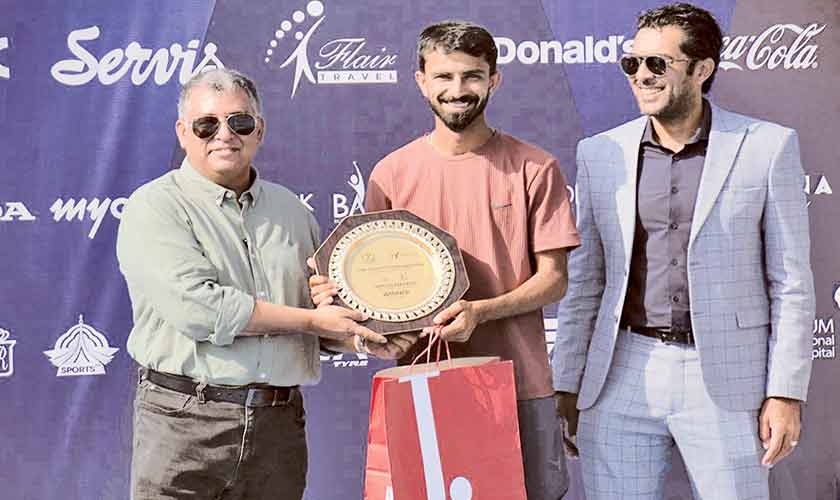
Speaking after the conclusion of the ITF M-15 Leg-2 event, Aisam expressed satisfaction over the smooth conduct of the tournaments and praised the support of sponsors, media and Islamabad Police for ensuring world-class arrangements. He also highlighted that local players are finally beginning to benefit from international exposure on home soil.
What makes this phase particularly special is that Pakistan’s success was not limited to administration alone. Pakistani players delivered performances that transformed these tournaments from routine events into historic milestones.
The biggest breakthrough came through Muhammad Shoaib, who emerged as the face of Pakistan’s tennis revival. His title-winning campaign at the Flair Travel ITF Men’s Futures M-15 Championship ended a painful 20-year drought for Pakistan in professional ITF singles competition.
Shoaib defeated Russia’s Nikita Ianin in a gripping three-set final, winning 7-6(7), 4-6, 6-2 before an emotional home crowd in Islamabad. The victory made him the first Pakistani in two decades after Aisam to capture such a prestigious ITF Futures singles title.
Even more impressively, Shoaib followed that achievement by reaching another final at the McDonald’s Pakistan ITF Championship 2026 (Leg-2), becoming the first Pakistani player in 25 years since Aisam himself to qualify for back-to-back finals of an ITF professional event.
That accomplishment perhaps carried even greater significance than the trophy itself because it demonstrated consistency, something Pakistan tennis has lacked for years. Shoaib’s rise now offers hope that Pakistan can produce players capable not only of isolated upsets but sustained competitiveness at the international level.
Although Shoaib narrowly lost the Leg-2 final to Sweden’s Arvid Nordquist in a thrilling three-set battle, his fighting spirit won admiration across the tennis community. The final itself showcased the growing quality of competition in Pakistan-hosted events. Nordquist displayed composure under pressure, while Shoaib’s aggressive baseline play repeatedly ignited the Islamabad crowd.
The Leg-1 tournament was equally memorable. Organized in memory of the late Khawaja Iftikhar Ahmad, the event carried emotional value for the Qureshi family while also representing Pakistan’s determination to rebuild international trust in its sporting infrastructure. Featuring players from 23 countries, the tournament proved that the global tennis community is once again willing to compete in Pakistan.
Yet perhaps the most emotional moment of the entire series came through veteran star Aqeel Khan. At 46 years of age, Aqeel produced a performance that defied logic, age and expectation. His victory over Russia’s Makar Krivoshchekov at the ITF M-15 Leg-2 event was not merely another win, it was a historic achievement that made him the oldest player in tennis history to win a professional ITF match.
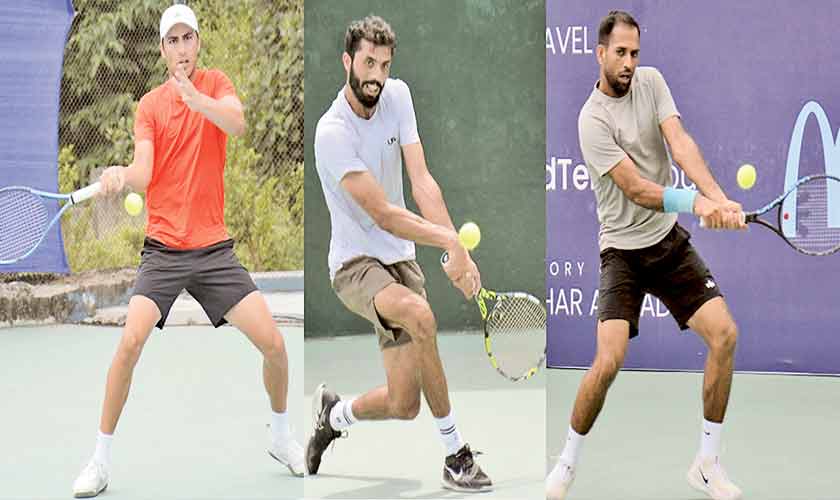
In an era where professional sport increasingly revolves around youth and athletic explosiveness, Aqeel’s achievement symbolized resilience, discipline and unmatched commitment to Pakistan tennis. His straight-forward reaction after the match reflected humility more than celebration. He credited Almighty Allah for helping him achieve the milestone and thanked the Pakistan Tennis Federation for creating opportunities through home events.
Aisam and PTF officials rightly described Aqeel’s feat as a proud moment for the country. Winning professional matches at 46 is extraordinary anywhere in the world, but doing so while continuing to inspire younger generations makes Aqeel’s contribution even more valuable.
Pakistan’s tennis revival is also becoming visible at the junior level, which may ultimately prove the federation’s greatest achievement.
Young talents such as Abubakar Talha, Hamza Roman and Mikaeel Ali Baig delivered performances that indicate a promising future for the sport. Abubakar Talha captured the ITF J-60 title after defeating Singapore’s Luke Jie Xi Ho in a tense final decided through back-to-back tie-breaks. He also partnered Hamza Roman to secure the boys’ doubles crown, giving Pakistan another major junior success on home courts.
Meanwhile, Mikaeel Ali Baig emerged as one of the standout stars of the junior circuit by clinching both singles and doubles titles at the ITF Pakistan International J-30 Championship. His composed victory against Lithuania’s Kristijonas Milasaukas reflected maturity beyond his years.
What stood out in Mikaeel’s comments afterward was not just confidence but professionalism. His disciplined training routine and understanding of pressure revealed a player already thinking beyond junior tennis. More importantly, his gratitude toward Aisam and the PTF highlighted the growing trust between players and the federation.
Aisam later congratulated all the junior players and emphasized that Pakistan’s emerging generation now has opportunities that previous players never received. He pointed toward expanded national tournaments, increased prize money, international exposure and the upcoming ATP Challenger event as signs that Pakistan tennis is finally building a long-term structure instead of relying on isolated talent. That may ultimately define the significance of these tournaments.
For too long, Pakistan tennis depended on individual brilliance from players like Aisam and Aqeel without establishing a sustainable pathway for future generations. What happened in Islamabad this year suggests that the federation is finally attempting to create continuity.
Of course, one successful season alone cannot solve decades of structural challenges. Pakistan tennis still needs stronger grassroots development, private investment, international partnerships and consistent international competition. But for the first time in many years, there is visible momentum.
The packed crowds in Islamabad, the participation of foreign athletes, the emergence of local champions and the success of junior players together created something Pakistan sports has desperately needed, belief.