Print Story
X




How citizens navigate fear and loss amid rampant crime in Karachi
| K |
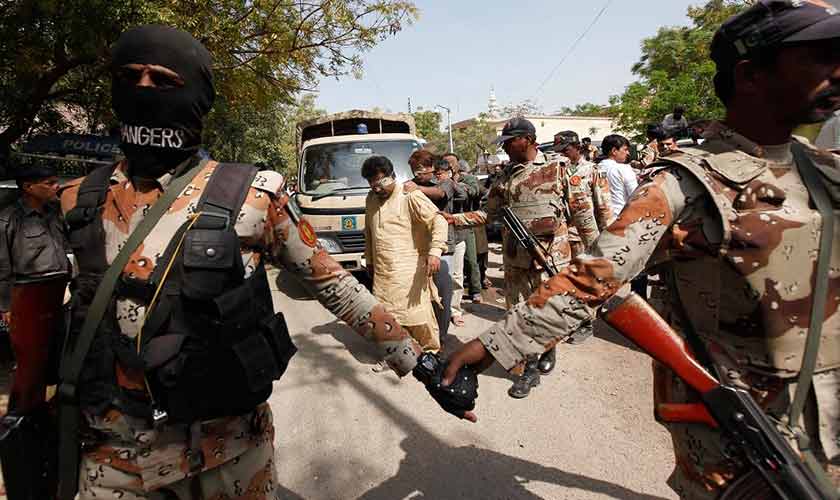
arachi’s deadly street crime continues to highlight broad concerns relating to urban security, policing challenges and the uneven capacity of law enforcement agencies across the city. From mobile phone snatching and vehicle theft to extortion complaints in several districts, fear of crime remains a significant concern for many residents.
While police point to ongoing crackdowns and some ‘signs of improvement’ in certain areas, citizens still face the psychological and financial impact of crime, alongside concerns over preventive policing and delays in the expansion of surveillance infrastructure such as the Safe City project.
Districts Central, East, Korangi and Orangi continue to suffer most from street crimes. Mobile phone snatchings and muggings are very common and an everyday phenomenon.
In some cases, particularly in Gulistan-i-Jauhar, parents ferrying children to schools and back home risk facing armed motorcyclists harassing, mugging and snatching mobile phones and valuables.
Effective police patrolling remains rare and a serious concern. Meanwhile, street crime continues to rage, fuelling a pervasive sense of insecurity.
In the last four months (Jan 1 to April 30), 16 people were killed and 70 injured while resisting robberies, deepening public fear and anxiety. Last year, 29 people were killed in cold blood and another 98 were wounded at the hands of robbers. The figures were compiled by the Citizens-Police Liaison Committee and corroborated by Sindh Police.
5,321 phones were reported stolen in the first four months of the current year. This compares alarmingly with 5,496 mobile phones snatched in 2025.
As many as 657 cars were stolen and snatched in 2025; in the last four months of the current year, 621 cars have been stolen.
For most victims, it is not just about losing a vehicle—it is the sudden loss of control and safety that leaves the strongest impact.
As far as motorbike theft is concerned, 15,512 were stolen and snatched last year. From January to April this year, 13,703 were reported stolen. In many cases, the police have failed to arrest the suspects.
The Karachi CCPO, Additional Inspector General Azad Khan says street crime has been on a decline over the last five months. “In District Central, the police have pursued street criminals and killed and injured some,” he says. “The police have also gone after repeat offenders.”
Khan says that paramilitary Rangers have also been taking action against street criminals. “Together, law enforcement has helped bring down street crime in District Central. There has been some improvement in other districts as well.”
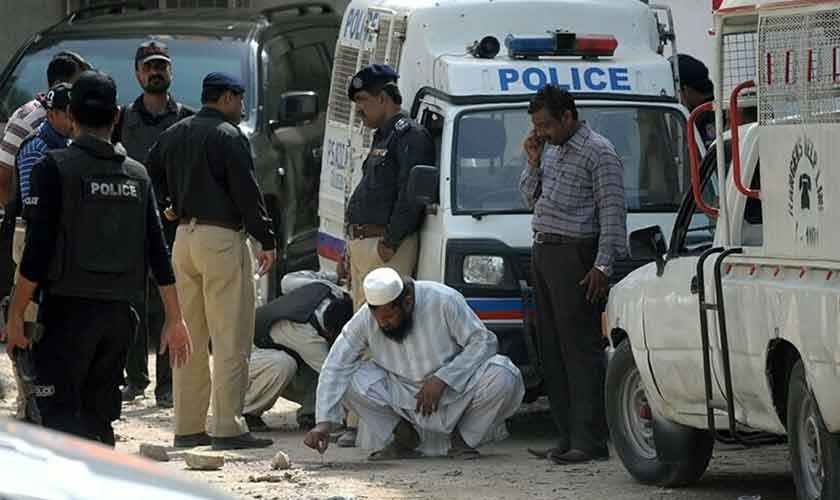
In the last four months, 16 people were killed and 70 injured while resisting robberies deepening public anxiety.
The persistence of such crimes contributes to public frustration and insecurity. In some cases, this has encouraged the youth to carry weapons for self-protection. Elsewhere, angry citizens have resorted to lynching suspected criminals. Often driven by fear, frustration and loss of trust in law enforcement, such reactions represent dangerous extremes that can deepen social violence, normalise vigilantism and further erode the rule of law in society.
Alongside street crime, organised extortion networks continue to add another layer of insecurity for residents and businessmen across Karachi.
According to the CPLC, 27 extortion cases were reported in the first four months of the current year. Last week, a real estate agent working in Maymar, came under attack at his residence in Federal B Area ‘for reaching out to the police.’ A KDA anti-encroachment official was injured in the incident.
“The incident is being investigated,” says the CCPO. He says police action against extortionists has somewhat reduced the intensity of crime. “However, there is a spike in certain police stations of Districts Central and West due to the involvement of Samad Kathiawari’s gang. Police action is under way.”
Police say the gangs led by Samad Kathiawari and Wasiullah Lakho are operating from Iran. They use international SIMs registered in Malaysia and other countries.
“The Interpol has issued red warrants for Wasiullah Lakho and Jamil Changa. The process is under way against Samad Kathiawari and some others,” says Khan.
He warns that “there is always a hike in armed robberies around Eid-ul Azha, when hundreds of animal vendors descend upon the city. These people are tempting targets for criminal gangs.” The Karachi Police have strategised plans alongside effective deployments to address this annual surge, he adds.
While agreeing that sustained action in some areas has helped reduce crime affecting businessmen, crime journalist Faraz Khan is critical of the use of red warrants in the absence of an extradition treaty with Iran, where Samad Kathiawari and Wasiullah Lakho are believed to be based.
The plan to install 1,200 traffic cameras in certain districts was initially welcomed by Karachiites. The citizens reckoned that this would help reduce crime alongside addressing traffic discipline and serious accidents. However, the slow pace of camera installation continues to weigh down effective police action. Faraz Khan says this has been a disappointment for many. Nevertheless, “there has been some improvement in traffic discipline in areas where traffic cameras have been installed,” he concedes.
In a parallel enforcement drive, the Karachi and Sindh Police have launched a crackdown against drug trafficking and betel nuts smuggling. According to CCPO Karachi, “two SSPs and around 80 other officers have been suspended from service for suspected collusion with the criminals.”
“The police are working with the Intelligence Bureau to bust drug and gutka smuggling gangs,” he adds.
Karachi’s crime landscape continues to reflect urban insecurity, institutional limitations and fragmented enforcement. For many residents, the trauma of robberies, vehicle snatching and extortion extends far beyond financial loss, leaving lasting psychological scars and a deepening sense of vulnerability.
The writer is a senior The News staffer in Karachi.