Print Story
X




Inflation’s crippling impact on the already struggling
| R |
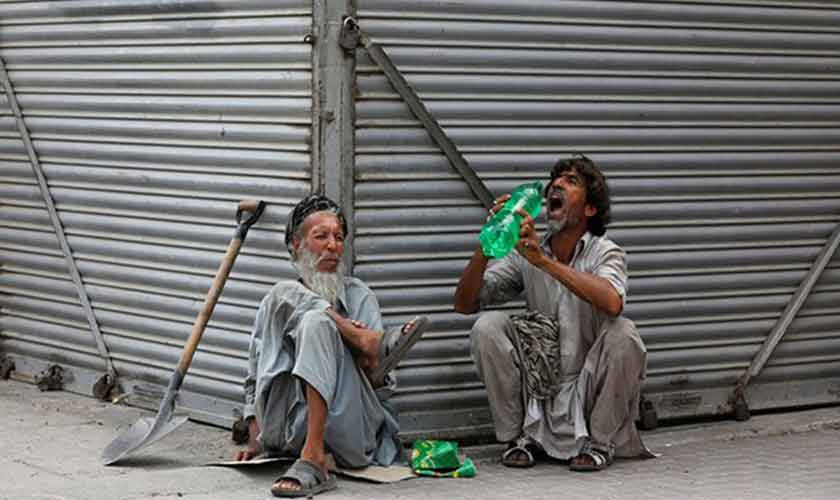
ahat Gul, 42, belongs to Yousaf Khan Killay, an over populated, unplanned village in Tangi sub-division of Charsadda. A father of six, Gul is a daily wage labourer. Providing three meals a day for his family is an enormous challenge for him. The recent wave of inflation has further burdened him.
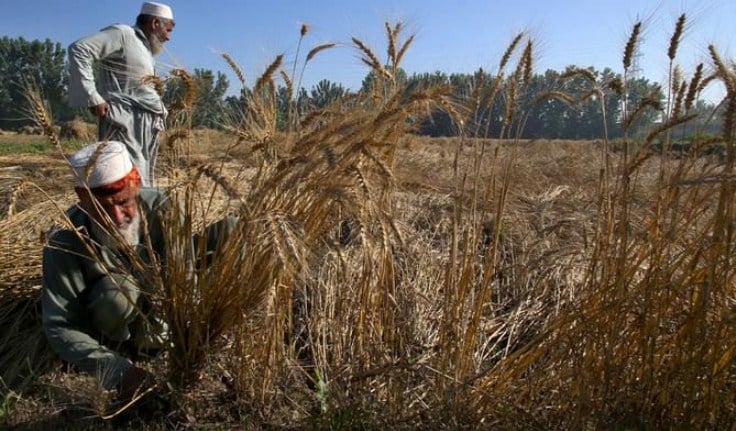
Only weeks ago, Gul returned to his village after working as a wheat reaper in the Punjab. The little he had earned there was spent on household expenses. Back home, he continues to work in the fields for a daily wage. But the low wage is no longer enough to sustain his family.
Three of his children study at a government primary school, where annual examinations are currently under way. He says he had to barter 10 kilograms of wheat with a neighbour for pencils, erasers and writing boards for his children. The wheat—a vital resource for his family’s survival—had been given to him as payment for his reaping work in the Punjab.
The ongoing tensions in the Middle East involving Iran, Israel and the United States, coupled with rising global oil prices and sky-rocketing inflation, have severely impacted every sector in the province, especially Khyber Pakhtunkhwa’s rural communities. In these villages, wages remain low and employment opportunities scarce. Yet, the food prices continue to rise. The poor were already struggling; now, even the ‘middle-class’ is finding it difficult to survive.
The increase in fuel prices has impacted every aspect of life. Inter-district transport fares have risen sharply. Many middle-class families keep their vehicles parked and avoid travel because of soaring petroleum prices.
In Tangi tehsil’s Dhaki union council, a cloth shop owner Arshad Khan sits alone in his deserted shop, scrolling through his mobile. Worry is visible on his face.
“Because of inflation, customers have stopped coming to markets,” he says. “Eid is approaching, but the bazaars no longer have the familiar activity and excitement. Some shopkeepers have even abandoned their businesses and returned to their [farming] lands.”
Arshad has to also pay rent for his shop despite making close to no profit. “If things continue like this, I may have to shut up shop,” he adds.
Farmers are also struggling under mounting production costs. Ghaffar Ali, a tobacco farmer in Charsadda, says that the cost of inputs this year have doubled compared to the last season.
“Tobacco farming requires chemical sprays; the prices of pesticides and fertilisers have increased dramatically,” he says. “I have already spent Rs 150,000 on fertiliser alone. Costs for labour and wood are separate. The situation is getting out of control.”
Wheat harvesting and threshing is currently under way across the Peshawar division. The rising diesel prices have increased the pressure on landowners and farmers alike. Farmers now pay up to Rs 7,000 per hour for wheat threshers—considerably higher than last year.
Labourers, farmers, small business owners and salaried workers are all struggling to make ends meet under the current inflationary wave. Many says they have run out of options.
In response to rising fuel prices, the Khyber Pakhtunkhwa government has announced several austerity measures from March to May. Government employees have been instructed to attend offices only twice a week. On the remaining days, they are to manage through work-from-home and rotation systems to reduce fuel consumption.
Fuel allocations for official vehicles have also been suspended. Schools, public as well as private, have been instructed to operate only four days a week. At the same time, many private schools have increased transportation charges, adding further financial pressure on parents.
Most private vehicles and school vans in Khyber Pakhtunkhwa run on compressed natural gas. A federal government decision to suspend gas supply to CNG stations in the province has created additional difficulties for vehicle owners.
Chief Minister Sohail Afridi issued a statement against the suspension. The CNG Association in the province also staged protest demonstrations against the federal government’s decision. Despite the agitation, gas supply to these stations remains suspended.
Yaseen Khan, who owns a small roadside fuel station in a village in Tangi, close to Mohmand district, says fuel sales have dropped by nearly 60 percent.
“Only motorcyclists come for fuel now,” he says “they too only buy as much as is immediately needed.” “Since the latest price hike, nobody has asked for a full-tank filling.”
Muzammil Aslam, advisor on finance to Khyber Pakhtunkhwa’s Chief Minister, has criticised the rise in petroleum prices. In statements posted on social media, he has accused the federal government of ‘overreacting’ to IMF demands and placing excessive burden on the public through petroleum levies.
According to him, the government is collecting between Rs 130 billion and Rs 150 billion every month through petroleum levies, while ordinary citizens are rapidly losing essential purchasing power—no longer being able to afford food, transport, medicines and education
Rahat Gul, too, sees little hope ahead.
Three years ago, his younger brother shifted his family to the Punjab. He has proposed that Gul, too, move his family. “If financial conditions continue to deteriorate, I will have no choice but to move to the Punjab with my family,” he says. “We may survive there by working on some farm. Here, life is becoming impossible.”
The writer is a multimedia producer. He tweets @daudpasaney.