Print Story
X




Why understanding the role of local journalism is important
| E |
leven years ago, a global overview of the challenges faced by local journalism pointed to an “uncertain future where people will have access to more and more media, but may well have access to less and less independently reported genuinely local news…” Titled Local Journalism, the decline of newspapers and the rise of digital media, and published by the Reuters Institute for the Study of Journalism, it went on to state that “if the trends [observed then] continue and existing research is anything to go by, we risk seeing much weaker local news media that do less in terms of holding power to account and keeping people informed… than they have in the past.” As a disclaimer, it went on to acknowledge that digital media offered citizens and local communities many other benefits in other areas beyond news and journalism.
Today, with mainstream conventional media struggling to adapt to an ever-evolving tech-driven media landscape, local news or what remains of it, appears more pronounced and practiced in the digital landscape.
Mahjabeen Abid has been reporting from southern Punjab for seven years. “During my freelancing days, I would find it challenging to report for the mainstream media on issues that mattered locally to communities. Many of my pitches on local stories were rejected,” she says.
These stories, she says, are rarely considered ‘important’ by the mainstream media.
Abid’s frustration is grounded in the observation that the stories she personally saw unfolding at the community level managed to find relevance in the mainstream only once they struck a chord at the national level.
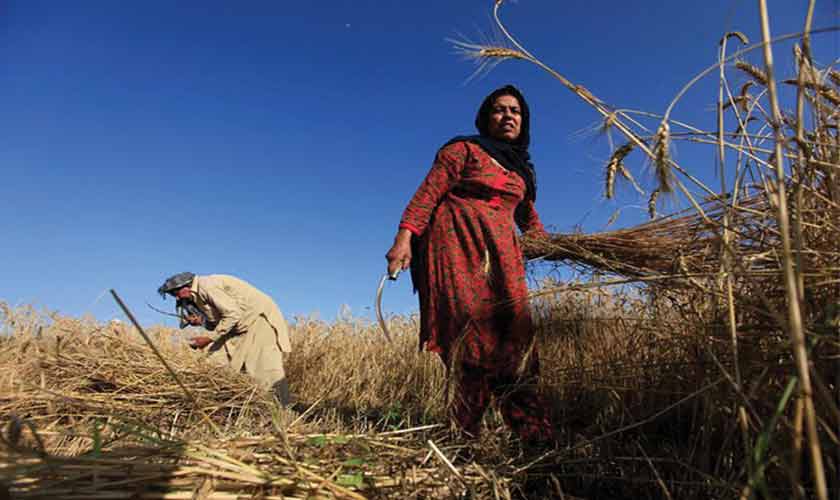
“It would become newsworthy only once the impact of what was happening locally—whether it was flooding or wheat threshing—manifested at the national level.”
Initially based in Multan, she has recently relocated to Lahore after having joined a digital news media platform that positions itself as an outlet focusing on marginalised communities, “ignored areas” and “sidelined issues.”
Last year, Abid reported from the ground for these pages as floods hit close to her home. However, she says, “everyday stories of the locals” fail to retain attention in the mainstream once the initial fever wears off.
“Where do we go then? Where do these stories go?”
This sentiment is echoed elsewhere.
“Our newspapers and news channels often fail to provide adequate coverage to women in rural and mountainous areas,” says Narges Khan, a local journalist who has been reporting from and around Charsadda since 2023.
“The mainstream is fixated with politics, crime and sports. Where do stories of our women and children go?”
Khan’s journalism journey was inspired by what she saw the locals—especially the women and children—suffer due to climate change in Swat and Dir during her visits to the northern areas in the summers. From electricity lines destroyed by floods to women being forced to fetch drinking water from far flung areas, she absorbed a lot.
It helped that journalism was a subject at home. Her husband, Daud Khan, is also a journalist. “I wanted to do something different. My family was very supportive and bore the travel expenses for my reporting.”
Khan registered her own digital platform, which focuses on “environmental and climate crisis reporting from northwestern Pakistan.”
With very few women journalists in the region, and most lacking resources to report, she says stories relating to women go largely unreported.
“Because of cultural considerations male reporters are unable to speak to women about their problems,” she says.
This is where Khan came in.
“It was easier for me to speak to the women and record the local stories in an audio format. Because of my familiarity with the local culture and Pashto, and being a woman, I was able to bring their stories forward.”
For three years now, she has been working on a radio magazine programme. Khan believes that her work is crucial because it allows her to bring local stories in local languages before the local audiences. “We try to engage various stakeholders so that we find local community solutions to community problems.”
Said Nazir, co-founder of a digital news platform shares the concern regarding under-reporting of women’s issues. This, he says, was a major challenge in the platform’s reporting.
“The platform was established to empower local communities in Khyber Pakhtunkhwa and the bordering regions with news that directly affects their daily lives,” he says. “But there were very few, and in some areas no, women journalists who could access female populations and document their stories.”
Established in 2011, the Peshawar-based platform evolved from a call-to-listen news radio service to a digital news platform in 2016.
The platform went on to train dozens of women in digital storytelling. This significantly improved the coverage of women’s issues, says Nazir. “It also ensured more inclusive representation in our reporting.”
What motivated them?
“The motivation was to bridge the information gap in underserved areas and to create a platform where local voices were heard, valued and reflected in the media landscape.”
He says the platform focuses on stories often overlooked by the mainstream media.
“The agenda is community-driven,” he says. “It promotes user-generated content and citizen journalism to ensure that diverse voices are represented, particularly those from marginalised groups.” The aim, he says, is to make communities active participants in storytelling and decision-making processes.
That comes with its fair share of challenges.
While connecting with local journalists was easy, for Nazir, a significant challenge lay in selling their vision: focusing on grassroots reporting.
“Most journalists had been trained by national and regional media. This had shaped their approach. They ended up viewing stories through a wide-angle political or national lens,” explains Nazir.
Even within the platform, he says, editors and producers were accustomed to prioritising national and international news, sometimes overlooking local issues. “Over time, the mindset changed and the team embraced the value of hyper-local reporting.”
What attracts the audiences the most on their platform?
Crime and conflict.
Nazir says this is largely because the audiences are “deeply concerned about their safety.”
“Stories related to governance, corruption and human rights violations are also popular as they directly impact people’s lives.” Apart from this, he says, youth related stories and content highlighting motivation and resilience also resonate strongly with audiences.
But how committed are journalists to reporting locally?
“There is a growing recognition among journalists of the importance of local and hyper-local reporting,” he says. “Many are beginning to understand that such stories are not only impactful but also valuable to their communities.”
Capacity, he says, remains a challenge.
Politics and conflict often dominate traditional media practice; hence, he says, journalists are inclined to follow the same. “There is a need to train journalists to help them expand their focus—particularly in areas such as gender, human rights, governance... even in investigative skills for reporting on education and health.”
Are the people interested?
“I refuse to accept that the audiences aren’t interested in public interest journalism,” says Adnan Rehmat, a media analyst. Public interest, he says, is a function of journalism. It becomes even more essential at the grassroots. “Millions sleep hungry in this country... don’t tell me there aren’t stories around you that resonate with local communities.”
The dynamic at play is complex.
Rehmat, with three decades of journalism experience, says often the motive behind journalism is to gauge the level of deviation from societal equity and governance.
“Journalism trends reflect governance realities on ground,” he says, adding that with a hyper centralised mode of governance, news tends to capture the same patterns focusing more on what happens in and around decision-making capitals instead of local communities.
This in turn, he says, makes it easy for the media.
“For their own convenience and owing to pressure from various institutions they don’t ruffle too many feathers.” The media’s mandate of public interest, he says, thus stands compromised.
In such an environment, he describes the news fall as being in a “low energy state.”
“If people don’t see themselves or their lives reflected in the news, they switch off.” This and the global explosion of independent digital media have changed the media landscape structurally, setting new trends. Lack of capacity and public trust in the mainstream media, he says, accelerated the impact.
The audiences shifted online to alternative media, where Rehmat says there is more lazy journalism.
“If you don’t do local journalism; if you don’t adapt; if you don’t reflect plural realities of the society, it won’t work. In fact, in journalistic advocacy circles, we now talk about hyper local journalism.”
Abid agrees.
Local digital platforms, she says, are very popular in southern Punjab. “The problem is that anyone can run these platforms without being accountable for their journalism or their professional ethics.”
This sets a low entry.
What happens then when the mainstream abandons local journalism?
“It concedes space to platforms that claim to bring local stories and marginalised voices but are essentially as far away from journalism as possible because there is no editorial oversight. It can just be noise,” she says.
The writer is a staff member.