Print Story
X




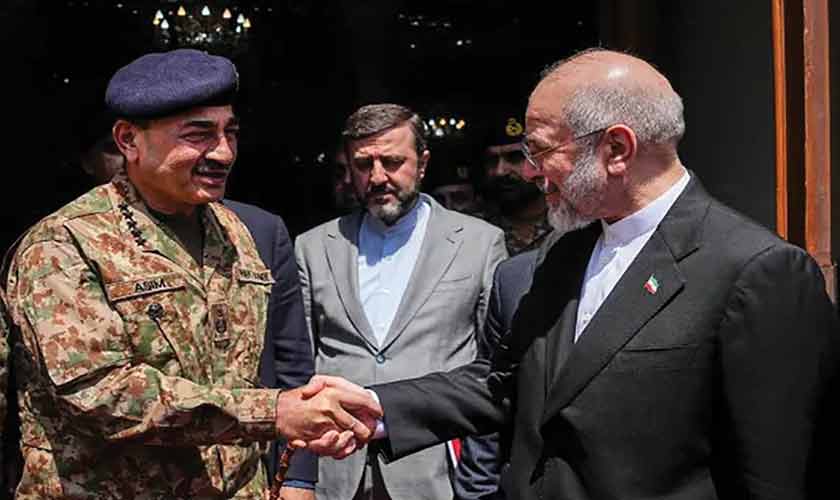
Pakistan remains engaged in efforts to restart the stalled US-Iran dialogue
| H |
aving extended the current ceasefire indefinitely, US President Donald Trump has indicated that a new round of US-Iran talks could take place soon. He has also emphasised, however, that there is no fixed timeline for either negotiations or the ceasefire. Earlier plans for talks in Islamabad were stalled after Iran withheld confirmation, citing concerns over the US naval blockade. The first round of talks, held on April 11, had ended without a comprehensive breakthrough.
If parties to the conflict continue to engage through Pakistan’s facilitation, the fact reflects confidence in its neutrality and usefulness. It has been pointed out that middle-order states willing to take on the mediation role become more relevant during periods of global tension involving major powers. While Pakistan cannot determine the outcome, it can help create the conditions for diplomacy to have a chance.
For decades, most states in the Gulf region have sought to project an image of predictability and stability, positioning themselves as secure hubs for global investment, tourism and business. This image was reinforced by an economy built on luxury tourism, global events, branding, mega infrastructure and investments in information technology and artificial intelligence.
That perception is undergoing a change following the US-Iran war, which has introduced uncertainty. The medium-term economic and geopolitical outlook for the Middle East is now defined by a risk of erosion of both the financial leverage derived from energy revenues and the strategic centrality that proximity to Western security frameworks historically conferred.
Pakistan’s former ambassador Naghmana Hashmi says that capital flows increasingly follow perceived security, connectivity and strategic relevance, reinforcing Gulf diversification away from single alignment strategies. “Credible information suggests that some of the Gulf capital has moved to European financial centres. An important trend is a longer-term shift towards investing in economies that combine geopolitical influence, regional connectivity and large market scale. The destinations likely to attract new investment include Pakistan, Saudi Arabia and Türkiye.”
After US-Israeli forces struck Iran using facilities based in some of the Gulf states, those states were struck by Irani missiles and drones. This has triggered an urgent reassessment of American security guarantees. Analysts say this will lead to a diversification of external partnerships. Former foreign secretary Salman Bashir, who has served extensively in the Middle East before ambassadorial assignments in EU states and China, says, “Many in the Middle East feel that the American security umbrella was of no value to them. It seemed instead to have made them targets.”
“The United States’ influence as a dominant power in the Gulf region has been strained in this conflict. China, meanwhile, continues to play a growing economic and diplomatic role,” he says.
“These assessments and calculations will shape the region’s dynamics in the years ahead. The United States will remain influential but more selective and reactive... China is emerging as a key beneficiary of this shift, expanding its economic and diplomatic role without assuming additional security responsibilities. Russia remains an opportunistic disruptor. No single power can now fully guarantee regional stability. This has prompted Gulf states to diversify their external partnerships.”
“This shift is reflected in the growing multi-alignment behaviour. The United States remains dominant militarily, but China is increasingly framed as a strategic hedge for Gulf states. The region appears to be moving towards a multipolar equilibrium—an order in which no single external power dominates and regional actors exercise greater autonomy,” says Bashir.
The United States will remain influential but it will be more selective and reactive... China is emerging as a key beneficiary of this shift, expanding its economic and diplomatic role without assuming additional security responsibilities.
“In practice, this will require Saudi Arabia, Iran, Turkey and Israel to acknowledge one another’s spheres of influence. They will have to engage in competition through diplomacy and avoid direct large-scale conflict. This reflects a transition in which Gulf states are no longer passive security clients. They are increasingly autonomous strategic actors. Saudi Arabia and the UAE are central to this ‘strategic hedging.’ Both these states now pursue multi-alignment strategies, maintaining defence ties with the United States, expanding economic and infrastructure cooperation with China and developing pragmatic diplomatic channels with Iran to contain the risks.”
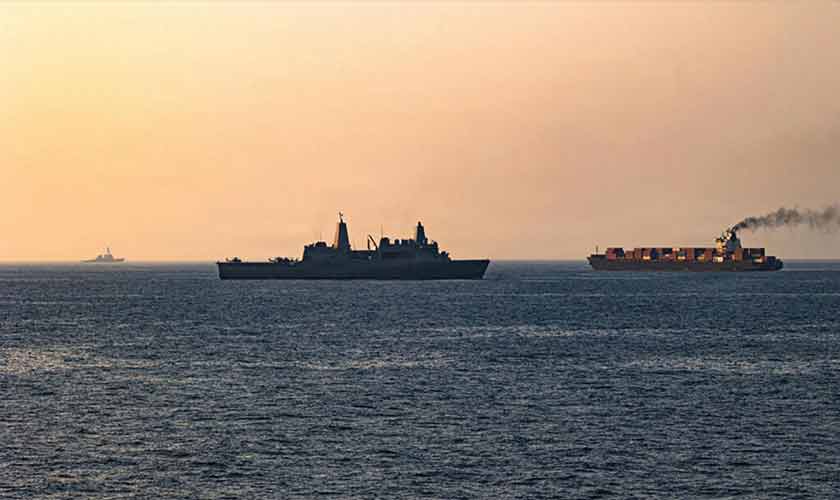
“Energy geopolitics is replacing security alliances as the organising principle of regional power. Security once guaranteed oil flows; vulnerabilities in energy infrastructure now shape security behaviour. As a result, infrastructure and chokepoints have become instruments of coercion rather than passive trade routes. As a result, the Strait of Hormuz, Bab el-Mandeb and the Suez Canal are being increasingly leveraged for coercive power rather than simply facilitating trade.”
Explaining the Hormuz crisis that exposed the systemic vulnerability of global energy chokepoints, Bashir says these shifts point to an emerging model in which economic interdependence and control over critical infrastructure increasingly shape security behaviour. “This evolving ‘geo-economic security system’ places trade routes, energy flows and financial linkages at the centre of regional power. It also strengthens the case for cooperative regional mechanisms to manage chokepoint risks. It appears increasingly plausible that over the medium to long term, the Gulf economies will transition from security-dependent states to geo-economic power brokers—leveraging energy, investment flows and strategic geography to shape regional outcomes,” he says. He says a constructive approach would be to draw lessons from China’s example, which has been emphasising the pursuit of shared security and inclusive prosperity.
“The post-war environment could open a window for Iran-GCC de-escalation. Public opinion in the Gulf is increasingly focused on stability and economic development,” Hashmi says. She says the March 2023 Iran-KSA agreement brokered by Beijing had thrown up the idea that the two states had interests that could not be served by permanent confrontation.
“The GCC states have realised that four decades of containment have resulted in Iran having a more advanced nuclear programme and missile capabilities. For them the only sensible alternative is accommodation: recognising Iran’s security interests and insisting clearly on the inviolability of Gulf sovereignty. The calculus is equally clear for Iran.
“Before the current escalation, the Strait of Hormuz had functioned as a global maritime commons. The conflict has introduced a layer of systemic uncertainty into one of the world’s most consequential chokepoints,” Hashmi says. She says the Hormuz dynamic has exposed a structural paradox in US regional strategy: overwhelming military capability has not translated into a durable regional order. Force projection without political architecture produces volatility, not resolution.
“Consequently, in the post-war Gulf, a gradual shift is under way towards what could be called a Chinese-style approach—anchored in economic collaboration, infrastructure development, diplomatic non-interference and unconditional respect for state sovereignty,” says Hashmi.
“China relies heavily on Gulf energy—about half its oil and a third of its LNG—much of it passing through the Strait of Hormuz, exposing a vulnerability that cannot be quickly reduced. For Beijing, a stable post-war Gulf is essential to economic growth. Any disruptions in Iran, Saudi Arabia or Qatari LNG cannot be offset in the near term. This dependence on stability explains why Beijing has backed its interests with hard capital.”
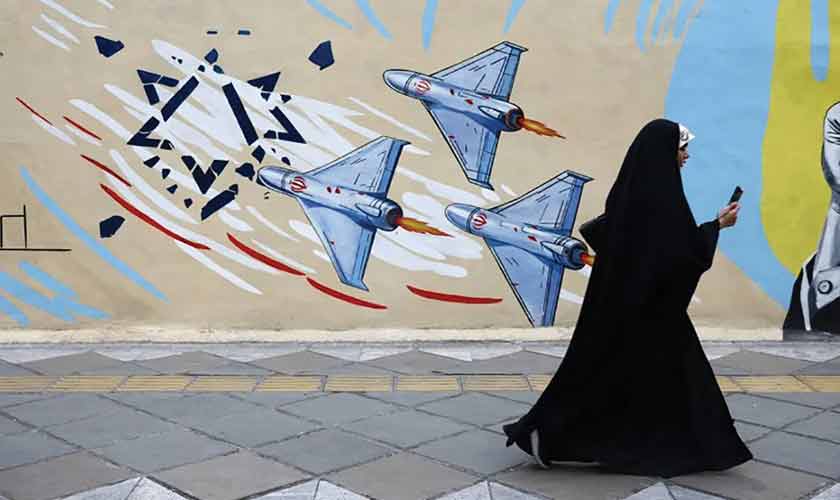
The Belt and Road Initiative’s $39bn investment positions China to lead post-war reconstruction across Gulf states with faster, cheaper and less politicised options. It will also prioritise restoring Iran’s role as a key transit corridor linking China to Europe. The war has also allowed China to leverage the conflict to expand its mediation role.”
“The post-war diplomatic landscape will present China with more opportunities. The reconstruction of a regional security architecture will require a convening power that the United States has temporarily forfeited. The proposed Trump-Xi meeting in Beijing in May 2026 shows that the US recognises China’s leverage. China is also building alternatives to the petro-dollar system,” says Hashmi.
“The Middle East has become a principal theatre in the contest over what kind of world order will characterise the second half of the 21st Century. The United States has invested its regional presence in a model premised on military preponderance, dollar supremacy and the export of governance norms.”
“The post-war Gulf is moving not toward a new hegemon, but toward a multipolar equilibrium shaped by US security presence, China’s economic rise and growing strategic autonomy in the Gulf. Stability will depend on whether this balance can be managed without reverting to conflict,” she says.
The writer is a senior The News staffer in Karachi.