Print Story
X




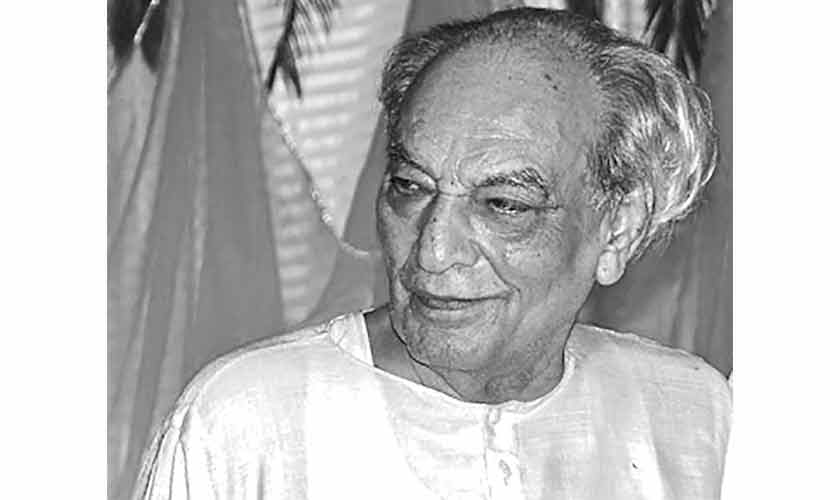
Raza Kazim moved across politics, philosophy and art with rare intellectual ease
| W |
hen Reza Kazim spoke about music, he was never speaking only about music. A note, for him, was also a question about civilisation. A raga could open into philosophy; the making of an instrument could become an argument with history. Sound itself was not merely heard but investigated, as if it held clues to the deeper architecture of life. In a country that often rewards narrow specialisation, Kazim, who died last week, remained gloriously difficult to classify.
He was, by profession, a lawyer, and by all accounts an accomplished one. But law was only one chamber in which he specialised. He moved easily between politics, history, education, acoustics, philosophy and the arts, driven by a belief that knowledge was not meant to be fenced into disciplines, but to illuminate life and, where possible, improve it.
In his early years, Kazim was drawn to Marxism, as many intellectually serious young people of his generation were. But commitment came at a cost. In the repressive decades of the 1950s and 1960s, leftist activists were surveilled, arrested and denounced as enemies of the state or religion. Kazim was imprisoned several times.
Those who knew Kazim often spoke of a man whose hardships only deepened his resolve. He emerged from incarceration more determined to think beyond the ready-made answers of ideology. Even when the political climate softened briefly during the years of the Pakistan Peoples Party, repression was never far away. Later, in the 1980s, he would again serve a long sentence, including time in the forbidding cells of Attock Fort.
Yet Kazim’s intellectual journey did not end in the certainties of orthodox Marxism. While others treated theory as finished scripture, he kept asking what it had failed to explain. New developments in psychology and the sciences of the mind drew his attention. He became interested in the unseen dimensions of culture: the ways aesthetic experiences shape human beings as profoundly as economics or politics do.
This search led him, perhaps, to music.
To describe Kazim as a patron of music would be too narrow a description. He approached music as a place where mathematical order, emotional depth, historical memory and spiritual insight meet.
That conviction shaped much of his later work. Through the Khusrau Academy, and later the Sanjan Nagar Institute of Philosophy and Arts in Lahore, he built spaces where music and learning could be approached with seriousness. These institutions were not conceived as cultural ornaments, but places where endangered traditions could be studied and practiced.
In a country that often rewards narrow specialisation, Kazim remained gloriously difficult to classify.
One of Kazim’s most valuable contributions was archival. He recorded many of the leading practitioners of diverse musical forms at a time when much great artistry risked disappearing without a trace. These recordings were admired for their focus and attention to nuance.
He also accepted the challenge of establishing the Department of Musicology at the National College of Arts, becoming its founding head. The significance of that role in what it represented: the formal recognition that music could be studied intellectually as well as performed. It was, in its own way, a radical proposition. He later resigned from the post after a change in the education ministry, but the precedent had been set.
Perhaps the most tangible symbol of Kazim’s imagination was the creation of a new instrument: the Sagar Veena. Drawing on tuning principles that he believed had been lost through centuries of transition, he wanted to recover forgotten sonic possibilities.
His interests extended even further into the physics of sound. He studied the science of recording, especially the challenge of reproducing musical sound with depth. Out of that inquiry came custom-built speakers he affectionately called bullahs.
There was also an educator’s impulse running through his work. Sanjan Nagar housed a school where unconventional learning methods were explored. To learn, for him, was to become more alive to the world.
Such figures can seem improbable in the present moment, as public life today often prizes speed over depth. Kazim belonged to an older tradition: the public intellectual who took risks and continued to ask larger questions than the times considered practical.
He leaves behind no single legacy because he never belonged to one. Lawyers can claim him, as can musicians, teachers, political activists and seekers of many kinds. But perhaps his truest legacy lies elsewhere: in the example of a life lived against conformity.
Reza Kazim refused the modern obsession with becoming only one thing. He understood that politics without culture grows sterile and that art without thought becomes decorative. In that sense, his death is the passing of a whole way of being intelligent in the world.
The writer is a culture critic based in Lahore.