Print Story
X




Pakistan’s silent ecological crisis requires a science-driven policy response
| B |
iodiversity — the intricate web of genes, species and ecosystems that sustain life on Earth — is declining at an unprecedented rate. Scientists around the world are issuing increasingly urgent warnings of a sixth mass extinction, one driven not by volcanic upheaval or asteroid impact, but by human activity alone. According to the International Union for Conservation of Nature, over 44,000 species worldwide are currently threatened with extinction. The global Red List Index deteriorated by more than 12 per cent between 1993 and 2024 — a stark measure of accelerating ecological loss. This is not a distant crisis; it is a present reality with profound consequences for food security, public health and economic stability — consequences that Pakistan, a nation of over 250 million people, can ill afford to ignore.
Pakistan’s ecological landscape is remarkably diverse, spanning the glaciated peaks of the Himalayas and Karakoram; the fertile plains of the Indus Basin; arid deserts; and the rich coastal mangroves of the Arabian Sea. Yet this extraordinary natural heritage is under severe and accelerating pressure. Habitat loss driven by urban sprawl and agricultural expansion, pollution from industrial and agrochemical sources, shifting climate patterns and deeply unsustainable farming practices are dismantling ecosystems that took millennia to form. While national extinction data remain under-reported — a reflection of governance gaps — alarming population declines have been documented among native bird species, amphibians, and, most critically, pollinators. Current estimates flag 540 endangered and 490 vulnerable species within Pakistan alone, underscoring the urgency of the crisis.
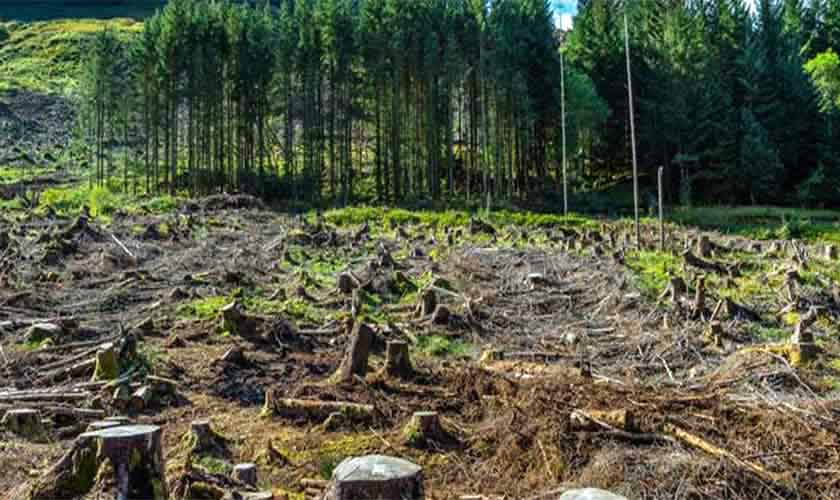
This vulnerability is compounded by the fact that Pakistan retains less than 5-6 per cent of its land area under forest cover — one of the lowest proportions in South Asia. According to WWF-Pakistan, it has been losing nearly 11,000 hectares of forest annually to deforestation, wildfires and agricultural conversion. More than 80 per cent of the country’s original forest cover has already been lost, leaving behind a fragmented agriculture-forest mosaic that is acutely vulnerable to both climate shocks and biodiversity collapse.
The pesticide problem
At the heart of Pakistan’s biodiversity crisis lies an over-reliance on chemical pesticides that has reached ecologically destabilising levels. Pesticide consumption in Pakistan has increased by a staggering 1,169 percent over the past two decades — far exceeding the global average. It is driven by calendar-based spraying practices promoted by industry actors, regardless of actual pest pressure. Bees, butterflies and other insect pollinators — responsible for enabling the reproduction of over 75 percent of the world’s food crops — are among the most acutely affected. Pakistan hosts hundreds of native pollinator species. Their populations are shrinking rapidly as pesticide applications intensify across agricultural zones.
The pesticides most prevalent in Pakistan include pyrethroids, organophosphates and organochlorines. The latter are especially damaging due to their persistence in the environment and their capacity to bioaccumulate through the food chain. A joint study by Quaid-i-Azam University and Lancaster University found that urban dust in and around Lahore contains measurable concentrations of chlorpyrifos and diazinon — indicating that pesticide contamination has spread well beyond farms and into the everyday environments of millions of Pakistanis.
The consequences extend far beyond the insects themselves. As pollinator populations collapse, crop yields falter, natural vegetation fails to regenerate and the food systems upon which rural livelihoods depend begin to unravel. Birds, amphibians and other beneficial organisms that serve as natural pest regulators are similarly imperilled, triggering a vicious cycle in which the loss of natural pest control drives yet greater pesticide use. The World Health Organisation estimates approximately three million cases of acute pesticide poisoning occur globally each year, causing nearly 220,000 deaths. These are disproportionately concentrated in developing nations such as Pakistan.
Recent regulatory discussions have raised concerns about pesticide adulteration in supply chains across Sindh and the Punjab, further intensifying risks to both ecological integrity and food safety. The 2024-2025 ban on 13 pesticides for use in rice cultivation — while opposed among some farming communities — signals a belated but necessary policy recognition of the scale of chemical misuse.
In advanced economies, the use of pesticides is governed by rigorous regulatory frameworks aligned with maximum residue limits (MRLs) established by the World Health Organisation and Food and Agriculture Organisation. These benchmarks, enforced through accredited laboratories and independent monitoring systems, ensure both agricultural productivity and public health protection.
Pakistan faces significant institutional shortfalls in this regard: accredited laboratories for pesticide residue testing are limited in number. Monitoring mechanisms remain fragmented across public and private sectors. The regulatory vacuum not only jeopardises domestic food safety but also erects barriers to agricultural exports — Pakistani fruits and vegetables frequently fail to meet international residue standards, undermining the trade relationships the country depends upon.
A compounding crisis
Climate change is compounding every dimension of Pakistan’s ecological emergency. Pakistan was ranked the most climate-vulnerable nation in the world in 2022 by Germanwatch’s Climate Risk Index, a distinction that reflects the country’s painful exposure to floods, droughts and extreme heat. The catastrophic 2022 monsoon floods — which submerged a third of its territory — caused losses exceeding $30 billion and devastated agricultural and natural ecosystems across Sindh, Balochistan and southern Punjab. Glacial melt in the Karakoram and Hindu Kush, accelerated by rising temperatures, now threatens the freshwater flows on which the Indus ecosystem and Pakistan’s agricultural heartland depend.
Shifting temperature and rainfall patterns are altering pest dynamics in ways that increase dependence on chemical inputs, further accelerating residue accumulation in soils, waterways and food chains. Climate projections suggest that between 15 and 30 per cent of known species globally face extinction by the end of this century under high-emission scenarios — a trajectory that would devastate Pakistan’s remaining biodiversity hotspots in the northern mountains and Indus delta. The carcinogenic risks associated with chronic pesticide exposure, affecting both human populations and livestock, are well documented in global scientific literature yet remain insufficiently integrated into Pakistan’s national health and agricultural planning.
Today Pakistan stands at the edge of a quiet ecological breakdown — one unfolding not with dramatic catastrophe but through a slow, cumulative erosion of the biodiversity that underpins its environment and its economy.
The way forward
Encouragingly, scientific research and emerging policy directions point toward viable solutions. Integrated pest management (IPM) — which combines biological controls, targeted pesticide application and ecological monitoring to minimise chemical dependency — has been validated across diverse agricultural contexts worldwide and has demonstrated measurable benefits for both yield protection and pollinator conservation. In Pakistan, ongoing doctoral research by Dr Asif on pesticide mitigation strategies, alongside active work by Arshad Farooq in the IPM Laboratory at the University of Agriculture Faisalabad’s Department of Entomology, underscores the domestic scientific capacity to drive change. The Ministry of National Food Security and Research has also taken initial steps toward regulating and promoting bio-pesticides as lower-impact alternatives to conventional chemical inputs.
What is required is a coherent, science-driven policy response commensurate with the scale of the crisis. The Ministry of Planning, Development and Special Initiatives must accord this issue priority consideration — particularly in strengthening MRL monitoring infrastructure and urgently expanding accredited testing laboratories nationwide. The Ministry of National Food Security and Research should formally adopt advanced MRL monitoring frameworks, expand investment in IPM adoption programmes and create meaningful financial incentives for farmers to transition toward sustainable agricultural practices. Habitat protection must be elevated within national development planning: intact ecosystems are not a barrier to economic progress; they are a prerequisite for it. International partnerships, drawing on the expertise of organisations such as the FAO and IUCN, can strengthen Pakistan’s institutional capacity in this domain.
Pakistan’s 1.5 per cent annual rate of forest loss must be reversed with the political urgency accorded to infrastructure development. The Ten Billion Tree Tsunami Programme, launched in 2018, set a useful precedent for large-scale ecological restoration. It must be complemented by biodiversity-sensitive land-use planning and robust enforcement of existing wildlife and forest protection legislation.
Protecting biodiversity is no longer optional. It is fundamental to Pakistan’s environmental resilience, agricultural productivity and long-term economic stability. The silent ecological crisis unfolding across the country’s fields, forests and wetlands demands the urgent attention of policymakers, scientists, industry stakeholders and citizens alike. Without coordinated action grounded in rigorous science and genuine political will, the natural heritage upon which future generations depend will be irreversibly diminished.
The writer is a former chairman of the Department of Entomology at University of Agriculture, Faisalabad.