Print Story
X




Now that the first quarter of 2026 has ended, we look at how Pakistan’s entertainment landscape has expanded, the stories that defined it and the questions it still hasn’t answered.
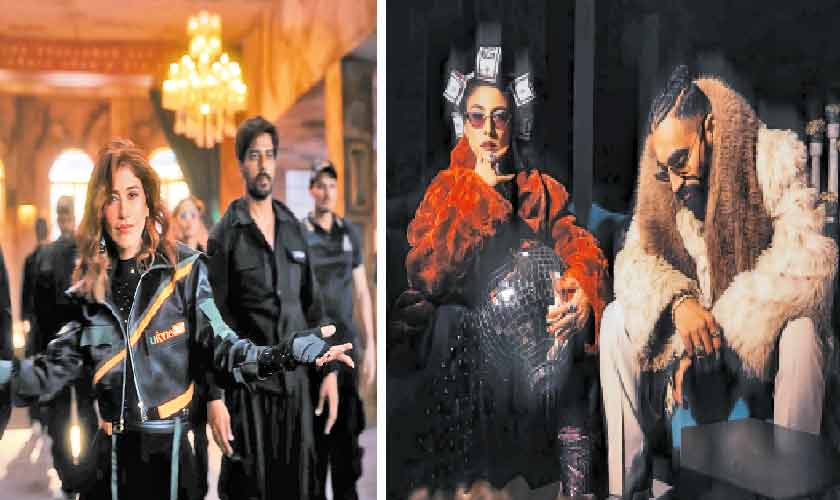
Arooj Aftab and Riz Ahmed: a collaboration that lingers
Arooj Aftab only appears on one track in Riz Ahmed’s Bait but honestly, you shouldn’t miss this one. It isn’t just a song you file away as a South Asian artistic collaboration or a lovely repre-sentation and move on. Doing that would be folly. Sit with it for a few seconds and it ends up being one of the most unexpectedly beautiful musical choices in the whole show.
The moment comes right at the end of the first episode and it sneaks up on you. It’s a reimagining of the Eurythmics’ ‘Sweet Dreams (Are Made of This)’, worked on together by Aftab and the UK electronic producer Anish Kumar. They haven’t thrown out what makes the original so immediately recognisable. That restless, slightly unnerving synth riff is still right there. But then Aftab’s voice comes in and something shifts. It’s somehow magical, like it’s been carrying something for a while. The edges soften but the unease doesn’t really leave. She sings, ‘Sunehre khwabon ka khel hai, main kaun hoon jo na kahe, saat samandar jaan li duniya, har koye yaha apne matlab ka hai, tera koi fiyada utha le ga, koi tumhe sab kuch de jaye ga, tumhe zaleel karke choray gay, tumhe yeh zulmi bana de gey’. The words carry the same cynicism as the original but from a different place, quieter and more worn down. A world where people are mostly out for themselves, where someone will either take advantage while pretending to promise you everything. It’s acknowledges how someone can and will grind you down through humiliation and power until you’re something entirely different. Is it bleak? Yes. But that’s what this reimagining needed. What makes it so beautiful is that Aftab doesn’t sing it like a warning or a confrontation. She sings it as if she’s someone who already knows this, which is why it hits differently. The riff underneath starts to feel stranger because of it, a little darker, carrying more than it did before. The song isn’t an overextended version so, even though it ends, it stays with you. Somehow, it feels less like a song that was chosen for the show and more like one that was always supposed to be there.

Bait is created by and stars Riz Ahmed, who plays Shah Latif, an out-of-work British-Pakistani actor grinding toward what might be his last shot, a final audition to play James Bond. The show orbits questions of identity, of what it costs to belong somewhere and of the small negotiations that never quite end. The music lives in that same in-between space.
The soundtrack, executive produced by Zubin Irani and Ahmed himself, has that quality of someone reaching into a really specific record collection, the South Asian film music of the 1970s sitting right alongside contemporary UK and South Asian voices. The EP brings together Jay Sean, Véyah, Jorja Smith, MC Shabba D and Amir Amor and the lineup doesn’t feel accidental. It feels like a point being made.
Ahmed has talked about it as a cultural landmark and you can hear why. It features artists from across the diaspora, saying quietly but clearly that a global desi music scene has arrived and knows exactly what it’s doing. When you listen to the EP as a whole, it stops feeling like a background score and starts feeling like a map of something.
“What makes Sweet Dreams (Are Made Of This)’ so beautiful is that Arooj Aftab doesn’t sing it like a warning or a confrontation. She sings it as if she’s someone who already knows this, which is why it hits differently. The riff underneath starts to feel stranger because of it, a little darker, carrying more than it did before. The song isn’t an overextended version so, even though it ends, it stays with you. Somehow, it feels less like a song that was chosen for the show and more like one that was always supposed to be there.”
And Aftab fits right into that. She’s not trying to take over the room. What she does is more interesting, she reframes it. A song that pretty much everyone already knows gets handed back to you feeling more ambiguous, more lived-in and a little less sure of itself. That’s genuinely difficult to pull off. And somehow, in just a few minutes, it tells you almost everything about what Bait is actually trying to do.
‘Paisa Bolay’ is saying the right things
Meesha Shafi and Talhah Yunus aren’t holding back in ‘Paisa Bolay’. The track takes a direct shot at wealth and power, stripped down to a basic hip-hop loop where the vocals do all the heavy lifting. Being blunt works as a message. And more importantly, they’re not just “saying it” for the sake of it. Over the last five years, Pakistani rap has made social and political critique the norm and everyone’s used to it now. The real demand today is for the music itself to feel as urgent as the lyrics. This is where ‘Paisa Bolay’ makes a leap in the right direction. The beat isn’t familiar, the song isn’t built around a catchy hook and there isn’t a single moment where the sound doesn’t amplify the anger in the words.
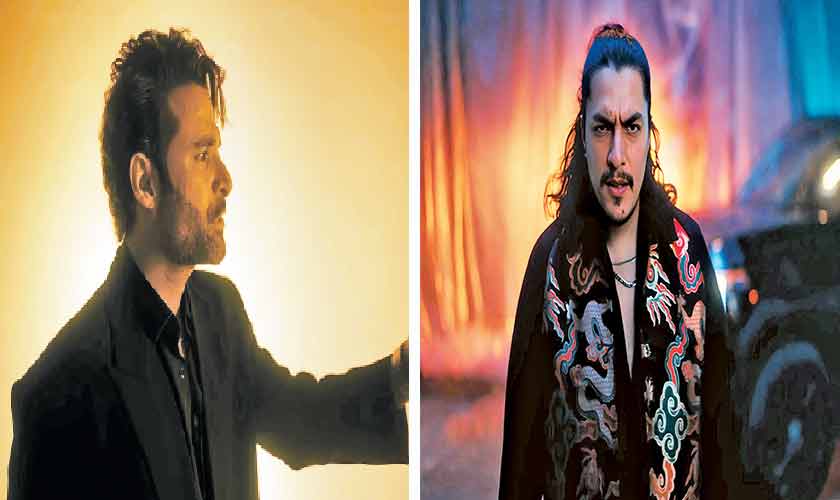
The production, handled by Abdullah Siddiqui and Meesha Shafi, is more than just competent. It’s effective and genuinely cool with raw, gritty edges in exactly the way the track needs. Unlike a half-baked project that can always be replaced by the next banger, ‘Paisa Bolay’ isn’t just another banger. It’s a fully-formed song that stays with you.
Credit to Abdullah Siddiqui and Meesha Shafi, whose years of working together continue to produce originals with a singular character. Talhah Yunus is a terrific rapper, but this is a collaboration he should take note of because it’s the kind of creative standard he and Talha Anjum would do well to bring to Young Stunners if critical acclaim matters as much as commercial success. Given how much music the two rappers release, together and separately, this is an important lesson to learn from.
‘Paisa Bolay’ is written and compo-sed by Meesha Shafi and Talhah Yunus and mixed and mastered by Abdullah Siddiqui. The video is directed by Aye Noor Fatima and executive produced by Meesha Shafi.
Pakistan Super League (PSL) anthems: the league knows how to make them. It has
forgotten how to keep them and the teams
are repeating the same mistake
Atif Aslam’s ‘Khelenge Beat Pe’ does its job. The rhythm is solid, the vocals are strong and it fits perfectly into a TV broadcast. As a piece of sports marketing, it’s perfectly competent but that competence is actually the problem here.
The early PSL anthems didn’t become hits just because they were well made. Tracks like ‘Khel Jamay Ga’ by Ali Zafar, ‘Tayyar Hain’ by Ali Azmat, Arif Lohar, Haroon and Asim Azhar and ‘Groove Mera’ by Naseebo Lal, Aima Baig and Young Stunners, both pro-duced by Zulfiqar Jabbar Khan (Xulfi), gained their power through repetition. They were played in stadiums and onscreen until they stopped feeling like adverts and started feeling like the soul of the tournament.
That kind of transformation takes time and continuity. You can’t force it, you just have to let it happen. The league, however, doesn’t follow this route. By dropping a brand new anthem every single year, it gets a shiny launch moment with fresh PR and social media hype but kills the chance for any song to actually stick. Music tied to sports needs time to soak into the culture. When you cut a song off after just one season, it stays a promotional track and never becomes an identity.
‘Khelenge Beat Pe’ follows the now standard formula: a catchy hook, a solid beat and a rap verse that doesn’t really stand out because the current strategy doesn’t ask it to. It just needs to work for a few months. This isn’t a creative failure since Atif Aslam more than delivers. It’s a strategic mistake. The PSL has already proven it can make anthems with staying power. Choosing to toss that history aside for yearly replacements is a choice the league can and should reverse. At this point, the PSL doesn’t need another anthem. It needs to remember the ones that already worked.
The same short term PR thinking shows up at the team level too. ‘Rise of Zalmi’, the official anthem for Peshawar Zalmi in PSL 11, feels less like a song built for longevity and more like a launch moment designed to generate quick buzz. Featuring Mahira Khan and Syra Yousuf and produced by Kashan Dawar, the high-energy track includes vocals from Bilal Ali, Nehaal Naseem, Wajid Layaq and Altamash Sever. It celebrates the team’s “Yellow Storm” spirit with a modern, high-tempo fusion.
The visuals are lively but slightly disjointed. With so many artists appearing in separate segments, the presentation feels scattered. A tighter collaboration, either featuring fewer performers or bringing everyone into one cohesive space, might have strengthened the identity. Syra Yousuf, however, stands out with relaxed, confident choreography and clear screen presence, while Mahira Khan appears mainly in one section that works, but the rest of her screen time, mostly walking, standing or observing, feels oddly static in comparison.
More importantly, the anthem arrives in a catalogue already filled with strong, recognisable Zalmi tracks. Previous songs include ‘Zalmi Raalal’ by Naughty Boy, Khumariyaan, Zahoor, Bilaal Avaz and Altamash Sever featuring Mahira Khan and Hamza Ali Abbasi, ‘Har Qadam Hai Zalmi’ by Farhan Saeed featuring Fortitude, ‘Kingdom’ by Abdullah Siddiqui featuring Altamash Sever, Mahira Khan, Esra Bilgic, Hania Amir and Ali Rehman, ‘Zalmi Da Pekhawar’ by Zeek Afridi and Gul Panra and ‘Aaya Zalmi’ by Zar Sanga, Sunny Khan Durrani, Zoha Zuberi, Tayyab Rehman and Zara Madani featuring Mahira Khan and Ali Rehman.

With a back catalogue like that, the smarter play might have been to lean into what already works rather than constantly chasing something new. ‘Aaya Zalmi’ with Zar Sanga’s inim-itable opening, ‘Kingdom’ with its layered production and ‘Zalmi Raalal’ with Khumariyaan’s gorgeous hybrid folk sound already have identity baked into them. Bringing them back across seasons could have built something deeper: a sonic signature the team owns. Instead, the yearly reset turns every new anthem into little more than a temporary campaign.
And honestly, this one doesn’t quite live up to what came before. The new song is missing some of Pashtun culture’s most compelling voices and that absence is hard to ignore. Syra brings energy, no question, but it’s a different kind of energy to Zar Sanga’s commanding opener or Khumariyaan’s folk-rooted warmth and the gap shows. The push to top the previous year ends up producing something more forgettable than what it replaced, which is a strange kind of goal.
At both the league and team level, the pattern is the same: prioritise the announcement, lose the anthem. Chase the moment, lose the memory.
Mahira Khan named
the problem. The
industry’s continued
inaction is the
actual story
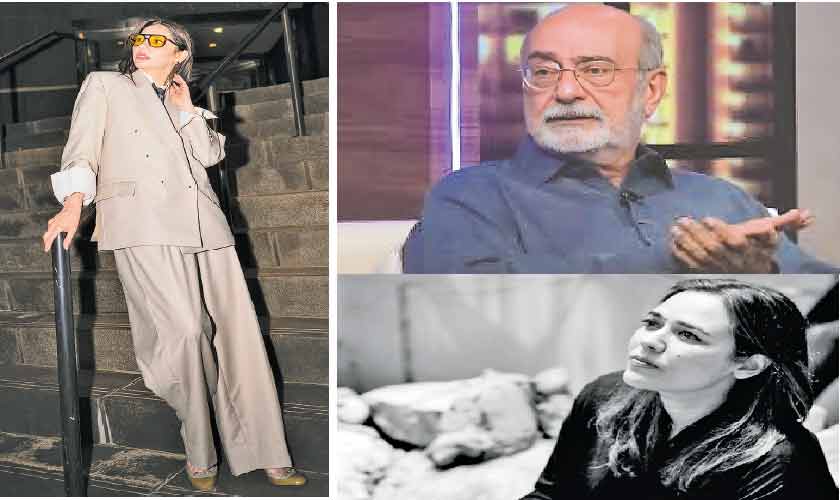
When Mahira Khan recently called out the massive pay gap between television’s top stars and junior crew members, the immediate wave of “yes, exactly” was telling. It proved that this isn’t some brand-new scandal, it’s the same conversation the industry has been having with itself for years.
As she explained, she believes artists should receive royalties, noting that while she isn’t advocating for Hollywood-style systems, at least “there the artist doesn’t go hungry.” Yet in Pakistan, many junior and supporting artists as well as technicians struggle despite the huge revenue channels earn from dramas.
Highlighting how the system leaves the most vulnerable without support, Khan added: “There are a lot of artists about whom you hear and you say that this shouldn’t have happened.”
The math is pretty simple and grim. While lead actors pull in huge per-episode fees and networks rake in advertising revenue, especially during peak-hours, the people actually building the show such as assistant directors, editors and technical teams, are left scrambling. Inconsistent rates, zero job security and delayed payments have become normalised with no way to fight back.
What makes it even harder to swallow is that the industry isn’t exactly broke. With YouTube monetisation, digital streaming and international deals, there’s more money flowing into Pakistani television than ever before. This isn’t a scarcity problem, it’s a distribution problem.
The system just isn’t wired to share the wealth and until it’s structurally forced to change, the people at the bottom will keep getting squeezed while the top stays comfortable.
This dysfunction becomes even clearer when you hear from people working within the system itself. Actor Syed Mohammed Ahmed and director Mehreen Jabbar describe similar struggles from different sides of the camera. In Pakistan’s entertainment industry, getting paid on time feels like a full-time job in itself. You aren’t just working, you’re chasing what you’ve already earned.
Ahmed’s experience is a perfect example. For him, being paid on time is a rare surprise, not the rule. Waiting three to four months has become the industry ‘norm’ and when production houses finally do pay up, they often act like they’re doing the artist a massive favour instead of fulfilling a basic legal obligation.
“Actor Syed Mohammed Ahmed and director Mehreen Jabbar describe similar struggles from different sides of the camera. In Pakistan’s entertainment industry, getting paid on time feels like a full-time job in itself. You aren’t just working, you’re chasing what you’ve already earned. Actor Syed Mohammed Ahmed’s experience is a perfect example. For him, being paid on time is a rare surprise, not the rule. Waiting three to four months has become the industry ‘norm’ and when production houses finally do pay up, they often act like they’re doing the artist a massive favour instead of fulfilling a basic legal obligation. Jabbar compares how different this is from working in the US. There, payment schedules are set in stone and respected. Here, there is no schedule, just the constant ‘pursuit’. This isn’t just a problem for the stars either. It hits everyone from directors to the lighting crew. But the people at the bottom: the spot boys and technicians, have it the worst. They do the heaviest physical labour with the least pay, no unions to back them up and zero job security.”
Jabbar compares how different this is from working in the US. There, payment schedules are set in stone and respected. Here, there is no schedule, just the constant pursuit.
This isn’t just a problem for the stars either. It hits everyone from directors to the lighting crew. But the people at the bottom, the spot boys and technicians, have it the worst. They do the heaviest physical labour with the least pay, no unions to back them up and zero job security.
Reform often stalls because it’s treated as a suggestion rather than a requirement. It’s not that people disagree, it’s that there is no enfor-cement. Personal appeals, no matter how famous the person making them, can’t replace the power of collective rules: fixed pay standards, formal contracts and bodies with actual authority to penalise violations. The question the industry needs to answer, not only discuss, is what it is willing to build to make the next conversation unnecessary.
Spotify’s SongDNA is
a better door to a room that’s still half-empty
Spotify’s SongDNA is a legitimate win for anyone who actually cares about who made the music they’re listening to. Putting credits, samples and creative links in the app makes everything easier. You no longer have to go on a detective mission across three different websites just to find out who produced a track. That’s a significant improvement and it’s worth giving Spotify credit for it.
However, a cleaner look doesn’t fix a messy system. The app can only show the data it’s given and metadata for non-Western music, especially Pakistani releases, is notoriously spotty. Accuracy depends on labels and distributors actually doing the paperwork and that discipline is usually weakest with independent artists and smaller local labels. SongDNA can show you the facts but it can’t invent information that was never uploaded in the first place.
Then there’s the paywall. Restricting credits to Premium subscribers feels like a strange move. Knowing who played the drums or sampled a classic beat isn’t a luxury feature, it’s basic documentation. Spotify didn’t hide this behind a subscription because it’s advanced tech, it did so as a business tactic. It’s important to call that out for what it is.
Ultimately, SongDNA is a great tool but it doesn’t solve the industry’s deeper data problem. It’s a better door but the room behind it is still largely in the dark.
SongDNA is still in beta mode right now, so hopefully things will improve when the final version comes out.