Print Story
X




Jonathan Anderson’s second womenswear show for Dior felt less like a fashion show and more like a quiet argument about how people actually get dressed.
| S |
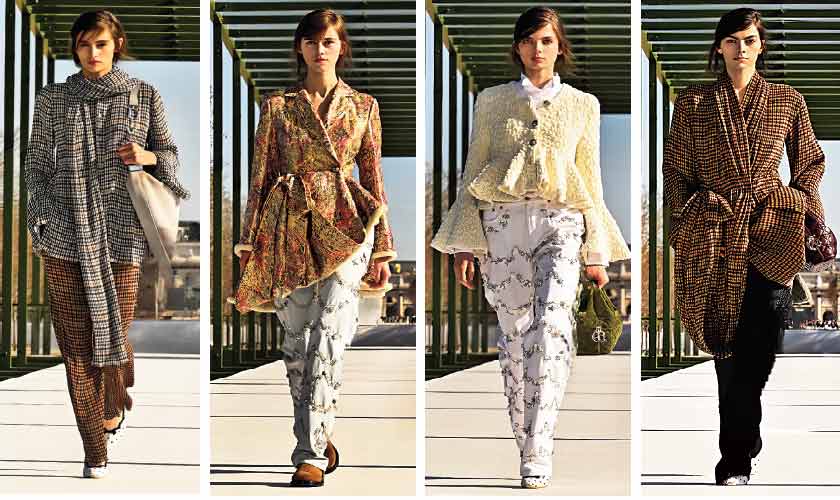
et in the Jardin des Tuileries, Jonathan Anderson’s latest show was all about clothes meant for the real world, moving with the wearer rather than standing frozen under a spotlight. While the collection felt soft and romantic at first, there was a serious level of engineering hidden beneath the surface. Peplums (short panels of fabric that flare out from the waist) weren’t there for nostalgia but to subtly shift where the eye settles on the body. Bubble hems were internally wired to keep their shape in motion and even the ruffles served a purpose, acting as a deliberate contrast to the sharper, more structured pieces rather than simply decorating them.
What became clear if you watched carefully, was how deliberately the collection played with weight. The heavy details kept landing low on the body, leaving everything from the waist up clean and uncluttered. The result was a tiny lag where the fabric trails just a split second behind the body’s movement. It’s ironic really, looking that effortless actually takes obsessive precision. But then again, that gap between how easy it looks and how hard it was to make, is pretty much the whole point of couture.
Ordinary clothes were treated with the same seriousnes. Jeans, shirts and robe coats weren’t just dressed up, they were completely reframed, making the old divide between everyday wear and special occasions feel entirely outdated. The prints had that same slightly off energy. What looked like loose painterly florals at first glance were actually engineered to look distorted. Nothing felt completely settled or finished. It was more of a feeling than a look, that lingering sense that something familiar is just barely out of reach.
The accessories were doing serious heavy lifting. Bags, gloves, and shoes weren’t just finishing touches but active participants, shifting proportions and grabbing attention. In several looks they were clearly the centrepiece, with everything else just playing a supporting role. There was also a real sense of practicality. Track pants, relaxed tailoring and easy-to-wear robe coats felt like pieces you could actually see yourself in. But even these weren’t totally straightforward. Every item had a little twist in the cut or the finish, just enough “edge” to keep it from feeling ordinary. You could tell they came from a specific vision, made by someone who actually had something to say.
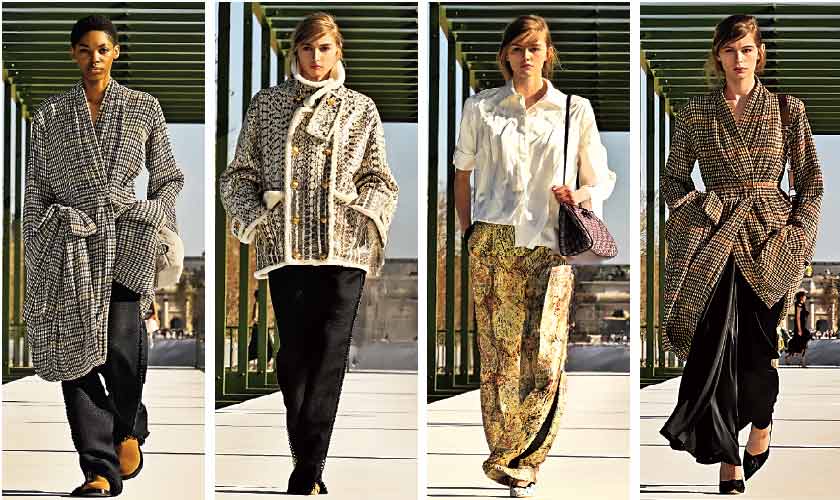
Underlying the whole show was a very current observation: seasonal dressing just doesn’t make sense anymore. We’ve seen that logic fading for years and this collection leaned into that by mixing heavy winter fabrics with lighters cuts and spring styles with a surprising sturdiness. It felt like a wardrobe built for the real world, one where the weather (and everything else) is pretty unpredictable.
The final point was probably the most relatable. The line between “dressing for yourself” and “dressing for others” has basically disappeared. Stepping outside today is a public act, whether we mean it or not. Rather than making that feel like a grand theatrical statement, the collection simply acknowledged it, offering clothes that take this reality as seriously as we do.