Print Story
X




Anger that discriminates between the strong and the weak is neither a sign of sincerity nor of strength
| T |
here was a man among my relatives who possessed considerable wealth. With it came authority that seemed to extend beyond material comfort and influenced his dealings with others. He was habitually angry. When matters did not suit his will, he would erupt in fits of indignation, directing harsh words at those he considered socially or financially inferior. Most of his friends and relatives, rather than confronting him, would excuse it saying he suffered from high blood pressure. The implication was that his anger was involuntary, therefore pardonable. This way, his excesses were tolerated, if not endorsed.
One day, an incident revealed a truth more instructive than the medical justification. A dispute arose between him and a neighbour whose social standing was not insignificant—one of his sons held a senior position in the police and another resided in the United States. The matter was taken before a panchayat. There, in a gathering where consequences were not easily dismissed, the neighbour spoke plainly and firmly. To the surprise of many, my relative did not lose his temper. His blood pressure, so often cited as the cause of his fury, apparently remained under control. He listened, measured his words and responded with restraint. An elderly man present at the gathering remarked with quiet irony that his anger and blood pressure were indeed most discerning; they rose only in the presence of the weak.
This episode carries an insight on a pattern of conduct, particularly the nature of power and its exercise. Anger, often portrayed as a spontaneous and uncontrollable emotion, is in many cases neither blind nor indiscriminate. It is calculated, selective and frequently directed where resistance is least expected. The strong, it appears, are often spared its harshest expressions; the weak are its frequent recipients.
This recollection comes to mind when one observes, in recent times, the language employed by political leaders on the global stage. The conduct of statesmen has traditionally been guided by a sense of decorum, shaped by the recognition that their words carry consequences far beyond personal sentiment. Diplomacy, by its very nature, demands restraint, dignity and a careful calibration of language. History and some contemporary events demonstrate that this standard has not always been upheld.
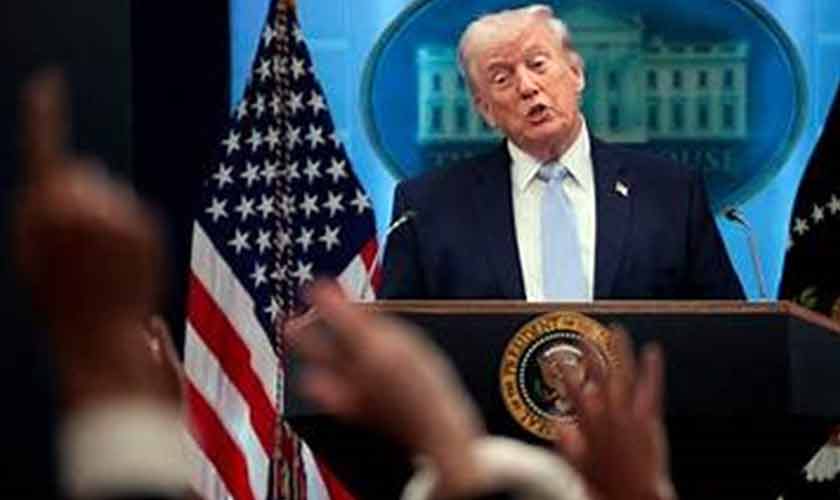
President Donald Trump of the United States recently used language in reference to Iran that departed markedly from the conventions of diplomatic discourse. His remarks, laced with profanity and overt hostility, were in sharp contrast to the measured tone expected in international relations. It is difficult to imagine that similar language would be employed against nations such as China, Russia or North Korea. The asymmetry is telling. Just as in the case of my relative, the harshness of expression appears to find its direction where the likelihood of retaliation is perceived to be limited.

Perhaps the most striking example emerged during the presidency of Richard Nixon, whose secretly recorded conversations, later released in the wake of the Watergate scandal, revealed a pattern of language that shocked the public conscience. These recordings exposed not only profanity but also remarks that carried undertones of prejudice and intolerance.
This is not, however, a new phenomenon in American political history. The use of coarse or profane language by presidents has been documented across generations. In the past, however, it was confined to private conversations, later revealed through memoirs, recordings or historical inquiry. Harry S Truman was known for his blunt expressions, once referring to General Douglas MacArthur in terms that would scarcely befit formal address. John F Kennedy, admired for his eloquence in public, was reputed to employ decidedly less refined language in private moments. Lyndon B Johnson carried this tendency further, his speech often coloured by rustic and unvarnished expressions that reflected both his personality and political style.
Perhaps the most striking example emerged during the presidency of Richard Nixon, whose recorded conversations, released in the wake of the Watergate scandal, revealed a pattern of language that shocked the public conscience. These recordings exposed not only profanity but also remarks that carried undertones of prejudice and intolerance. In more recent times, George W Bush and Barack Obama have, on occasion, been associated with informal or coarse expressions, though generally in private or informal contexts.
What distinguishes the present moment is not merely the use of such language, but its open and public deployment, particularly through the immediacy of social media. President Donald Trump has frequently articulated his views in terms that blur the line between political rhetoric and personal invective. His recent statements concerning Iran, including explicit threats accompanied by profane expressions, exemplify a departure from the traditional norms of statecraft. The gravity of international conflict, especially in a region as sensitive as the Middle East, would ordinarily call for language that seeks to de-escalate rather than inflame.
The implications of such a shift are not confined to matters of etiquette. Language shapes perception; perception, in turn, influences action. When the discourse of leadership descends into vulgarity, it risks normalising a tone that erodes respect, both domestically and internationally. It diminishes the moral authority that nations seek to uphold and complicates the delicate task of diplomacy.
The lesson, whether drawn from a modest local panchayat or corridors of global power, is consistent. Strength is not demonstrated through the ability to intimidate the weak, nor is authority enhanced by an abandonment of restraint. True leadership lies in the capacity to exercise power with wisdom, to speak with dignity even in moments of tension and to uphold standards that inspire respect rather than fear.
Anger that discriminates between the strong and the weak is neither a sign of sincerity nor of strength. It is, rather, a reflection of calculation. When such calculation finds expression in the language of those who shape the destinies of nations, it becomes not merely a personal flaw, but a matter of global consequence.
The writer is a freelance columnist