Print Story
X




Organisations like Sindh Science Society can get young people to take interest in science
| S |
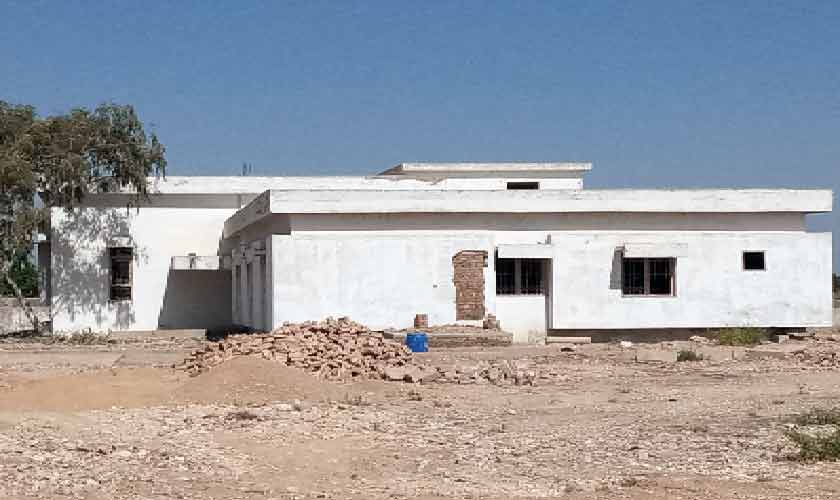
cience enthusiasts in Jamshoro and Hyderabad are worried that Sindh Science Society, the only organisation of its kind in Jamshoro, has been inactive for years. The Society’s building, close to Jamshoro Railway Station, used to be a thriving centre where science enthusiasts – students as well as mentors - would congregate to study and take part in conferences.
The society was founded in 1960. Its stated goal was advancement of science in Sindh. Prof Dr Mumtaz Ali Qazi and some of his colleagues at University of Sindh, Jamshoro, founded the organisation to promote scientific awareness among the people of Sindh, particularly students. They also wished to enrich the Sindhi language by producing scientific literature. Their inspiration came from organisations like the Royal Society. In 1971, the society started publishing a reputable science magazine.
The journal was published monthly until 1989. After that came a protracted gap. Its last issue was published in 1998. The society also held three significant scientific conferences in 1972, 1973 and 1975. It also started a research journal called Scientific Progress and published thirteen books on various topics.
Dr Murtaza Dharijo, a former president of the Sindh Science Society and editor of its science magazine, says that the society’s building, completed in 1977, was a gift from the Mehran Engineering College (now Mehran University of Engineering and Technology). A portion of the building was later handed to the police the same year.
Some members of the society later sought to reclaim the building. Pir Mazhar-ul-Haq moved a resolution in this regard in the Sindh Assembly in 1990. However, nothing came of the effort. The case was submitted to the provincial ombudsman in 1994 who ruled that the building should be handed over to the elected body of the society. However, Mehran University management refused to comply with the order. Later, the society won a suit filed before the Kotri civil court in 1995. The university administration filed an appeal against the judgment before the High Court. The society won the case once more. However, the university still maintained possession.
The society now faces significant obstacles to its work. It has not held a conference in several years and there has been no scientific publications. The building, too, has become dilapidated.
The society was registered under Societies Act of 1876. Its office bearers have included prominent people including MM Qazi, Wadal Shah, MM Qureshi, Abdul Rahman Memon and Ali Murtaza Dharijo. The university administration has recently expressed intent to begin law classes in the building.
Asad Habib Palari, a lecturer at Muslim Science Degree College, Hyderabad, and an MPhil scholar, says there aren’t many organisations devoted to advancing science. He says the Science Society has a crucial role. He says that “it is the only place in the city where one can discuss scientific knowledge.”
Regrettably, nobody is prepared to assume responsibility for this establishment. Zulfikar Ali Bhutto, the Society’s president at the time, had spoken at the first scientific conference in Sindhi in 1971. Bhutto said that he was happy that the Sindh Science Society was holding a science conference at the University of Sindh to advance scientific understanding. He acknowledged the difficulties the university faced but expressed optimism that the required assistance will be forthcoming to guarantee improved learning environment.
Membership categories include founding members, general members, life members, patrons, temporary members and student members. A university degree is required for general members. However, student and temporary members are exempted. Its office bearers include a president, two vice presidents, a general secretary, an associate secretary, two treasurers, a publicity secretary and 13 councilors.
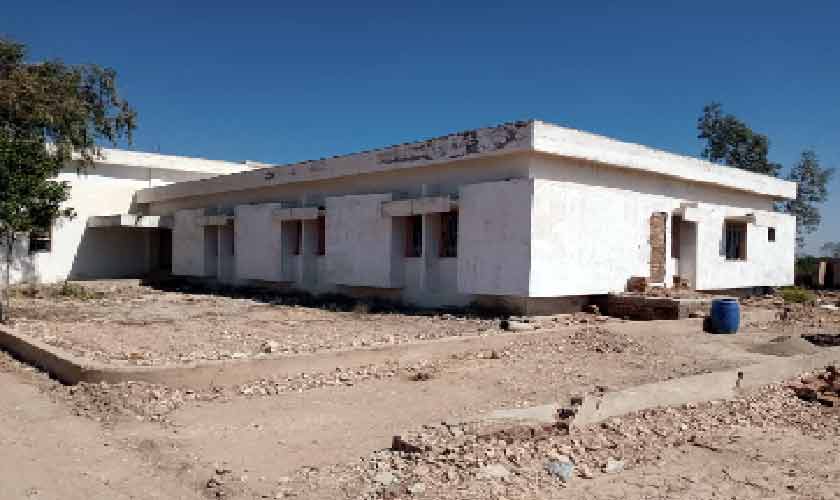
Dr Murtaza says the decline of such institutions is a result of society’s general lack of enthusiasm for research. He says that the edifice, is currently in poor condition, can only be restored if science is accorded the respect it deserves. The society used to have a sizable library. However, the books were taken away by law enforcement.
Dr Murtaza says the installation of a functioning governing body and the translation and dissemination of contemporary scientific information are necessary to save the society. He laments that most Sindhi newspapers ignore science and technology. Reviving organisations like the Sindh Science Society, he says, is necessary to get young people to take interest in science.
The building is currently undergoing construction with the addition of new rooms meant for law classes.
“The building is owned by the University of Sindh. Some Sindh Science Society officials insist that the building belongs to them and was built by the Education Department. There is currently no governing body to oversee the Society’s operations. No science magazine is being published. In the interest of the community, the university administration has chosen to use the building for law classes. Objections to this decision are pointless. It will only serve an educational purpose,” says Nadir Mughiri, a spokesperson for the University of Sindh.
The last elected governing body of Sindh Science Society was dissolved in 2021. No body has been elected since then. A body was normally elected for a two-year term.
“There is still optimism that a new elected body will soon assume its duties. A 15-member management committee has been mandated with the conduct of election. Requests for conduct of election have been consistently turned down by society secretary Rafiq Lashari. Azhar Shah, president from 2019 to 2021, says he is not aware of the university’s plans.
The author is a writer, blogger and journalist