Print Story
X




A man’s attempt to find his estranged daughter leads him to the underworld

| I |
n an era where crime thrillers often rely on spectacle over substance, Run Away centres the genre on something far more unsettling: the fragility of familial bonds. Based on the gripping work of Harlan Coben and expected to follow the stylistic footsteps of his previous collaborations with Netflix, this series offers more than just a mystery. It becomes a psychological excavation of parenthood, control and the haunting question of how far is too far when it comes to saving someone you love.
Run Away tells the story of Simon Greene, a seemingly stable man whose life fractures the moment he spots his estranged daughter in a park. She appears disheveled, distant and hard to recognise. What begins as a desperate attempt to reconnect soon spirals into a relentless pursuit through a shadowy underworld filled with drugs, manipulation and false identities. The narrative wastes no time pulling viewers into its tense atmosphere, where every answer breeds new questions and trust becomes increasingly rare.
The strength of Run Away lies in its character-driven storytelling. Every character feels psychologically layered rather than purely functional. Simon Greene, the central figure, is written as a deeply conflicted father whose desperation gradually exposes his controlling tendencies, making him both sympathetic and unsettling. His daughter, often portrayed with a fragile yet defiant presence, embodies the tension between vulnerability and autonomy, reflecting the broader theme of generational disconnect.
If the adaptation follows the casting approach of other Harlan Coben projects on Netflix, audiences can expect grounded, performance-driven actors who rely on subtle expressions rather than dramatic excess. Supporting characters are equally significant, each carrying hidden motives and moral ambiguity. This enhances the narrative’s unpredictability and keeps viewers wondering who can be trusted.
What distinguishes Run Away from more formulaic thrillers is its psychological depth. Rather than presenting a straightforward missing person plot, the story delves into the internal dissonance of its protagonist. Simon is not simply chasing his daughter. He is also chasing a version of reality that aligns with his own need for control. His journey becomes symbolic of parental anxiety - the inability to accept that children can and will become strangers. This internal conflict is where the show finds its strongest footing, transforming external action into emotional turmoil.
In a world where digital and physical realities increasingly overlap, the idea of losing someone without them truly disappearing feels especially relevant. The series subtly critiques the illusion of proximity in modern families and suggests that it does not necessarily lead to understanding.
Thematically, Run Away thrives on the concept of cognitive dissonance. Simon’s perception of himself as a good father clashes with the reality of his actions, which grow increasingly obsessive and morally ambiguous. This tension mirrors real-life psychological struggles, making the story both thrilling and deeply relatable. It raises uncomfortable questions: is love inherently selfless, or is it often a disguised form of control? At what point does protection become possession?
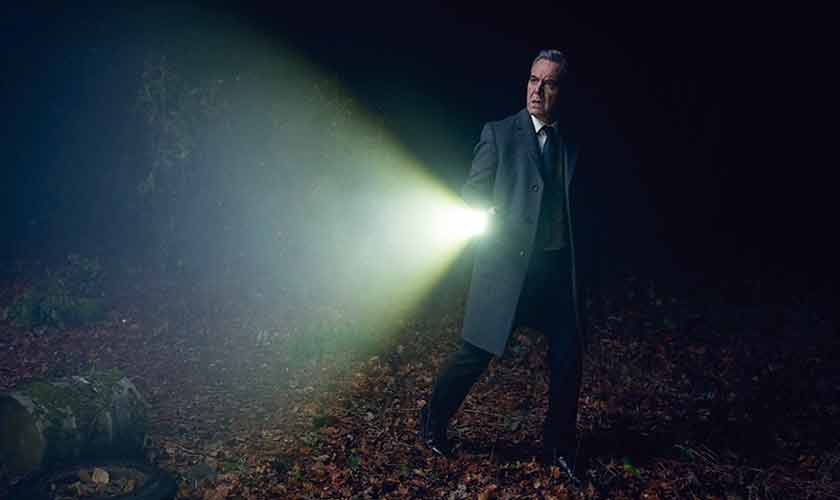
Visually, if the adaptation remains faithful to the tone of earlier Coben series like The Stranger and Stay Close, audiences can expect a muted, almost claustrophobic aesthetic. Dark palettes, tight framing and urban isolation are likely to dominate the screen, reinforcing the protagonist’s psychological entrapment. These stylistic choices are not merely decorative. They serve as extensions of the narrative and immerse viewers in a world where clarity is always just out of reach.
Another compelling aspect of Run Away is its treatment of secondary characters. Unlike many thrillers that reduce supporting roles to simple plot devices, this story allows its ensemble to develop meaningfully. Each character, whether ally or antagonist, carries distinct motivations, secrets and moral complexities. This layered characterisation enhances the unpredictability of the plot and ensures that viewers remain constantly engaged.
However, the story is not without potential pitfalls. Coben’s narratives are often criticised for relying on coincidence and last-minute revelations. Run Away risks encountering the same issue. If not handled carefully, the accumulation of twists may feel less like organic storytelling and more like manipulation. The adaptation will need to balance suspense with plausibility so that its surprises feel earned rather than forced.
That said, the emotional resonance of the story is likely to overshadow its structural weaknesses. At its heart, Run Away is not about crime. It is about loss. It explores the loss of innocence, the loss of control and ultimately the loss of the idealised family unit. Simon’s journey is as much about confronting his own limitations as it is about finding his daughter. This duality gives the narrative a sense of depth that elevates it beyond standard genre conventions.
At its heart, Run Away is not about crime. It is about loss. It explores the loss of innocence, the loss of control and ultimately the loss of the idealised family unit.
Run Away taps into contemporary anxieties surrounding youth, addiction and emotional disconnection. In a world where digital and physical realities increasingly overlap, the idea of losing someone without them truly disappearing feels especially relevant. The series subtly critiques the illusion of proximity in modern families and suggests that it does not necessarily lead to understanding.
Visually, Run Away is expected to embrace a restrained yet immersive aesthetic, consistent with the tone seen in The Stranger and Stay Close. The series is likely to employ a muted colour palette dominated by greys, blues and dim lighting to create a sense of emotional coldness and psychological confinement. Cinematography plays a crucial role, with tight framing and shadow-heavy compositions that mirror the protagonist’s internal turmoil and the secrecy surrounding the plot. Urban settings are often depicted as isolating rather than vibrant, reinforcing the theme of disconnection despite physical proximity. The visual design avoids flashy effects and focuses on atmosphere, using lighting, space and composition to build tension, making the environment feel like an extension of the characters’ fractured mental states.
Run Away promises to be a compelling addition to the modern thriller landscape. With its intricate plotting, psychological insight and emotionally charged narrative, it has the potential to captivate both casual viewers and critical audiences alike. Whether it ultimately succeeds will depend on its execution, but the foundation is undeniably strong.
More than just a story about a father looking for his daughter, Run Away becomes a meditation on the limits of love and the dangerous lengths people are willing to go in order to preserve it.
The writer has a degree in psychology with a minor in mass communication. She can be reached at [email protected]