Print Story
X




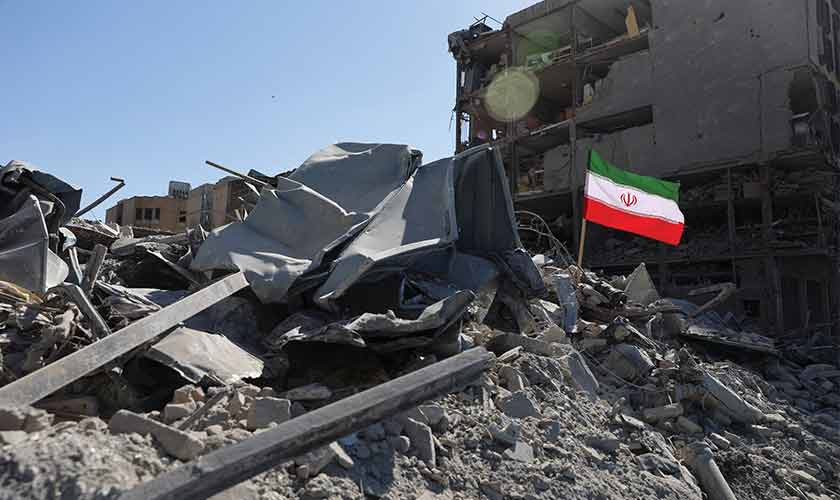
The US and Israel took a range of military measures to damage Iran. Despite setbacks, the war has not crippled the country
| T |
he US-Israel war on Tehran has halted following a Pakistan-brokered ceasefire on April 8. Regional and global economies already face a financial fallout worth billions of dollars, driven by the closure of a critical global oil chokepoint, the Strait of Hormuz, for over five weeks. Large-scale disruptions, particularly in energy markets, have intensified. Economists are drawing parallels to historical oil shocks, most notably the 1973 oil crisis, raising concerns about how close the global economy may be to a recession. The war, which commenced on February 28 this year, began amid ongoing Oman-backed negotiations between the two countries in Geneva. A day before the US launched its attack on Iran, the Omani foreign minister had remarked that Iran had agreed to degrade its current stockpiles to the lowest level possible, and that a deal could be achieved amicably in the subsequent months. However, the very next day, the United States and Israel, in a joint military action, attacked Tehran. In retaliation, Tehran targeted American bases in the Middle East, causing severe damages to infrastructure, which, according to reports, amounted to $800 million in the first two weeks.
The US-Israel strikes, which killed Iran’s supreme leader Ayatollah Ali Khamenei, have undoubtedly added to the growing list of actions under the Trump administration that demonstrate a complete disregard for international society and the rules-based order. Notably, while covert interventions have long been a persistent feature of American foreign policy, under Trump, the country has shifted toward more overt and direct forms of aggression and intervention abroad. This has undermined the liberal international order.
During his first term, American airstrikes had killed Major Gen Qassem Soleimani. Similarly, months after assuming office in his second term, the US struck Iranian nuclear facilities, marking the beginning of the 12-Day War that ended in June 2025 through an Oman-mediated ceasefire.
A year later, as the United States continues its campaign against Iran, its objectives in the war appear increasingly inconsistent, particularly with regard to Iran-backed Hezbollah.
Broadly, according to various Trump administration officials, the goals included destroying Iran’s missile capabilities and naval infrastructure; preventing it from acquiring nuclear weapons; and curtailing the Iranian regime’s support for allies across the Middle East. Additionally, Washington envisioned a complete regime change in Iran.
To achieve these objectives, the US took a range of military measures. While these actions inflicted significant damage on Iran’s nuclear facilities and missile capabilities, they failed to achieve regime change, despite mass protests that had initially suggested the possibility of such an outcome.
Similarly, American efforts to curb Hezbollah also remained unsuccessful. The group conducted large-scale attacks on Israel, straining its Iron Dome defence system. The Trump administration’s request to Congress for an additional $200 billion to fund the Iran war also raised concerns among lawmakers about the mounting financial costs of the conflict.
Despite these setbacks, the war did not cripple Iran.
While covert interventions have long been a persistent feature of American foreign policy, under Trump, the country has shifted toward more overt and direct forms of aggression and intervention abroad.
Although the attacks damaged its nuclear facilities, Iran largely succeeded in sustaining their operations, particularly by maintaining strong domestic support. It was, in fact, able to impose on the US what can be termed “deterrence by punishment,” under which a state undertakes strict economic and military actions to impose severe costs on an adversary. Iran was also able to expand the conflict horizontally by targeting American military bases in the region and closing the Strait of Hormuz—the latter further compounding difficulties for the US.
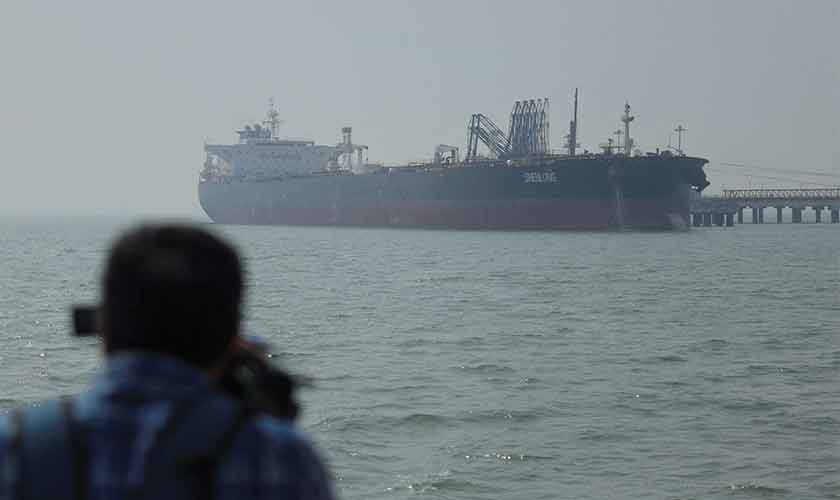
The Strait’s closure was initially portrayed by the US as a temporary disruption. However, it later went on to urge its NATO allies to assist in securing it. Trump’s appeal was met with resistance from NATO allies, who highlighted that the war had been initiated without prior consultation. The closure disrupted global oil supplies and drove up fuel prices worldwide.
More recently, Iran also threatened to close the Strait of Bab al-Mandeb, with support from its Houthi allies in Yemen. Notably, Bab al-Mandeb is another major global chokepoint, located between Yemen and Djibouti, connecting the Red Sea to the Indian Ocean. Analysts warned that a simultaneous closure of both straits could halt approximately 25 percent of global oil and gas supplies.
In such a scenario, the impact on the US and global economy would have been severe, significantly increasing the likelihood of further escalation—a phenomenon described by American political scientist Robert A Pape as the “escalation trap.” According to Pape, the trap emerges when the initiating state experiences strategic disappointment despite early success in achieving its objectives, marking the first stage of the trap. In the second stage, the targeted state responds by expanding the conflict horizontally, bringing in additional actors and raising the overall cost of the war. In the third stage, the initiating state escalates further in an attempt to regain leverage. This creates a cycle of continuous escalation that ultimately pushes the conflict to a scale far beyond what any of the parties had initially intended.
The United States’ increasing reliance on unilateral coercive measures suggested a willingness, alongside Israel, to pursue a similar trajectory, potentially escalating the war in search of decisive gains, whether by securing access to Iran’s enriched uranium or targeting the country’s leadership.
However, such objectives were unlikely to go uncontested, as the Islamic Revolutionary Guard Corps appeared prepared to mount sustained resistance against American and Israeli forces on its own soil.
Following the recent ceasefire brokered by Pakistan, both countries are claiming victory. While Iran has allowed shipping traffic through the Strait of Hormuz—the reopening of which had been a central objective of the Trump administration—it has also advanced a 10-point plan calling for a complete end to the war and lifting of sanctions.
The ceasefire remains fragile. Its durability will depend on the willingness of both sides to translate this short-term de-escalation into a more sustainable political settlement over time. Importantly, any meaningful peace process must also urge Israel to halt its bombing campaign in Lebanon. The US should also play a constructive role in facilitating a mutually agreed resolution to the Palestine conflict—the underlying driver of the halted Iran war and a continuing source of future armed conflicts in West Asia.
Ejaz Hussain has a PhD in political science from Heidelberg University and post-doc experience at University of California, Berkeley. He is a DAAD and Fulbright fellow and an associate professor. He can be reached at [email protected].
Malik Mashhood is a graduate teaching associate at the Lahore School of Economics.