Print Story
X




Well-being begins not with perfection, but with order
| I |
n all our homes, we have a storage room. It sits quietly behind a door that rarely opens.
Inside, old trunks lean against the walls; fabrics are folded carefully into corners; wedding decorations rest in newspaper wrapping, waiting for a celebration that has passed. Placed gently are things too meaningful to discard but too inconvenient to display; preserved but rarely revisited. Nothing is thrown away.
Over time, the room grows dense. Not necessarily chaotic, just heavy. The air changes slightly when you enter it. Dust settles on what was once precious. What is kept for safety slowly begins to age.
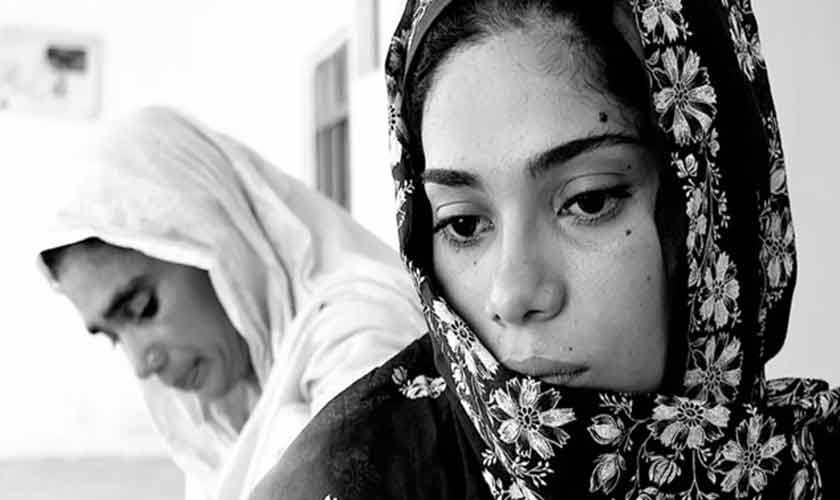
Our emotional lives are built in the same way. There is unspoken anger; erased ambitions; the quiet ache of wanting something different from life; the exhaustion of always adjusting. For many women, especially where composure is prized above most virtues, these emotions are not real enough to be confronted and are thereby relocated inward. The nervous system becomes a storage room, absorbing what cannot be expressed, carrying what cannot be displayed.
Nothing too worrisome, of course. We are “traditional that way.” The vocabulary of nervous systems and emotional rest sits awkwardly in homes where composure is the highest form of femininity. If a word cannot be placed on the dinner table without causing discomfort, it is simply never spoken. The discomfort, however, remains; it only moves inward.
A woman wanting space raises concern. For those carrying the entire emotional labour of a family, there are clearly ‘more important’ things to address. After all, the institution of home, of family, of marriage functions because of her. A daughter seeking solitude raises suspicion. Women hesitate to soak sunlight even on their own terraces.
Let that settle for a moment.
Protection is offered as an explanation. It sounds loving. It sounds responsible. It sounds like care.
But what exactly are we protecting? Clearly not their mental, physical or emotional well-being. Even when concern is genuine, it rarely makes room for personal space or emotional rest. It guards the body from the outside while leaving the interior entirely unattended.
The human body does not protest loudly. It adapts.
When stress lingers, cortisol lingers with it. Sleep grows lighter. Hormones drift out of rhythm. The relationship is not linear; rather, it compounds. Sustained cortisol elevation worsens insulin resistance, which deepens the hormonal disruption already under way, quietly and without announcement.
Women have long carried the emotional weight of households. It is a kind of strength, but strength, too, requires maintenance.
Across South Asia, an estimated 20 to 30 per cent of women show symptoms associated with polycystic ovary syndrome. In Pakistan, more than one in three women are overweight or obese. These are most often framed as lifestyle failures like discipline, diet and routine; rarely as storage. Rarely as the accumulated consequence of long-term vigilance; of restricted movement; of emotional labour carried daily, invisibly, without relief.
When cycles become irregular or fertility becomes fragile, commentary arrives swiftly; wight becomes conversation; bodies become public property. The symptoms are examined with great care, yet the accumulation that produced them is not. Like the storage room, we look at what has deteriorated and wonder why.
A nervous system that has never been allowed to fully exhale does not simply reset. It learns to remain alert. It scans the tone before entering a room. It moderates desire before it can be spoken. It carries not only its own weight, but also the emotional equilibrium of an entire household. Women, more often than not, become the quiet regulators of everyone else’s atmosphere; absorbing what others cannot hold, smoothing what others cannot face.
Emotional labour does not dissolve; it settles. Like everything else placed in that room, it waits.
There is a quiet irony in how we evolve. We modernise beautifully when it benefits us: businesses and schools go online; careers pivot; systems are updated. We declutter economically with remarkable efficiency. Yet when it comes to emotional inheritance and examining what we have carried for generations, stored without question, we hesitate.
The door remains closed, perhaps because opening it would require sorting. Some things would be found useful again; some would need to be discarded; some would reveal that what we thought we were protecting has begun to decay.
The storage room itself is not the problem; neglect is. When rooms remain unopened for too long, even the most precious things begin to gather dust.
Perhaps well-being begins not with perfection, but with decluttering; with light entering spaces that have been sealed out of habit; with asking whether what we are preserving is still of use.
Women have long carried the emotional weight of households. It is a kind of strength, but strength, too, requires maintenance.
What we store without tending eventually changes form. The body, patient and loyal, carries what we do not sort, until it gently asks us to open the door.
The writer is a sociologist. She can be reached at Roaringbrown@yahoo.com