Print Story
X

| T |
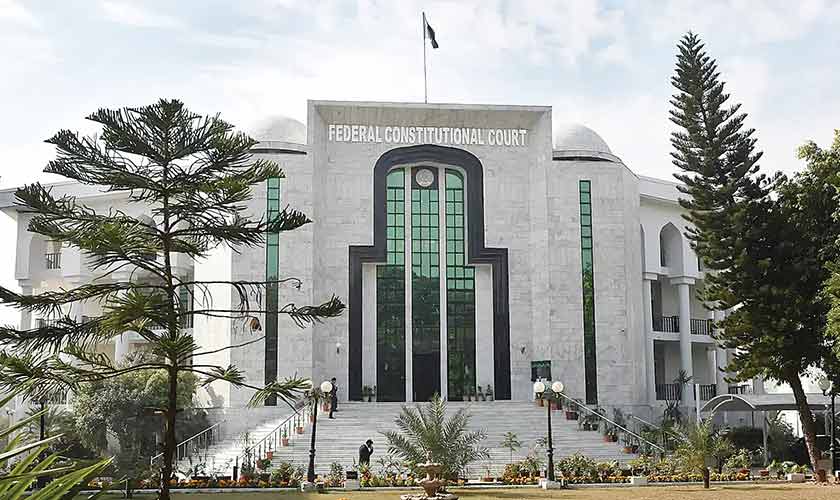
The recent Federal Constitutional Court ruling in the child marriage-forced conversion case is about a father’s loss, a daughter’s apparent defiance and a legal system trapped in a paradox. At its heart is a girl who went out for a routine breakfast and never returned home, only to resurface in a courtroom as a convert and a newlywed, claiming she had reached the legal age for marriage.
On March 25, the FCC announced a verdict upholding the validity of the marriage between the girl and a Muslim man. It rejected a petition for a writ of habeas corpus filed by her father, Shahbaz Masih, who was seeking her recovery. Earlier, he had lodged a complaint with the police, alleging abduction. However, during the investigation, Maria appeared before a magistrate and recorded a statement saying she had married Shehryar of her own free will. She said she had not been abducted. Subsequently, the father filed a petition under Section 491 CrPC before an additional sessions judge seeking her recovery. The petition was dismissed on October 9, 2025. A petition challenging that order was also dismissed by the Lahore High Court on October 17, 2025. After that the father approached the FCC. Headed by Justice Syed Hasan Azhar Rizvi, a two-judge bench held that Maria, who had embraced Islam, was of mature age and in lawful custody of her husband.
This case is similar to Huma Younus and Arzoo Raja’s cases. In Huma’s case, school and baptismal records showing that she was 14 were brushed aside by the court with the observation that she had reached puberty. In Arzoo’s case, a 43-year-old man had converted and married a much younger girl. These aren’t just legal disputes; they are signs of a social rot. A forged marriage certificate and a coached statement can apparently override more than a decade of parental care.
During the investigation, Maria appeared before a magistrate and recorded a statement saying she had married Shehryar of her own free will. She said she had not been abducted.
In Maria’s case, too, the court chose to go by “apparent age” and “openly professed” faith rather than formal birth record. The passage of the Islamabad Capital Territory Child Marriage Restraint Act (2025), which sets the age of marriage at 18 for both men and women, was supposed to be our shield. Yet, this case has shown that a law is only as strong as the judge who enforces it. If courts continue to treat the Child Marriage Restraint Act as a mere penalty for the groom rather than a protection for the girl, will they effectively continue to validate ‘abductions’ as ‘elopements.’ Here is a legal machinery that only prioritises the state’s pursuit of procedural efficiency.
If a court can look at a birth certificate and dismiss it as a mere scrap of paper, and look at a child and call her a woman, then we must ask ourselves, what exactly is the “age of majority” in Pakistan. Is it 18 years of growth? If our courts continue to validate ‘free will’ in the absence of maturity, are we upholding a constitutional right, or are we simply providing the state’s official seal of approval for the theft of our daughters?
The writer is a law graduate from Ziauddin University. She can be reached at, [email protected].