Print Story
X

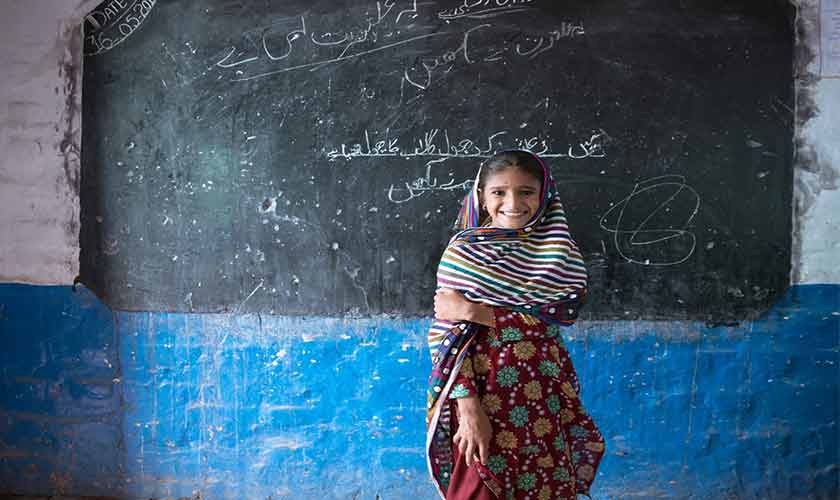
“I am not a burden. I am the foundation.”
| T |
he words came from a teenage debater from the Punjab at a recent Girls Fest in Lahore. She spoke with the conviction of a generation that refuses to inherit the limits placed on the one before it. Yet Pakistan’s education financing tells a different story.
The latest Public Financing in Education report produced by the Pakistan Institute of Education in collaboration with the Ministry of Federal Education and Professional Training offers a valuable snapshot of how education is funded across the country. Like a pathological report, it lays bare the strengths and weaknesses of the system, providing rare transparency. It reflects growing alignment among development partners — organisations including the World Bank, the UNICEF and the Foreign, Commonwealth and Development Office of the British government, alongside civil society - that have repeatedly called for stronger education financing and clearer budget tracking, including dedicated spending for girls’ education.
The broader context remains sobering. The recent national report on girls’ education shows that 26.2 million children in Pakistan remain out of school, including at least 13.4 million girls. These numbers are alarming but not surprising. They reflect long-standing structural gaps in how education is financed, prioritised and delivered.
The root of these gaps lies in how Pakistan spends what little it allocates. Public spending on education remains far below global benchmarks, hovering around 1 percent of GDP — well short of the 4–6 percent recommended internationally to build a resilient education system. Even within existing budgets, the composition of spending raises difficult questions. Across provinces, most education budgets are absorbed by current expenditure — mainly salaries. Development spending, which could expand access or improve learning environments, remains limited. Non-salary spending — funding for textbooks, teaching materials, school maintenance and basic facilities — is often minimal. In effect, the system is financed largely to maintain itself rather than to transform outcomes.
This points to a deeper challenge in how the state measures progress. The system often rewards inputs rather than outcomes. Success is frequently measured through enrolment numbers, classrooms constructed and salaries paid — indicators that matter, but that do not necessarily tell us whether the system is delivering meaningful progress, particularly for girls. The outcomes that matter most receive far less consistent policy focus: girls completing secondary school, reductions in dropout between Grades 9 and 10, measurable learning gains and transitions into higher education, skills training or employment. The lesson is straightforward — what gets measured and funded gets prioritised. The Finance Ministry must therefore make a clear commitment: all education budgets must include gender-disaggregated lines and all allocations must be tracked for their impact on girls’ enrolment and retention. Every rupee not aligned with outcomes that keep girls in school is a missed opportunity.
Introducing gender-responsive budget classifications will allow governments and citizens to see where resources are directed, help policymakers track progress in closing gender gaps and strengthen accountability for results. It will turn commitments into measurable action.
Getting the numbers right on paper, however, is only part of the challenge. For millions of girls in Pakistan, the barrier to education is not simply whether a school exists nearby — it is whether they can reach and remain in that school safely and with dignity. Budgets must therefore address the conditions that quietly push girls out: safe and reliable transport, the recruitment and deployment of female teachers, sanitation and menstrual hygiene facilities and secure school environments. When these conditions are absent, dropout rates rise sharply — particularly in rural areas and during the transition to secondary school. In such contexts, policy debates about curriculum reform or assessment frameworks become secondary. If a girl cannot safely reach school, the rest of the education system becomes irrelevant to her life. Mobility, safety and dignity must be treated as core education investments, not small pilot projects dependent on short-term funding.
Making this shift requires that girls be visible in the budget itself. One of the most significant gaps in Pakistan’s education financing is the absence of gender-responsive budgeting. Without gender-disaggregated budget lines, it is difficult to determine how much public spending actually supports girls’ education. Introducing gender-responsive budget classifications will allow governments and citizens to see where resources are directed, help policymakers track progress in closing gender gaps and strengthen accountability for results. It will turn commitments into measurable action.
Reports like those produced by the Pakistan Institute of Education should not simply inform debate — they should catalyse change. Recruiting more female teachers, ensuring safe mobility for girls, improving sanitation facilities and strengthening secure school environments are not peripheral initiatives. They are essential investments in a functioning education system. Pakistan often describes its education challenge as an emergency. For the 13.4 million girls currently out of school, it certainly is. Emergencies require budgets that reflect urgency, particularly at the secondary level, where dropout rates remain the highest.
I often think back to that young girl in Lahore who stood on a stage and declared: “I am not a burden. I am the foundation.” She was not asking for sympathy. She was asking for a system that recognised her potential. Education budgets are where that recognition becomes real. Once Pakistan begins to finance what matters — safety, access, dignity and opportunity for girls — we will discover something powerful.
She was right.
Girls are not the burden.
They are the foundation.
Dr Nishat Riaz is the chief executive at Malala Fund Pakistan.