Print Story
X




The real risk is not that Pakistan is dreaming too big about the blue economy; it is that the country continues to think too small
| R |
ecently, the Planning Commission of Pakistan emphasised Pakistan’s blue economy. The narrative has attracted attention of several critics who have described the commission’s narrative as “unrealistic” and “detached from economic realities.” While this discussion is intellectually engaging, it fails to acknowledge an important point: nations become maritime powers through their institutions and infrastructure based on strategic thinking rather than waiting for favourable conditions.
In this context, Pakistan’s blue economy concept should be seen not as an attempt to announce prosperity but as a roadmap to explore a new economic frontier. The maritime economy in Pakistan has remained neglected despite its geography and strategic importance.
The blue economy approach presented by the Planning Commission cannot be considered an attempt to achieve rapid prosperity. Rather, it is a national strategy for tapping into an underexplored economic sphere. The maritime industry of Pakistan has been lagging behind for decades despite significant geographic and strategic advantage. Continuing to overlook this untapped area of growth would amount to criminal neglect.
The OECD estimates that the ocean economy will reach $3 trillion globally by 2030. This includes various segments of fisheries, offshore renewable energy, shipping, maritime biotechnology, maritime logistics and tourism. Countries in Asia, Africa and the Gulf region are realigning their national priorities to take advantage of this shift.
In this evolving global scenario, Pakistan cannot afford maritime isolation. Pakistan has over 1,000 kilometers of coastline and an Exclusive Economic Zone abundant in fisheries, mineral deposits and strategically located shipping lanes. Almost 95 percent of Pakistan’s foreign trade is carried out through sea transport. Still, the contribution of maritime activity remains a tiny fractions of GDP.
Most of the criticism directed at the blue economy concept has been based on the statement that “potential is not output.” From a technical perspective, the assertion is correct. However, in strategic terms, this is not a sufficient claim. Singapore was once no more than a small trading settlement with few resources of its own. Dubai was once a desert city relying entirely on its pearl industry.
The Planning Commission has not suggested that development will derive automatically from the country’s geography. However it has recognised and acknowledged an opportunity.
Another aspect criticised with regard to the framework is related to the issue of data availability and projections. Undoubtedly, there is room for better collection of maritime data in Pakistan. However, if nations had to wait till they received complete information about their infrastructure investment, many success stories would never materialise.
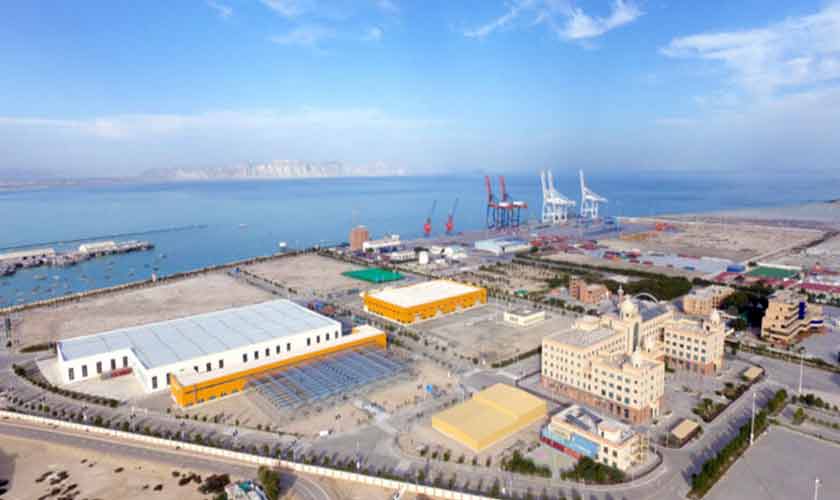
It is important to note that the Gwadar project has been criticised unfairly. Ports take decades to achieve their full potential. Rotterdam, Shanghai and Jebel Ali took many years to become the success that they are today.
Gwadar thus should not be measured in terms of immediate commercial benefits alone. Its strategic importance arises from Pakistan’s ability to be a part of newly emerging economic corridors linking Central Asia, the Middle East, South Asia and Western China. Infrastructure investments are key to creating future possibilities.
The blue economy framework needs to be seen not as a panacea of instant transformation, but as a doctrinal guide for maritime development. It must be stressed that in geopolitical terms Pakistan’s maritime future is not optional.
The governance concerns with regard to the blue economy paradigm are the most pertinent criticism of the concept. Pakistan has been characterised by inefficiencies, weak regulatory regimes, insufficient maritime training programme, and environmental governance difficulties. However, this does not negate the vision of the Planning Commission. In fact, it is precisely because of these deficiencies that the paradigm was developed in this manner.
The blue economy approach will establish coordination between the relevant actors in the government, including ministries, port authorities, fisheries departments, environment protection organisations, navies, private investors and provincial governments. Reforms and vision are not mutually exclusive. Rather reform is often the mechanism through which a vision becomes reality.
The environmental factors need to be weighed in a balanced manner. In the context of the current blue economy model that focuses on integrating environmental sustainability into economic growth plans, sustainable fisheries, marine biodiversity protection, climate adaptation, mangrove planting and renewable offshore energy production have become vital components of any blue economy strategy adopted across the world.
Pakistan, one of the countries most affected by climate change, cannot isolate its efforts towards environmental protection from economic development planning. Coast degradation, rising sea levels and fish stock depletion pose direct threats to the livelihoods of its citizens. There is an opportunity now to incorporate environmental management into national development planning through the blue economy.
Further, the maritime development sector can create numerous job opportunities for the youth. Modernising the fisheries sector alone would enhance exports, food security and coastal livelihoods. Ship-breaking, shipbuilding, logistics, warehousing, marine services and tourism are labour intensive industries.
The criticism of a “policy hype culture” too merits reflection. Pakistan has had its share of visionary policies that were poorly implemented. However, pessimism is no answer to poor policy implementation. To achieve progress, nations need both a national vision and implementation capacity. While there is a tendency on the part of critics to emphasise the latter, the former is no less important. It must be remembered that economies lacking a clear direction find it hard to marshal investment, undertake institutional reforms and seek international alliances.
The blue economy framework, therefore, needs to be seen not as a panacea for instant transformation, but as a doctrinal guide for maritime development. It must be stressed that in geopolitical terms Pakistan’s maritime future is not optional.
It is critical to emphasise that Pakistan’s maritime future is imperative. The Indian Ocean is turning into one of the most important, economically and strategically vibrant regions of the world. Global trade lines, energy flows and naval rivalries are increasingly becoming linked to maritime geopolitics. In this backdrop, Pakistan’s coastline represents not just economic value but also strategic strength.
Economic discourse cannot be reduced to simplistic dichotomies such as “mirage vs reality.” The success or failure of Pakistan’s maritime endeavours is not inevitable. Rather, it requires political dedication, institutional reforms, environmental conservation and strategic patience.
The real risk is not that Pakistan is dreaming too big about blue economy; it is that it continues thinking too small.
The writer is an independent consultant specialising in sustainable public-private partnership projects. He can be reached at [email protected]