Print Story
X




Women and children behind bars must be given the tools to imagine a future beyond their confinement
| W |
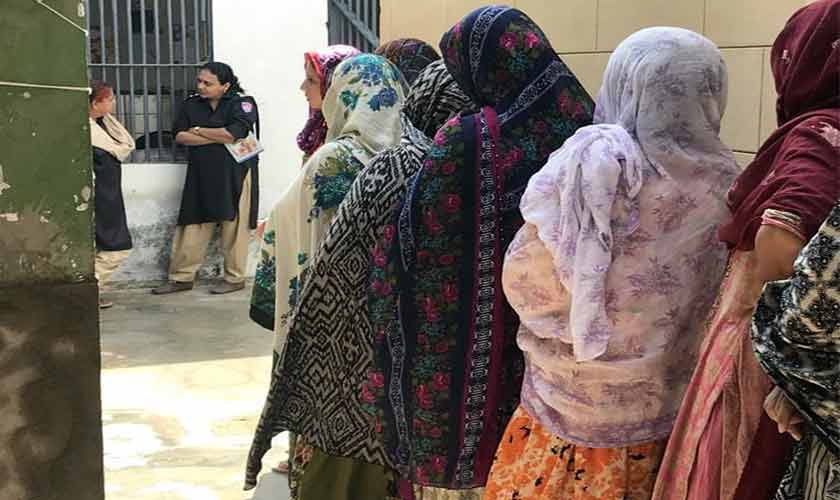
hen I first walked through the gates of Sukkur district prison — the only correctional facility for women and juveniles in interior Sindh — I braced for the worst. Friends had warned me access was hard to come by. Like many other people, I imagined a dark, hopeless place. The reality surprised me: children merrily ran around in the courtyard, the facility was clean and the staff welcomed me warmly.
This was not the place I had pictured. The facility, housing 30 juveniles and 85 women on charges ranging from substance abuse to murder, was better managed than I had expected. Still, beneath the apparent order, I noticed troubling realities Pakistan can no longer afford to ignore.
Almost all the inmates I met —juveniles as well as women — were under trial. Many had already spent months, in some cases years, behind bars. Most of the juveniles had had only primary education. Most of them could read and write simple Urdu and Sindhi sentences; very few had learnt English. They were painfully aware of their situation, yet they clung to hope. A boy told me: “We are held in jail for long durations because we are poor.”
The women, outwardly neat and well fed, carry invisible burdens. “We become distressed when we think of our children outside,” one mother said. Another, a widow, said she worried about her home. Many said poverty and illiteracy had pushed them into crime. Some said ruthless men used women and children to sustain their smuggling operations because courts treated them leniently. Nearly all the women were married and had children. Their psychological distress, they said, was compounded by separation from their children.
What struck me most was the absence of mental health support. The prison staff included no psychologist. Emergency psychiatric care was outsourced to public hospitals. Routine counselling — essential for both rehabilitation and prevention of reoffending — was nonexistent.
Educational and vocational training opportunities seemed inadequate. A single teacher offered instruction at the primary school level. The classrooms were in disrepair. Prisoners received religious education. Some said they had found spiritual solace in learning to pray and read the Holy Quran. But there was no meaningful access to skills that might help them build a dignified life upon their release. A few women said they sustained themselves with embroidery or sewing. Most had nothing to look forward to beyond the prison meals.
A prison without psychologists,vocational training or meaningful education is not a correctional facility. It is a holding cell for the poor.
Hygiene was compromised. Government programmes that once supplied hygiene kits had stopped, leaving most women with poor menstrual and oral health. Crowding only made matters worse. [How many prisoners is the facility designed for?]
To their credit, the prison officials — from the superintendent to the guards — appeared to be doing their best. I was struck by their sincerity and the dignity with which they treated inmates. They provided water, food, medical care and a system of spiritual teaching. Some prisoners said these facilities were better than what they had had outside. However, the bar is set low. If prisons are truly to be correctional spaces, they must do more than feed and shelter the inmates.
Reform does not require reinventing the system. The government must appoint at least two psychologists at Sukkur prison, along with a mental health team for counselling not just prisoners but also the guards. A vocational training centre should be established to impart marketable skills so that the inmates can support themselves upon release. The hygiene kit programme must be revived. Educational infrastructure — classrooms, teachers, study materials — must be rebuilt. Finally, the prisoners should be made eligible to receive social protection through state initiatives like the Benazir Income Support Programme.
Civil society - from UNICEF and the UNDP to the Ministry of Human Rights - must not ignore Sukkur simply because it is so distant from Karachi and Hyderabad. The Sukkur prison inmates are among the most underserved people in Pakistan. They deserve better.
A prison without psychologists, vocational training and meaningful education is not a correctional facility. It is a holding cell for the poor. Sukkur showed me that while some progress has been made, much remains to be done. To break the cycle of poverty and crime, we must begin by treating correction as more than confinement; we must give the women and children behind bars the tools to imagine a better future.
The writer is a student at the National University of Medical Sciences, Islamabad.