Print Story
X




As the government pushes ahead with its austerity drive, the challenge lies in balancing immediate economic stabilisation with long-term resilience
| T |
he government has rolled out fresh austerity measures after a sharp rise in global oil prices triggered by the Iran-Israel-US conflict, with Prime Minister Shahbaz Sharif urging restraint across public and private sectors to contain the economic fallout.
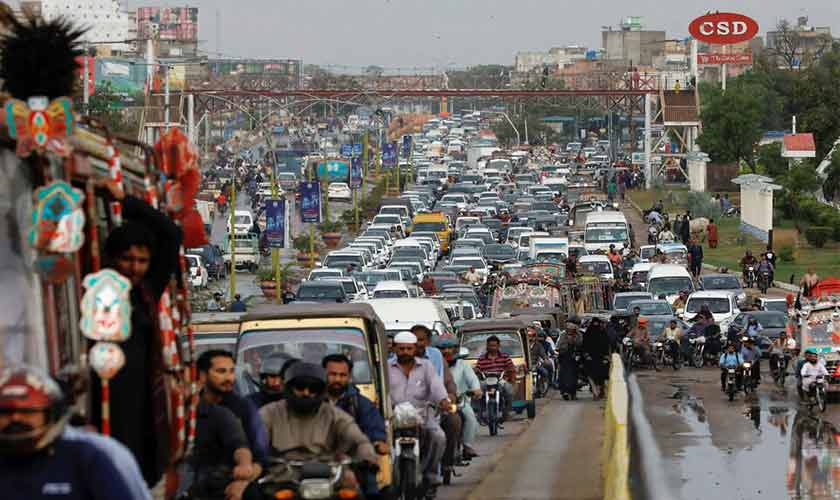
The measures include a reduction in government fuel consumption; a four-day workweek for federal offices; restrictions on official travel; early market closures to conserve electricity; and a push for remote work, where possible. Public sector development spending is being reprioritised. Ministries have been directed to cut non-essential expenditures. Framing the plan as a national response to an external crisis, the federal government has also encouraged provincial governments and private businesses to follow suit.
Pakistan faces renewed pressure on its import bill and foreign exchange reserves, with petroleum products forming a significant share of imports. Officials say the aim is to stabilise the external account, reduce energy demand and signal fiscal discipline at a time of global uncertainty.
Economists say the immediate logic behind the measures is difficult to contest, but warn that their effectiveness may be short-lived without deeper structural reforms.
Prof Dr Raza Ali Khan, former chairman of the Economics and Management Sciences Department at NED University of Engineering and Technology, says the measures reflect a pragmatic response to an external shock but have clear limitations.
“The recent austerity measures, adopted in response to the oil shock arising from US-Iran tensions and uncertainty in the Strait of Hormuz, are economically rational but inherently limited,” he says.
“In the short run, reducing government expenditure, curbing fuel consumption and enforcing energy conservation can help stabilise foreign exchange reserves and contain external imbalances.”
He notes that such demand management policies are necessary in crises driven by external factors, but cautions that they do not offer a lasting solution. Austerity, he says, tends to slow economic activity, increase the cost of living and disproportionately affects low-income citizens already struggling with inflation.
“These measures often reflect a reactive policy mindset,” he says, adding that without parallel efforts in energy diversification, efficiency improvements and structural economic changes, austerity risks becoming cyclical rather than transformative. He warns that while such policies may provide short-term stability, they do not address the root cause of economic vulnerability.
Research analysts echo similar concerns, highlighting the broader economic impact of contractionary policies.
Bilawal Suhag, head of research at the Federation of Pakistan Chambers of Commerce and Industry, describes the government’s response as ‘necessary’ but warns of its ripple effects across the economy.
“The PM’s austerity plan was a necessary response to war-driven disruptions in global fuel supply, which have intensified pressure on Pakistan’s external account and fiscal stability,” he says.
“By reducing fuel consumption, limiting government expenditure and encouraging a four-day work week and remote operations, the policy aims to contain the import bill and demonstrate fiscal discipline.”
However, he points out that the measures extend beyond the public sector and are likely to influence private sector operations as well, potentially slowing economic activity. According to him, reduced demand in key sectors such as transport, hospitality and events could weaken overall consumption and disrupt supply chains.
Suhag also highlights the uneven social impact of austerity, particularly on traditionally vulnerable groups. Daily wage earners and informal workers are likely to bear the brunt of reduced economic activity. Shifts towards remote work and online education could widen existing inequalities due to limited access to digital infrastructure.
He stresses the need for targeted interventions to cushion these effects, including expanded support through the Benazir Income Support Programme and similar initiatives. At the same time, he says, the crisis presents an opportunity to accelerate the transition to cleaner energy sources, electric vehicles and a more inclusive digital ecosystem.
On the ground, the impact of enforced austerity is already being felt in ways that have triggered concern among civil society groups.
Activist Sattar Zangejo criticises the implementation of certain measures in Sindh, particularly the suspension of key rail services that serve low-income communities.
“The Sindh government is once again considering the implementation of smart lockdowns,” he says. “These measures are stripping the common man of the most basic transport.”
He points to the suspension of trains running between Rohri and Kotri, which connect several towns and serve thousands of daily commuters. These include Habib Kot, Ruk Station, Madeji, Larkana, Naudero, Badrah, Sita Road, Dadu, Sehwan, Lakhiari and Sunn.
Residents say the move has disrupted livelihoods and made travel unaffordable for many.
“Don’t make travel more expensive for the poor in the name of austerity,” he says. “These people have no money and nowhere else to go.”
The suspension of the Marvi Express, which runs from Hyderabad to Khokhropar via Mirpurkhas, has compounded their problem, locals say. Some say that instead of limiting affordable public transport, the government should consider imposing temporary restrictions on private vehicles.
For many commuters, services such as the Mohenjo-Daro Express represent a lifeline, a low-cost option that is difficult to replace. Limiting these services, critics say, risks deepening inequality while delivering meager savings in fuel consumption.
Beyond immediate measures, the crisis has revived the debate around Pakistan’s long-standing energy challenges and untapped domestic resources.
Zangejo says reliance on imported fuel continues to expose the country to external shocks, despite the presence of significant coal reserves in Thar. Progress has remained slow due to infrastructure constraints and policy delays.
A key example is the delayed railway link from Chhor to Islamkot, essential for transporting coal to other parts of the country. Originally expected to be completed within months, the project has stretched over several years, limiting the potential of Thar coal to ease the energy crisis.
Zangejo says, “If we don’t use develop our own assets, the cost of fuel and daily life will continue to rise.”
The debate also extends to urban energy use.
Experts suggest that adjusting market hours to align with daylight could significantly reduce electricity consumption in Karachi, Hyderabad, Sukkur, Mirpurkhas and Nawabshah. Early opening and closing times, they argue, will not only conserve energy but also support the broad goals of austerity without directly affecting mobility or livelihoods.
As the government pushes ahead with its austerity drive, the challenge lies in balancing immediate economic stabilisation with long-term resilience. While the current measures may help contain the impact of rising fuel prices, their social and economic costs are becoming increasingly visible.
Analysts say the real test will be whether policymakers can use this moment to implement deeper reforms that reduce dependence on imported energy, strengthen domestic capacity and protect vulnerable segments of society.
Austerity remains a necessary but imperfect tool, offering short-term relief in a crisis that demands far more fundamental change.
The writer is a senior financial correspondent at The News. He holds Alfred Friendly, Daniel Pearl and Geo Journalism fellowships. He can be reached at [email protected].