Print Story
X




Food security begins by empowering female farmers
| I |
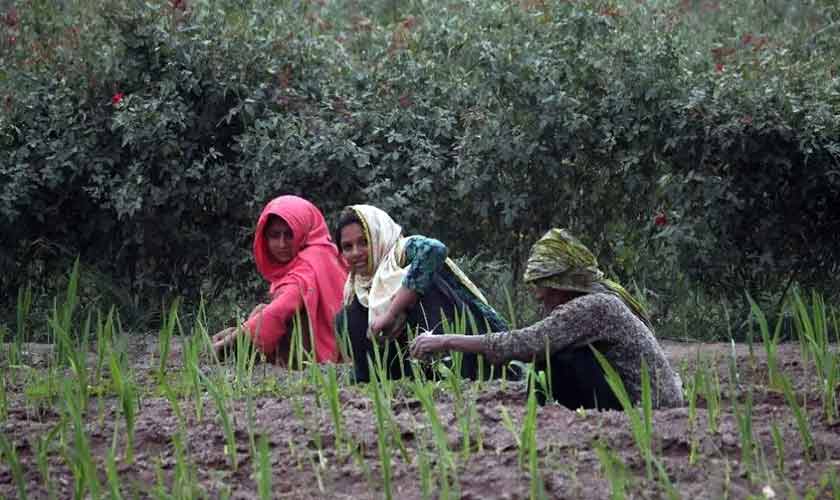
n Pakistan, agriculture is more than an economic sector—it is a way of life anchoring national stability and employing 37 per cent of the workforce, contributing 23.5 per cent to GDP, according to the Pakistan Economic Survey 2024-25. Yet, within this vast ecosystem, one truth remains insufficiently acknowledged: women are its invisible backbone. Constituting 48.5 per cent of Pakistan’s 241 million people, with nearly half living in rural areas, women account for an extraordinary 67.9 per cent of the agricultural workforce—surpassing men—and dedicate more than 50 hours weekly to cultivating fields, tending livestock, and processing produce. Across Pakistan, women are central to post-harvest activities and dominate livestock management, from animal care to dairy processing and market sales, forming the backbone of rural household economies.
Empowering female farmers is not simply a social responsibility but a macroeconomic necessity. Pakistan’s agricultural potential remains constrained when half the workforce operates without equitable access to resources, recognition, and opportunity. When communities invest in women’s advancement through knowledge, infrastructure, mentorship, and opportunity, the returns extend far beyond individuals to families, markets, and national growth. When women thrive, agricultural systems become more resilient and inclusive.
Across Pakistan, encouraging examples are emerging in which collaborative efforts among communities, development partners, and responsible industry players are helping bridge long-standing gaps. Initiatives such as Sarsabz Tabeer, launched in 2022 by Fatima Fertiliser, illustrate how targeted capacity-building can unlock economic opportunities for rural women. Anchored on four pillars—education, financial aid, skill development, and health—the initiative focuses on equipping women with modern food processing skills that reduce post-harvest losses while enabling financial independence. Through comprehensive training programmes conducted with USAID-certified trainers, more than 3,500 women across Pakistan have learned how to transform surplus agricultural produce into value-added, marketable goods. Many participants have since launched small businesses, opened local retail outlets, or begun supplying products to restaurants and hospitality markets, demonstrating how access to skills and mentorship can convert informal agricultural labour into sustainable entrepreneurship. Such models highlight how private-sector participation, when aligned with community needs, can contribute meaningfully to a more inclusive agricultural ecosystem.
Empowering female farmers is not simply a social responsibility but a macroeconomic necessity. Pakistan’s agricultural potential remains constrained when half the workforce operates without equitable access to resources, recognition, and opportunity.
As climate change reshapes agricultural realities, investing in female farmers is no longer optional; it is essential for resilience. Women remain central to household food security and natural resource management, yet their potential as decision-makers and innovators remains underutilised. Expanding access to climate-smart training, financial services, and market linkages can strengthen entire agricultural value chains while improving community stability and productivity.
Empowering Pakistan’s female farmers is not a symbolic gesture but an economic imperative. The true seeds of change are sown when women are given equitable access to resources, recognition, and opportunity. Ensuring inclusion within agricultural value chains will determine the future strength and sustainability of the sector. When women are equipped to succeed, agriculture becomes more resilient, rural economies grow stronger, and national progress moves forward on foundations that are both inclusive and enduring.
The writer is Fatima Fertilizer Company Limited’s marketing and sales director and the first woman to hold this role in Pakistan’s fertiliser sector. With over 25 years of experience, she leads nationwide marketing, sales, and farmer engagement initiatives while advancing digital innovation and sustainability across the company’s operations.