Print Story
X




Continuity remains a serious issue for local government institutions
| T |
he importance of autonomous local governments is paramount in the context of reforming Pakistan’s governance system and building transparent and accountable state institutions. Modern governance systems across the world increasingly emphasise decentralisation. Effective governance requires that political, administrative and financial powers be clearly devolved from higher tiers to lower ones in a transparent, accountable and participative manner. Without meaningful decentralisation, democratic structures remain incomplete and service delivery remains inefficient.
Pakistan continues to rank poorly in global governance indicators. International financial institutions such as the International Monetary Fund have repeatedly raised concerns regarding weaknesses in governance, institutional fragility and structural inefficiencies. These concerns are not merely technical observations; they have direct implications for economic stability, development planning and public trust. If governance reforms are delayed further or avoided, political instability and economic stagnation will continue to obstruct progress. The most affected people are the deprived and vulnerable segments of society whose everyday issues—water supply, sanitation, education, healthcare and infrastructure—remain inadequately addressed.
The passage of the 18th Amendment to the constitution was a milestone in strengthening provincial autonomy. The underlying principle was clear: just as the federation devolved powers to the provinces, the provinces would further devolve authority to district governments through empowered local governments. Provincial autonomy and local autonomy were envisioned as complementary pillars of a democratic framework. However, the practical outcome has not aligned well with this vision. Instead of deepening decentralisation, provincial governments have consolidated authority within provincial capitals, limiting the operational, financial and administrative space available to local bodies.
As a result, local governments in many provinces have remained politically weak and administratively constrained. Although the constitution includes provisions regarding local governments—particularly Articles 140A, 32 and 7—these provisions lack clarity on permanence, financial independence and protection from arbitrary dissolution. Such constitutional ambiguities allow provinces to delay elections, curtail authority and restructure local systems without ensuring continuity. The absence of enforceable mechanisms has weakened the spirit of decentralisation.
Another worrisome development is the rise of parallel governance structures in the form of provincial authorities and public companies that manage sectors traditionally belonging to local governments, such as urban planning, waste management, transport and water services. When provincial governments administer these functions through centralised authorities, elected local bodies become redundant. This practice undermines democratic accountability and reduces citizen engagement in decision-making processes at the grassroots level.
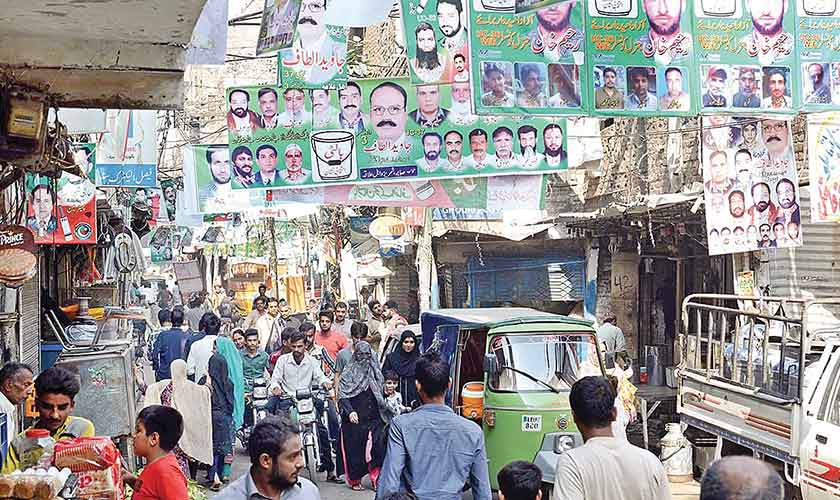
Continuity of the local government system remains a serious issue. In the Punjab, for instance, local government elections were last held in 2015. More than a decade has passed without sustained democratic functioning at the local level. Such delays contradict constitutional principles and weaken institutional stability. While provinces bear primary responsibility, oversight bodies such as the Election Commission of Pakistan must also ensure that constitutional obligations regarding timely elections are fulfilled. Without regular elections, local democracy becomes episodic rather than institutionalised.
If Pakistan seeks genuine governance reform, a comprehensive constitutional framework for local governments is essential.
If Pakistan genuinely seeks governance reform, a comprehensive constitutional framework for local governments is essential. Comparative experience offers useful lessons. The Constitution of India, through its 73rd and 74th Amendments, provides detailed constitutional recognition to rural and urban local governments, clearly outlining their tenure, powers and fiscal arrangements. Pakistan needs a similar constitutional chapter that recognises local governments as a permanent and protected tier of governance, while allowing provinces flexibility in implementation within a national framework.
Currently, significant variations exist among provincial local government laws, including those applicable in Islamabad. Differences in structure, tenure, fiscal authority and electoral mechanisms create inconsistency and weaken institutional coherence. Excessive provincial discretion has turned local governments into temporary political arrangements rather than stable democratic institutions. This fragmented approach undermines long-term development planning and equitable service delivery.
Resource distribution further exposes structural imbalances. Provincial Finance Commissions often fail to adopt transparent and equitable formulas that adequately address disparities between developed urban centers and underdeveloped districts. Smaller and poverty-stricken districts frequently receive insufficient allocations, reinforcing regional inequalities. Without clearly defined and functional District Finance Commissions operating within Provincial Finance Commissions, fair development across regions will remain unattainable.
Inclusive representation must also be central to local government reform. Effective decentralisation requires meaningful participation of women, minorities, labourers, farmers, persons with disabilities, transgender individuals and the youth. Women’s representation at the local level should be at least 33 percent. Also, this representation must be substantive rather than symbolic. Direct elections for positions such as chairman, vice-chairman and mayor can enhance democratic legitimacy and strengthen accountability by empowering citizens to choose their local leadership directly.
Resistance to autonomous local governments stems from multiple actors. Provincial political elites often perceive empowered local bodies as competitors for influence and resources. Members of National and Provincial Assemblies may fear losing control over development funds and patronage networks. Certain sections of the bureaucracy also express concerns about capacity at the grassroots level, arguing that administrative control should remain centralised. However, capacity limitations can be addressed through training, institutional support and performance-based accountability. Centralisation is no substitute for democratic empowerment.
To build a genuinely autonomous local government system, Pakistan must adopt five fundamental principles. First, local governments should be constitutionally recognised as the third tier of government alongside federal and provincial tiers. This recognition must guarantee permanence and protect them from arbitrary dissolution. Second, a comprehensive constitutional amendment should clearly define political, administrative and fiscal powers to eliminate ambiguity. Third, the tenure of local governments should align with that of federal and provincial assemblies to ensure continuity and synchronisation in democratic cycles. Fourth, local government elections should be conducted on a party basis to strengthen political accountability and integrate grassroots politics with national political structures. Fifth, the Provincial Finance Commissions must establish transparent District Finance Commissions to ensure equitable and formula-based resource allocation.
Pakistan’s governance crisis—marked by political instability, economic stress and declining public trust—cannot be separated from the weakness of its local government system. Grassroots democracy provides the foundation upon which national democratic institutions stand. When local governments are absent or ineffective, citizens feel disconnected from governance processes, leading to frustration and erosion of trust. A democratic system limited to federal and provincial levels does not represent a complete democratic order.
A truly democratic system requires institutions functioning from top to bottom, grounded in accountability and citizen participation. Strengthening autonomous local governments is not merely an administrative reform; it is a democratic necessity. The time has come for Pakistan to move beyond rhetorical commitments and undertake structural reforms that institutionalize decentralisation.
Once meaningful constitutional, fiscal and political reforms are implemented, local governments will enhance service delivery, promote inclusive development and restore public confidence in democratic institutions. However, if these reforms remain absent from the national agenda, governance challenges will deepen and inequalities will widen. The solution to Pakistan’s governance crisis lies in empowering an autonomous, accountable and constitutionally protected local government system. The responsibility now rests with policymakers and political leadership to act decisively in strengthening democracy at its foundation.
The writer is a political analyst and public policy advisor