Print Story
X




Pakistan is among the countries where water resources are under severe stress

| T |
he global freshwater stock is exposed to a twin menace; it is declining as well as degrading. The 2025 global water monitoring report of the World Bank, Continental Drying: A threat to our common future, depicts a grim picture of the world’s hydro future. The report lists Pakistan among the countries under drying conditions responsible for the highest share of inefficient agricultural water consumption. Other countries sharing this ignominy include Algeria, Cambodia, Mexico, Thailand, Tunisia, and Romania. These countries consume more water per tonne of yield than other countries using the same technology within the same climatic conditions. Inefficiencies and the choice of more water-intensive crops are making matters complicated. The report reveals that over the past two decades, 37 drying countries have transitioned to more water intensive agriculture. 22 of those are located in arid and semi-arid regions.
Another important report, Living Beyond our Hydrological Means in the Post-Crisis Era, depicts an alarming situation. Released by the United Nations University Institute for Water, Environment and Health, the report presents a bleak state of water resources by declaring that the world has moved from water ‘stress’ and ‘crisis’ to water ‘bankruptcy.’ In a startling revelation, the report mentions that around 35 percent of natural wetlands spread over 410 million hectares have vanished since 1970. Loss of surface water resources has exerted stress on groundwater which is being depleted at unsustainable proportions. Consequently, 70 percent of the world’s major aquifers are on decline.
Pakistan is among the countries where water resources are under severe stress, mainly for anthropogenic reasons. Consistently increasing population, accelerated urbanisation, imprudent choice of crops, poorly managed irrigation infrastructure, obsolete on-farm practices, reckless groundwater abstraction, precarious pollution of water resources, chronically poor water productivity and overall mis-governance are major causes of the water crisis in the country.
Pakistan’s water map is dominated by one of the world’s largest rivers, the Indus. Indus and its tributaries bring 140-145 million acre feet of water every year from its northern glaciers and highlands. This enormous quantum of water is twice the flow in Nile and thrice the Euphrates and the Tigris put together. Such an abundant water endowment should have made the country water surplus or at least self-sufficient in water resources.
Unbridled population growth from approximately 33 million in 1947 to over 250 million in the present day has, however, squeezed per capita water availability from 5,000 cubic metres to only 850. The latent advantage of being a water surplus country has been erased by the runaway population growth. With the present pace of population growth, Pakistan is on the trajectory to becoming water bankrupt within a few decades. Even more dams and canals will not provide any reprieve if the number of mouths to feed is not restrained.
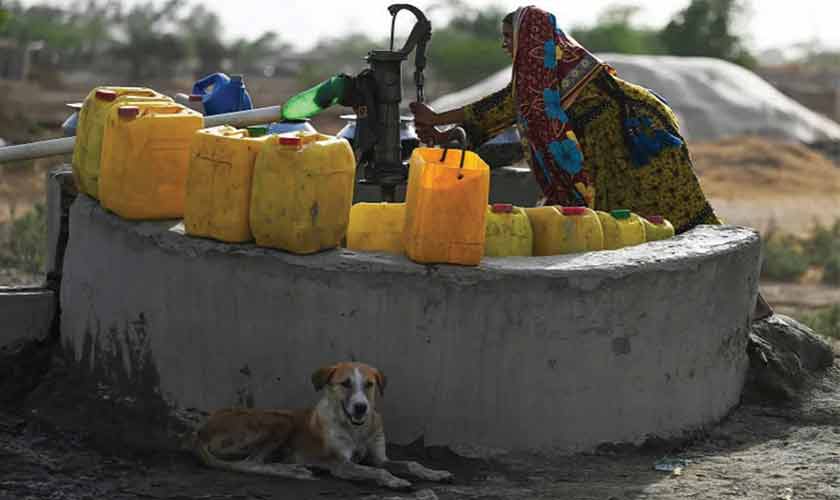
With the present pace of population growth, Pakistan is on the trajectory to become water bankrupt in a few decades.
As surface water resources are becoming insufficient, groundwater extraction has gained momentum. Over 60 percent of irrigation requirements in the Indus Basin are now being met through groundwater pumping. As a result, the Indus Basin aquifer is ranked as the second most over-stressed underground water reserve in the world.
The number of agricultural tube wells in the Punjab rose from 334,000 in 1994 to over 1.2 million in 2024. The province’s annual withdrawal of groundwater—over 51 MAF—is almost equal to its share in river waters under the inter provincial water apportionment accord of 1991. This over-extraction of groundwater has caused the water table to drop below 6 metres in more than half of the irrigated areas.
Groundwater mining is likely to increase with heavily subsidised solar tubewells. In 2023, the federal government approved the solarisation of agriculture tubewells in all provinces at a cost of over Rs 377 billion. In 2025, the Punjab govt announced 95 percent subsidy on converting 8,000 tubewells to solar power. This will encourage over abstraction as energy becomes free.
The abnormal water losses in the agriculture sector are another serious challenge. Agriculture consumes more than 90 percent of fresh water in the country. However, the grossly inefficient sector is a source of waste of huge quantities of fresh water. Some 60 percent of water is lost from canal head to farmland. This includes losses due to natural evaporation, poorly maintained infrastructure and archaic farming practices. Most of this loss occurs through more than 40,000 unlined water courses in the Punjab and Sindh. In the process, not only is water lost, but also land is degraded. Some 2.2 million acres of land is affected by water logging and salinity in Pakistan. It makes about 30-35 percent of cultivable land in the country.
Every year, 50,000 and 100,000 acres are being lost to water logging and salinity. This also poses food security challenge in the long term. While boasting of a rich agriculture economy, Pakistan still has to import food worth $8-10 billion every year—a sizeable burden on its foreign exchange reserves.
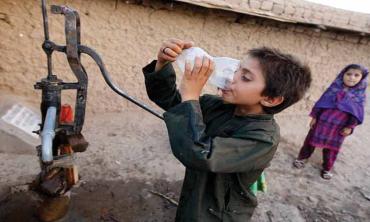
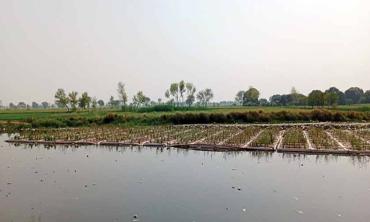
Amid all these challenges, planners appear indifferent to pollution of freshwater resources. Pakistan’s ranking on water quality standards is 80 out of 122 countries. Over 52 percent of globally produced wastewater is treated. However, only one percent of wastewater is treated in Pakistan. Some 16 million people lack access to clean water near their homes. As a result, 40 percent of all reported diseases in Pakistan are attributed to poor water quality. Municipal and industrial sewerage are frequently discharged into freshwater bodies without any treatment. For several years, Manchhar, one of the largest freshwater lakes in Asia, has regularly received toxic agriculture waste through the Right Bank Outfall Drain.
The political debate over water resources has been limited to the construction of dams and canals. This myopic approach is not doing any service to the water sector. Water resource development urgently needs a multi-disciplinary solution approach and a greater focus on conservation.
The writer is senior advisor on water governance at the Sustainable Development Policy Institute. He can be reached at [email protected].