Print Story
X




Vital structural transformation remains an ongoing task
| A |
t a time marked by economic strain and political polarisation, Prime Minister Shahbaz Sharif’s government adopted a pragmatic and stabilisation-focused approach to governance. His policies were aimed at economic recovery, fiscal discipline and institutional coordination. Sharif’s administrative experience and emphasis on consensus-building helped in maintaining democratic continuity and restoring a measure of economic confidence. While challenges persist, his governance has reflected a commitment to structured reforms and responsible statecraft during a period of national uncertainty.
Sharif assumed office amid mounting fiscal pressures, inflationary strain and deep political polarisation. The convergence of domestic instability and global economic turbulence created an environment where governance required not only political legitimacy but also administrative clarity and swift decision-making. In such circumstances, leadership is tested less by rhetoric and more by its capacity to stabilise institutions, reassure markets and restore public confidence.
Shahbaz Sharif’s approach to governance has reflected pragmatism over populism. Drawing upon his administrative experience, he emphasised fiscal discipline, institutional coordination and engagement with international financial partners to prevent default on debt liabilities and ensure continuity of state functions. Rather than pursuing abrupt structural shifts, his government prioritised stabilisation as a precondition for reform—recognising that economic recovery and political stability are deeply connected in Pakistan’s evolving democratic framework.
Sharif’s crisis-management style, coalition-building efforts and development-oriented outlook contributed to steering the country through a period of uncertainty. While challenges remain formidable, the emphasis on responsible governance and structured reform has been a case study in pragmatic leadership under pressure.
When the present government assumed office, Pakistan’s macroeconomic indicators reflected significant vulnerability. External account pressures, energy sector liabilities and fiscal imbalances demanded urgent corrective measures. Rather than pursuing politically expedient policies, the Sharif administration opted for stabilisation anchored in difficult but necessary reforms. Engagement with international financial institutions, particularly the International Monetary Fund, was framed not as a political compromise but as an economic imperative to prevent sovereign default and restore credibility in global markets.
The government’s fiscal consolidation efforts — rationalising subsidies, broadening the tax base and enhancing revenue collection — were part of a broader strategy to signal responsibility to both domestic stakeholders and external partners. While such measures inevitably imposed short-term burdens, they reflected an understanding that macroeconomic stability is a prerequisite for sustainable growth. In times of crisis, governance is often judged by the willingness to take the necessary unpopular decisions. In this regard, Sharif’s approach demonstrated administrative resolve.
A defining feature of Shahbaz Sharif’s leadership has been his administrative orientation. Drawing upon his prior executive experience, he emphasised coordination among federal ministries, regulatory bodies and provincial governments. This managerial style aimed to reduce bureaucratic inertia and accelerate decision-making processes at a time when delays carried high economic costs.
Energy sector reforms, efforts to manage circular debt and initiatives to streamline development expenditures were pursued through structured oversight mechanisms. Regular review meetings and performance monitoring became central to the governance model, reinforcing accountability within the executive branch. The institutional discipline signaled an attempt to move beyond reactive policymaking toward systematic governance.
The essence of Sharif’s governance is its pragmatism—a recognition that sustainable progress requires difficult decisions, steady administration and institutional resilience.
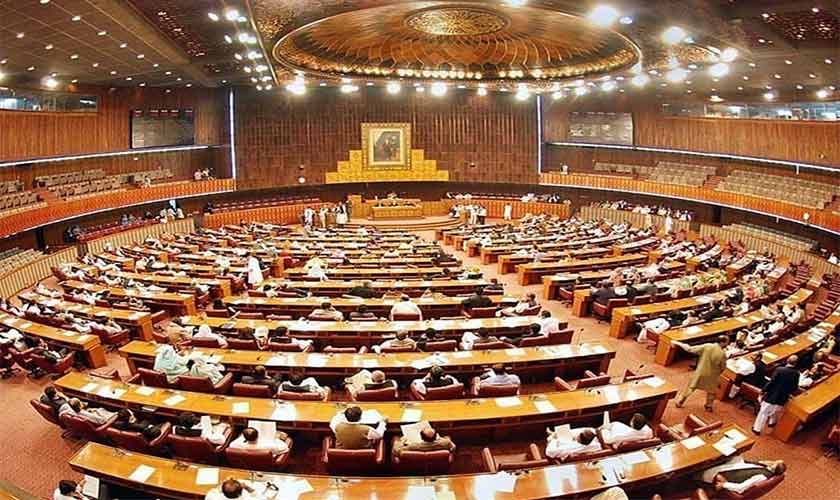
The Sharif government operated within a coalition framework, navigating a politically fragmented parliament. Given the polarised environment, maintaining democratic continuity required negotiation, accommodation and dialogue. Rather than intensifying confrontation, the administration sought parliamentary consensus on key economic legislation and reform measures.
Coalition governance, while complex, demonstrated the resilience of Pakistan’s parliamentary system. By sustaining legislative processes and avoiding institutional paralysis, the government contributed to democratic stability during a volatile period. The emphasis on constitutional procedure and consultative politics underscored a commitment to democratic norms, even amid sharp political contestation.
Economic recovery in an interconnected global order necessitates diplomatic recalibration. The Sharif administration prioritised re-engagement with key international partners, regional actors and multilateral institutions. High-level visits and economic diplomacy were directed towards restoring Pakistan’s credibility as a responsible economic actor.
Constructive engagement with Gulf partners, China and Western capitals reflected a balanced foreign policy outlook aimed at attracting investment and securing financial support. By reinforcing diplomatic channels, the government worked to ensure that Pakistan’s external relationships complemented domestic stabilisation efforts. In times of fiscal vulnerability, international confidence becomes a strategic asset; rebuilding that confidence was central to Sharif’s foreign policy orientation.
While fiscal discipline remained a priority, the government also sought to mitigate the social impact of economic adjustment. Strengthening targeted relief mechanisms and protecting vulnerable segments of society formed part of the effort to balance austerity with compassion. Economic reform, in this framework, was not presented as an end in itself but as a pathway to inclusive development.
Development planning under Sharif retained emphasis on infrastructure modernisation and energy sustainability, recognising that long-term growth depends on productive capacity and connectivity. By linking stabilisation with developmental vision, the administration aimed to avoid the trap of short-term crisis management without strategic foresight.
Perhaps the most distinctive aspect of Shahbaz Sharif’s governance has been his pragmatic leadership style. In contrast to populist rhetoric, his approach has favoured consultation with technocrats, data-driven policy reviews and incremental reform. Crisis governance often demands steady management rather than dramatic gestures; Sharif’s emphasis on administrative detail reflects this philosophy.
Critics may debate the pace or depth of reforms. It is difficult, however, to overlook the central objective: preventing economic collapse and maintaining institutional continuity. In an environment where uncertainty can rapidly erode stability, measured leadership can be a stabilising force.
Sharif’s progress must be assessed within the extraordinary constraints under which his term began. Faced with severe economic headwinds and political polarisation, his government chose stabilisation over spectacle, reform over rhetoric and negotiation over confrontation. Through fiscal consolidation, institutional coordination, coalition management and diplomatic outreach, the administration sought to restore economic confidence and safeguard democratic continuity.
Challenges undeniably persist and structural transformation remains an ongoing task. Yet the essence of Sharif’s governance lies in its pragmatism—a recognition that sustainable progress requires difficult decisions, steady administration and institutional resilience. In steering Pakistan through crisis, his leadership has provided responsible statecraft rooted in experience and commitment to national stability.
The writer is chair person of the Department of Pakistan Studies at Allama Iqbal Open University, Islamabad