Print Story
X




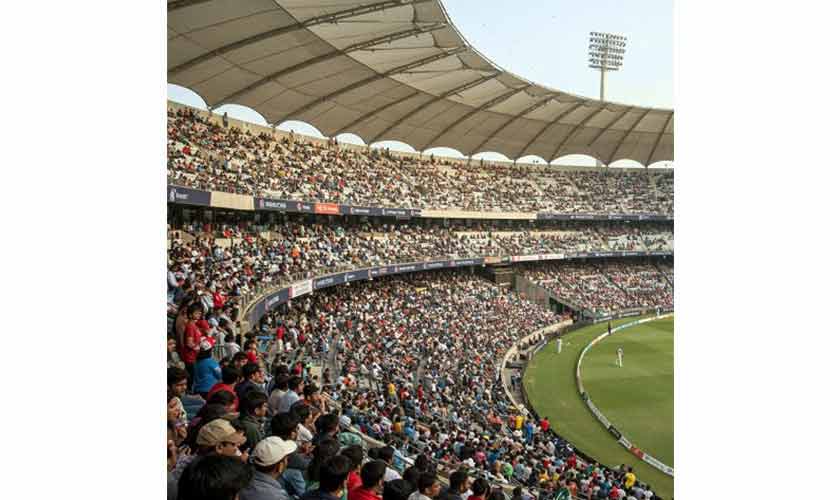
Cricket has evolved from a sport played for national prestige into a multi-billion-dollar global sports industry
| C |
ricket is one of the most widely followed sports in the world today, with an estimated 2.5 billion fans globally according to sports market analyses. Most of this audience is concentrated in South Asia, the United Kingdom, Australia and parts of Africa. India alone accounts for over a billion cricket followers.
Over the last three decades, cricket has evolved from a sport played primarily for national prestige into a multi-billion-dollar global sports industry driven by broadcasting markets, franchise leagues, sponsorship capital and digital streaming platforms. This transformation has given rise to what economists and analysts increasingly refer to as crickonomics - the study of how finances shape the structure, governance and competitive dynamics of the game.
Times change
The economic transformation of cricket began in the 1990s, following the expansion of satellite television and the liberalisation of media markets in many countries, including India.
In 1993, India’s cricket board began selling television rights independently, marking the start of cricket’s transition into a high-value broadcast product. As television audiences expanded rapidly across South Asia, cricket became one of the most commercially attractive sports properties in the world.
By the early 2000s, international cricket broadcasting rights had multiplied dramatically in value. Media companies realised that cricket matches in South Asia could attract hundreds of millions of viewers, making the sport extremely valuable for advertisers and sponsors.
Franchise cricket
A defining moment in cricket economics occurred in 2008 with the launch of the Indian Premier League. The IPL introduced a franchise-based model similar to American sports leagues, combining corporate ownership, global broadcasting rightsand player auctions.
The league was immediately successful. Its first broadcasting deal was worth $1.026 billion over ten years, making it one of the richest cricket tournaments ever launched.
By 2022, the IPL’s commercial value had grown dramatically. Media rights for the 2023-2027 IPL cycle were sold for nearly $6.2 billion, making it one of the most valuable sporting leagues in the world on a per-match basis.
The IPL regularly attracts over 400 million unique viewers per season today, with individual matches drawing television audiences exceeding 100 million viewers.
Major tournaments
Cricket’s global audience continues to expand through major international tournaments. The ICC Men’s Cricket World Cup 2019, hosted in England, generated:
• 1.6 billion global viewers across television and digital platforms
• 706 million unique viewers in India alone
• Over 4.6 billion total viewing minutes globally
The key challenge in the coming decades will be ensuring that cricket’s financial growth is balanced with institutional fairness, global development and competitive integrity, so that the sport remains both economically sustainable and genuinely international in character.
Similarly, the ICC Men’s T20 World Cup 2022 attracted more than 1.28 billion global viewers, demonstrating the growing global popularity of the shorter format.
Digital streaming has further expanded cricket’s reach, allowing millions of viewers to watch matches through mobile devices and online platforms.
The Indian market
The global cricket economy today is heavily influenced by the Indian market.
Industry estimates suggest that:
• Over 70 percent of global cricket revenue originates from India.
• India accounts for a majority of cricket’s global broadcast audience.
• The Board of Control for Cricket in India is the wealthiest cricket board in the world.
This dominance is reflected in international cricket finances. Under recent revenue distribution models, the BCCI receives a significantly larger share of ICC revenues compared to other cricket boards.
This financial concentration has led analysts to describe modern cricket as a market-driven ecosystem where economic influence shapes governance and decision-making.
The future
Cricket’s commercial expansion has created new opportunities for players, administrators and investors. Global sponsorship deals, franchise leagues and digital broadcasting have turned the sport into a major global entertainment industry.
However, the growth of cricket’s economic ecosystem also raises important questions about competitive balance, governance fairness and the sustainability of international cricket.
As cricket continues to expand into new markets and digital audiences, the challenge will be ensuring that the economic success of the game supports the development of cricket worldwide rather than concentrating influence within a few dominant markets.
The emerging trend
The central trend shaping the future of cricket is the growing concentration of economic power around large broadcast markets, particularly South Asia. As media rights, franchise leagues and digital streaming platforms continue to expand, the financial centre of gravity in cricket is increasingly moving toward commercially dominant markets and privately owned leagues. This trend suggests that the game will continue to evolve into a hybrid model of international sport and global entertainment industry, where finances play a decisive role in scheduling, governance and competitive structures. The key challenge for the coming decades will be ensuring that cricket’s financial growth is balanced with institutional fairness, global development and competitive integrity, so that the sport remains both economically sustainable and genuinely international in character.
The writer is a cricket enthusiast and analyst