Print Story
X




Malik Niaz Ahmad Jakhar will be remembered as a politician whose career mirrored the evolution of democratic politics in the region
| T |
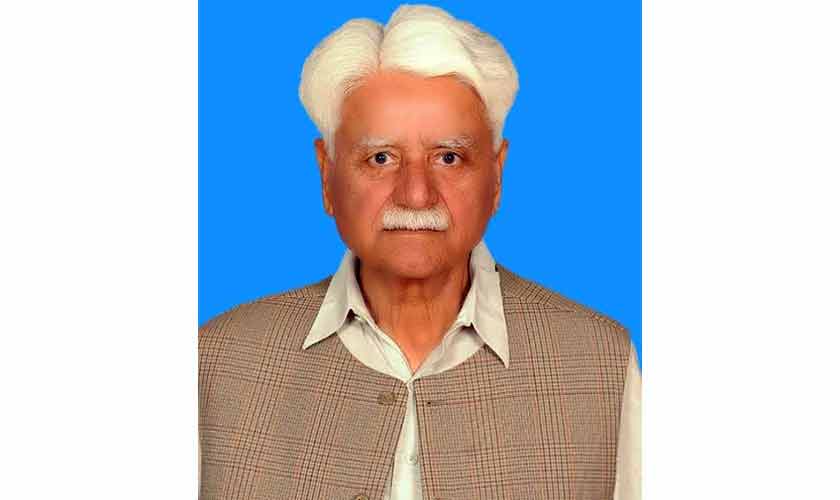
he death of Malik Niaz Ahmad Jakhar on March 11, marks the end of a political career that spanned nearly four decades and reflected the changing contours of electoral politics in southern Punjab. He was a four-time member of the National Assembly and a long-standing political figure in Layyah district. Jakhar’s career embodied the rise of the regional electable — a politician whose influence was derived as much from personal networking and constituency ties as from party affiliation.
Born on July 18, 1954, in Layyah, Jakhar hailed from a prominent agrarian family with deep roots in the district’s social and political life. His father, Malik Haider Bakhsh, was a respected local notable. In southern Punjab’s rural political culture, where clan affiliations and personal loyalties often shape electoral outcomes, such social standing was important.
Layyah, situated along the western edge of the Punjab, has long been characterised by competitive politics dominated by a handful of influential families. Jakhar emerged as one of the central figures in this landscape, navigating shifting political alliances while maintaining a loyal voter base.
Jakhar was first elected to the National Assembly during Pakistan’s democratic transition following the end of the military regime of Gen Zia-ul Haq. In the 1988 general election, he contested from NA-139 (Layyah-I) as a candidate of the Pakistan Peoples Party. The election that brought Benazir Bhutto to power, also launched Jakhar’s parliamentary career.
Securing more than 43,000 votes, he defeated Syed Muhammad Khurshid Shah Bukhari. The victory marked the beginning of a long political journey that would see him contest eight general elections over the next three decades.
There were setbacks as well. In the 1990 general election, contested amid great polarisation, Jakhar ran from the same constituency as a candidate of the Pakistan Democratic Alliance, a coalition aligned with the PPP. He lost the contest to a candidate backed by the Islami Jamhoori Ittehad, reflecting the shifting political balance of the time.
Jakhar returned to the parliament in the 1993 general election, once again contesting as a PPP candidate. In that election, he secured more than 64,000 votes and defeated Malik Ghulam Haider Thind of the Pakistan Muslim League-N. The victory reaffirmed his political relevance in Layyah.
The political tide shifted once again in the 1997 elections, when the PML-N swept to power across much of the country. Jakhar contested the election under the PPP banner but lost the seat to Malik Ghulam Haider Thind. Despite the setback, he remained active in constituency politics, maintaining strong ties with local communities.
His return to parliament came in the 2002 general election, held under the political arrangements following the takeover by Gen Pervez Musharraf. Contesting from the newly delimited NA-182 (Layyah-II) as a PPP candidate, Jakhar polledmore than 74,000 votes and defeated his old rival Malik Ghulam Haider Thind. The victory gave him his third term in the National Assembly.
Over time, however, the shifting landscape of Pakistani politics prompted changes in his party affiliation. Ahead of the 2008 general election, Jakhar joined the Pakistan Muslim League-Quaid, which had emerged as a dominant political force during the Musharraf era. Contesting the election from NA-182, he faced a strong challenge from Syed Muhammad Saqlain Shah Bukhari of the PML-N and lost the seat.
In the 2013 general election, Jakhar contested as an independent candidate from the same constituency but again fell short against Bukhari. Though no longer in the parliament, he remained a prominent political actor in Layyah.
His most consequential political move came in December 2014 when he joined Pakistan Tehreek-i-Insaf. The party led by Imran Khan was expanding its presence in southern Punjab.
In the 2018 general election, Jakhar contested from NA-188 (Layyah-II) as a PTI candidate and won with more than 109,000 votes, defeating his long-time rival Saqlain Shah Bukhari. The victory gave him his fourth term in the National Assembly. This was a significant political comeback.
Jakhar served as a member of the 15th National Assembly from August 2018 until January 2023, participating in parliamentary proceedings over a period marked by intense political contestation in the country.
Jakhar’s political legacy will continue through his family. His son, Malik Awais Jakhar was elected to the National Assembly in the 2024 general election, ensuring the continuation of the family’s presence in Layyah’s political arena.
Observers of Punjab’s politics often describe Malik Niaz Ahmad Jakhar as the archetypal southern Punjab electable — a politician whose strength lay in his deep constituency connections and ability to adapt to changing political circumstances.
With his passing at the age of 71, Layyah has lost one of its most experienced political figures, a man whose career mirrored the evolution of electoral politics in the region.
The writer, an award-winning investigative journalist, is the editor-in-chief of The Scoop, a digital platform. He can be reached on X @HassanNaqvi5