Print Story
X




For many women the path to digital justice is fraught with institutional and cultural barriers
| S |
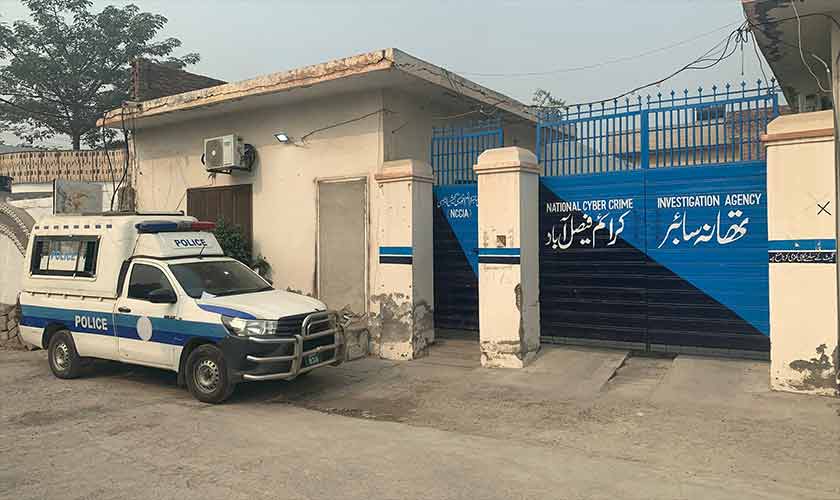
aira* Aslam, a working woman from Wapda City, Faisalabad, says she expected protection when she approached the National Cyber Crime Investigation Agency office in Faisalabad a few months ago. Instead, she says, she encountered ridicule, delay and institutional resistance. “I now believe that approaching them [for help] was the biggest mistake of my life,” says Saira.
Aslam says a professional rival, aided by several men, had launched a coordinated defamation campaign against her on Facebook. She says false allegations were circulated for weeks. She and her daughter issued responses but the harassment escalated into serious character assassination and death threats.
When she sought legal remedy, she says, she rather than the accused became the primary focus. After she had made several visits to the NCCIA office, she says, she was called for “complaint verification.”
There, she alleges, an investigating officer made mocking remarks about her complaint and demanded that she surrender her mobile phone for forensic analysis. She was told that the agency could not proceed further without her handing over the device.
“All the evidence was available online. I had submitted screenshots and links,” she says. “There was no need for my personal phone.”
When she questioned the legality of the demand, she says, she was sent back without further action. A complaint filed through the Prime Minister’s Portal was later closed with the remark that she had not visited the office. She contests the claim. Subsequent complaints to senior authorities, she says, have yielded no action.
The complaint is not unique. Fatima Idrees,* a freelance journalist, says an officer suggested that her harasser might simply be a “boyfriend” acting out of anger and that the matter would resolve itself. She says her complaint was eventually closed for “non-pursuance.”
Mah Noor,* a school teacher, says she withdrew her complaint after being asked to surrender her mobile phone.
The experiences, narrated by actual women in Faisalabad, mirror concerns raised in a research report published by the Human Rights Commission of Pakistan titled Rethinking the Prevention of Electronic Crimes Act: How Cybercrime Laws Are Weaponised Against Women. The report concludes that women approaching the authorities with complaints of online harassment continue to face systemic barriers to justice.
Legislation
When the Prevention of Electronic Crimes Act was passed in 2016, one of its stated objectives was to protect women from digital abuse. At the time, the-then state minister for information technology had argued that, in the absence of legal safeguards, women were being driven to ‘suicide.’ Yet, within months of PECA’s passage, a final-year student at the University of Sindh, Jamshoro, allegedly died by suicide after being blackmailed over some photos. In 2020, another woman reportedly took her life following similar official inaction on her complaint.
The HRCP concludes that the promise of protection remains largely unfulfilled. Instead of serving as a shield for women, the law has frequently been used to target dissenters, enable censorship and reinforce patriarchal power structures that silence women. The report documents a troubling pattern: women who seek legal remedy often encounter procedural delays, dismissive attitudes and further harassment, sometimes from the very institutions tasked with protecting them.

Particularly concerning, the HRCP notes, is the coercive nature of the pre-trial stage. Although Sections 160 and 161 of the Criminal Procedure Code appear neutral on paper, those summoned - whether accused or witnesses - are frequently made to wait for hours, repeatedly called in and treated as guilty from the outset. Official notices often fail to distinguish between an accused person and a witness. Such practices, the report observes, run counter to the state’s obligations under international human rights instruments, including the ICCPR and the CEDAW.
Legal practitioners in Faisalabad echo these concerns. Maria Rustam, a member of the District Bar, says it is common for the NCCIA officials to discourage complainants rather than register FIRs.
“The objective often appears to be to exhaust the complainant to the point where she withdraws the case,” she says. “This reduces the investigative burden.”
Rustam says that demanding a complainant’s mobile phone at the complaint verification stage is “unlawful and amounts to harassment.” According to her, the investigating officer’s responsibility at that stage is to assess the available material and determine whether a cognizable offense is made out. “Forensic examination of a mobile phone can only be conducted under a court order, typically at the trial stage. Demanding the phone prior to FIR registration has no legal basis,” she maintains.
The Digital Rights Foundation, a non-profit organisation advocating for safer digital spaces, says that the legal framework already provides a structured procedure. Under PECA 2016, the Prevention of Electronic Crimes Investigation Rules 2018, S.O. No. 05/2020, and the Cyber Crime Standard Operating Procedures, a Verification Officer must complete complaint verification within 15 days. Enquiries should ordinarily be completed within 45 days. Once an FIR is registered, the investigating officer is required to submit a report within 60 days.
Crucially, the DRF clarifies, the NCCIA has no legal authority at the complaint verification stage to compel a complainant to surrender her personal mobile phone or conduct forensic analysis prior to FIR registration. The SOPs confine verification to a preliminary review of reported online content, recording the complainant’s particulars, obtaining a verified CNIC copy, collecting available details of the accused and securing an undertaking of cooperation. Device seizure at this stage exceeds the scope of the law and is a violation of the PECA framework.
The chasm between authorized procedure and practice appears to be wide. According to information available on NCCIA’s official website, 171,600 complaints were received in 2024 alone, including 37,065 filed by women. The agency’s data indicates that the conviction rate in cybercrime and online harassment cases is remarkably low.
Data obtained under the Right to Information law paints a similar picture. During the last nine months of 2025, the NCCIA received 94,592 complaints. Of these, 73,332 were closed without formal inquiry. Enquiries were conducted into 21,260 complaints, resulting in the registration of 1,140 FIRs. Challans were submitted to courts in 651 cases. Only 20 convictions were secured during this period.
The numbers raise fundamental questions about filtering mechanisms at the complaint stage, investigative capacity, prosecutorial effectiveness and institutional accountability.
Multiple attempts were made to seek clarification from the director general of NCCIA and the circle incharge of NCCIA Faisalabad regarding allegations of unlawful demands for mobile phone surrender, hostile conduct by investigating officers, the low conviction rate and internal accountability mechanisms. No response was received.
The HRCP suggests that the solution lies not in mere administrative reform but in structural change. The report calls for clear legal mechanisms within the PECA to hold investigating agencies accountable for abuse of power, investigative delays and conduct that undermines the dignity of complainants.
It urges the parliament to undertake a comprehensive legislative review of the PECA, including summoning annual reports under Section 53, holding public hearings to document testimonies of alleged misuse of powers and conducting collaborative sessions with federal and provincial judicial academies to assess implementation challenges.
It also recommends reviewing proposed amendments to PECA 2016, the Investigation Rules 2018, the Criminal Procedure Code and relevant constitutional provisions particularly to strengthen safeguards at the pre-trial stage.
Nearly a decade after PECA’s enactment and more than a year after the transition from FIA’s Cyber Crime Wing to NCCIA, for many women seeking digital justice, the lived reality remains fraught with delay, discouragement and distrust.
*Note: names have been changed to protect the survivors
The writer has been associated with journalism for the past decade. He tweets @naeemahmad876