Print Story
X




Save for a few standouts, the drama industry keeps on churning out the same old fare

| I |
s the drama industry in need of a serious overhaul? When the same stories keep resurfacing with new faces, this becomes more than casual criticism - it becomes a necessary question. How long can audiences be expected to engage with narratives that feel recycled; performances that feel rehearsed; and plot lines that unfold as predicted? When there is no element of surprise, there is little incentive to stay invested.
Too few and far between are the stories that genuinely feel like a breath of fresh air, regardless of whether they carry an explicit social message. Entertainment, in itself, is not the problem, but even entertainment demands substance. For today’s audience, depth is not optional; it is fundamental.
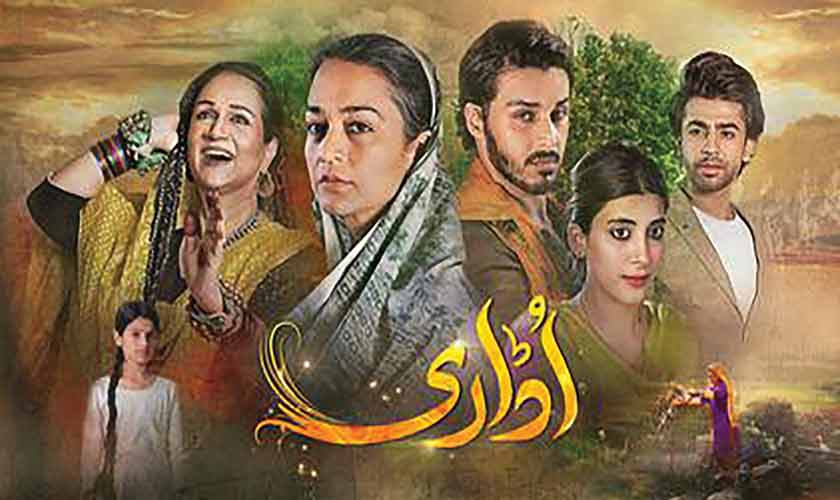
This is not to deny that some remarkable dramas have been produced in Pakistan. Pakistani content travels across borders, earning admiration and recognition. Yet such standouts remain exceptions rather than the rule. Certain projects have commendably sparked difficult conversations such as not-so-perfect but highly revered joint family system and harassment in Jama Taqseem; the importance of girls’ education and the harsh reality of child labour in Zard Patton Ka Bunn; child sexual abuse in Udaari; and the exploration of cybercrime and public shaming in the currently on-air Aik Aur Pakeezah. These dramas were purposeful - written to raise awareness and provoke dialogue. They carried intent beyond ratings.
However, when one shifts their gaze to so-called “pure entertainment,” the cracks come to the surface. Much of what is produced lacks depth, not only in writing but in performance as well. Consider the stereotypical portrayal of a university-going girl: exaggerated expressions, loud body language, childish rebellion masquerading as humour. These caricatures are sold as comedy. They rarely resemble young women navigating higher education.
There is a similar lack of maturity about most male characters. Sheer immaturity, irritable behaviour and chaos are equated with wit. In contrast, classics such as Aangan Terha had offered sharp, layered humour without reducing characters to parodies. Even recent productions like the Kis Ki Aayegi Baraat franchise and Ishq Jalebi, though centred around marriage, managed to bring freshness, timing and authenticity to familiar territory.
The stagnation is perhaps most evident in writing. For over a decade, the same creative circles have dominated seasonal programming - particularly Ramazan dramas - often recycling the trope of the chaotic girl or boy who inevitably falls in love with a cousin. Cousin marriage appears to be the beginning and end of collective imagination. Marriage, preferably within the family, becomes the ultimate goal, the central conflict and the punchline - all at once.
How long can audiences be expected to engage with narratives that feel recycled; performances that feel rehearsed; and plot lines that unfold exactly as predicted? When there is no element of surprise, there is little incentive to stay invested.
One craves narratives that venture beyond this narrow lens. Where are the stories about workplace politics, professional ambition, financial stress, fractured friendships and identity crises? There is an abundance of lived experiences waiting to be explored, yet the industry remains fixated on weddings and domestic rivalries. Even contemporary romance tends to circle back to the same heightened tropes visible in shows like Tairay Bin and Meem Say Mohabbat.

Even if marriage must remain central - a fair choice given the cultural realities - why is it reduced to clichés? The tyrannical mother-in-law, the manipulative sister-in-law, the jealous unmarried cousin: these archetypes have been exhausted. Marriage is a union of two individuals shaped by different histories and emotional landscapes. It brings negotiation, compromise, clashing values and quiet growth. As Jama Taqseem demonstrated effectively, in this region, marriage is not merely the union of two people, but of two families, ripe with complexity that remains largely unexplored.

This leads to an uncomfortable question: does this obsessive repetition stem from a lack of creative courage, or from market demand? Are such narratives profitable because they reflect unfulfilled aspirations, or because they are safe and proven to sell? Perhaps both. Ratings often dictate risk. Yet safety breeds stagnation.
All the more reason, then, to appreciate the writers and producers who have dared to deviate - those behind Ishq Jalebi, Kis Ki Aayegi Baraat, Kafeel, Jama Taqseem, Jo Bichar Gaye and Duniyapur - productions that reflect a capacity for range, wit and narrative ambition. One can claim them as products of Pakistani drama industry with pride. They serve as reminders that the industry is capable of far more than repetition.
The question, ultimately, is not whether talent exists. It does. The question is whether the industry is willing to risk reinvention.
The writer is based in Karachi. She can be reached at [email protected]