Print Story
X




Local traders see a beautification drive aiming to restore the colonial allure of the Clock Tower area as an inconvenience
| W |
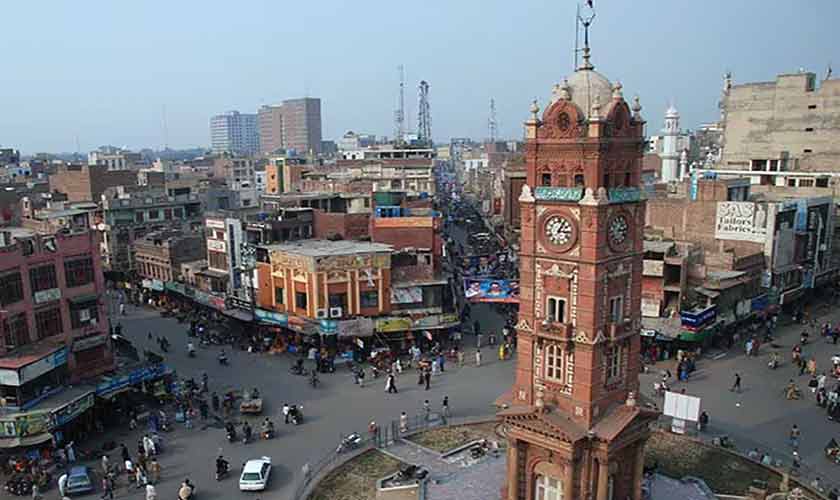
ork under a comprehensive beautification plan for Faisalabad’s historic Clock Tower area and the adjoining Katchery Bazaar has been under way since early January. The project aims to transform Katchery Bazaar into a model market while restoring the historic identity of the old city.
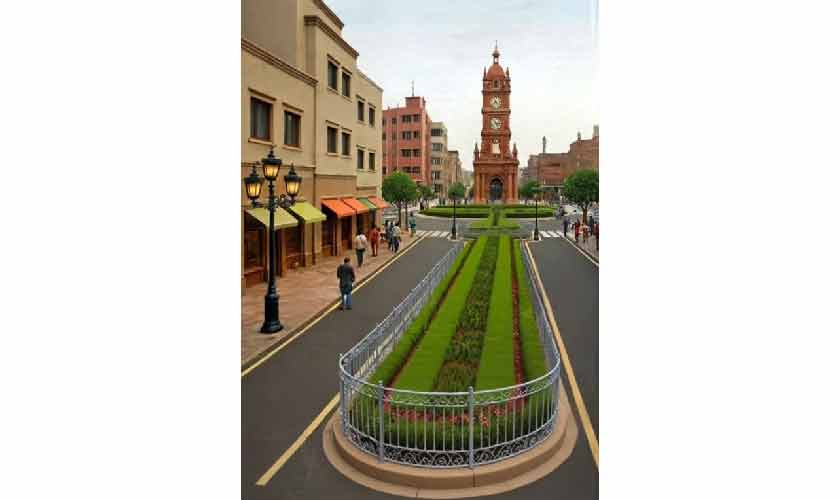
Several buildings, including the historic Zail Ghar, are being restored to their original design. A green belt is being constructed along the road passing through the Katchery Bazaar.
Shop fronts and plazas are also being redesigned with uniform panels to create visual harmony. Earlier signboards and shutters have been removed to install standardised boards across the market.
Overhead electricity and telephone wires are being shifted underground. Excess wires attached to poles, shop fronts and rooftops are also being removed to enhance the aesthetic appeal and preserve the area’s historic charm.
While the administration views the project as a step towards heritage preservation, some traders complain that the manner in which the project is being conducted and its timing have affected commercial activity in the area.
Aslam Bhalli, the Supreme Anjuman-i-Tajran president, says traders’ organisations and other stakeholders were not consulted before initiating the project. He says that all eight bazaars surrounding the Clock Tower house wholesale markets.
“Before declaring them vehicle-free or launching the proposed beautification, the government should have first developed a comprehensive plan to relocate wholesale operations to an alternative site,” he says.
Bhalli says that nearly 80 per cent of the wholesale business across the eight bazaars has been affected.
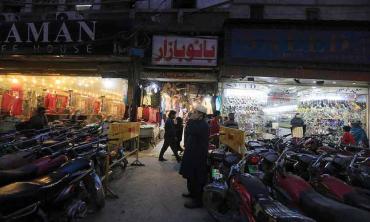
Traders complain that construction began without notice and is progressing slowly. With the Eid shopping season beginning, ongoing digging, dust and restricted access have discouraged customers from visiting the markets.
Aftab Butt, general secretary of the Anjuman Tajran Railway Road and city chairman Mirza Muhammad Ashraf Mughal have expressed deep concern over the lack of parking plazas and the worsening traffic issues.
Chaudhry Shafiq Anjum, president of the Chamber of Small Traders, questions the feasibility of a vehicle-free model given the city’s harsh climate. Repeated earthwork and the scattered debris in Katchery Bazaar, he says, have created immense difficulties for both shopkeepers and customers.
Divisional Commissioner Raja Jahangir Anwar says that the Clock Tower and its eight surrounding bazaars are not merely commercial zones but iconic symbols of Faisalabad’s colonial heritage. He says the project aims to restore the lost urban value and revive the true character of the old city, which has long suffered from congestion and disorganised parking.
To mitigate business disruption during this transition, he says, the government is providing free electric carts for customers. The government is bearing the operational costs.
He says that once the project is completed, the switch to a pedestrian-friendly zone will significantly raise property values and increase customer footfall.
Addressing concerns over parking, Raja Jahangir Anwar says that a comprehensive city-wide parking master plan has been developed. This plan prioritises four major parking zones around the central bazaars and introduces a new policy allowing the private sector to develop parking facilities.
Additionally, the city’s designated parking company is authorised to lease private land to establish structured parking solutions. He views this initiative as profound urban regeneration rather than simple beautification. He says its aim is to transform the area into a Central City Square attracting local families and tourists alike.
The beautification plan is expected to extend to the remaining Clock Tower bazaars after completion of work in Katchery Bazaar. It includes restoration of historic buildings, shifting of utility wires underground, installation of standardised signboards and possible construction of green belts.
Stakeholders say for the vision to succeed, implementation must balance heritage conservation with commercial sustainability. Adequate parking infrastructure, climate-sensitive planning and meaningful stakeholder consultation are essential to ensure that urban renewal does not come at the cost of livelihoods. Even after significant public investment, the sustainability of these improvements will also depend on maintaining greenery, cleanliness and infrastructure standards.
The contributor is the Faisalabad Bureau chief of daily Jang