Print Story
X




Poetry recited under starlit skies and engaging discussions
| I |
n the crisp February air of Peshawar, where the ancient city’s storied walls whisper tales of empires past, unfolded a renaissance of sorts.
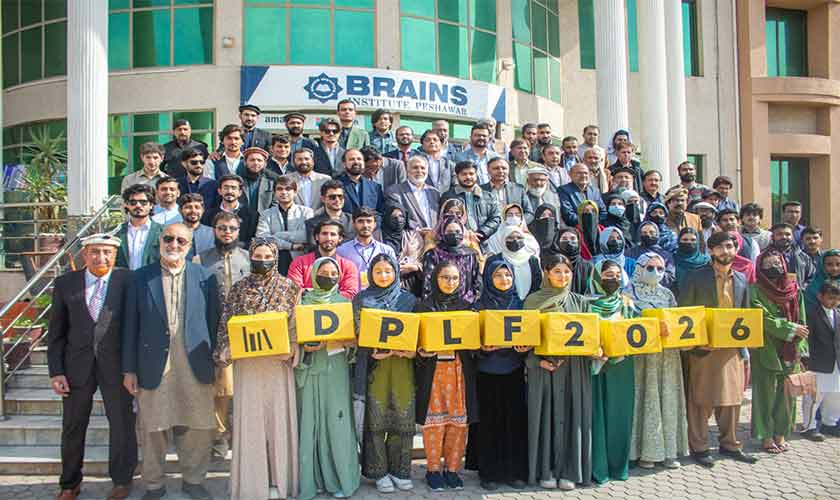
The 5th edition of DOSTI Peshawar Literature Festival was hosted, from February 9 to 15, by the BRAINS Institute. The venue transformed into a bustling hub of ideas and conversations as soon as the event began.
This wasn’t just another literary gathering; it was a defiant celebration of intellect in a region too frequently overshadowed by militancy and conflict. As the pioneering and most intellectually significant literature festival in Khyber Pakhtunkhwa, DOSTI Peshawar Literature Festival has, since its inception five years ago, rewritten the narrative of the province—from a frontier outpost to a vibrant epicentre of cultural and scholarly revival.
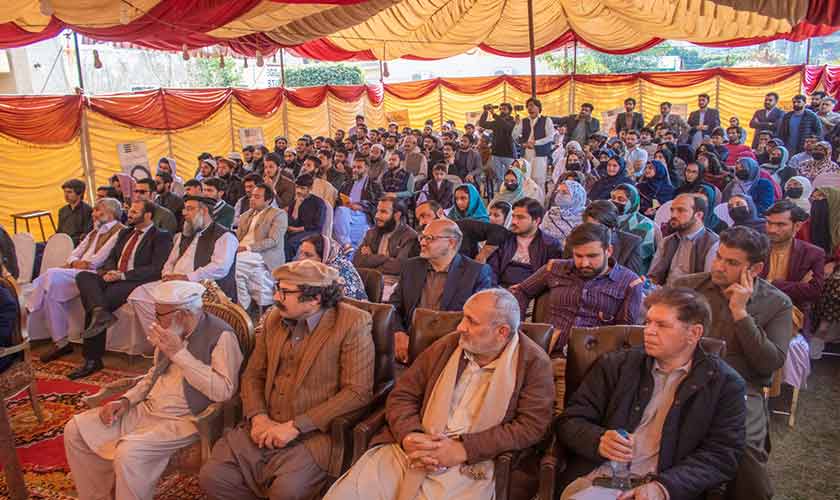
Picture this: scholars in traditional shalwar qamees mingling with young students clutching notebooks; poets reciting verses under the winter sun; and policymakers debating the future of AI in Pashto-inflected English. Over seven days, the festival drew thousands—writers, academics, activists and literature lovers—from across Pakistan and beyond.
Its expansive line-up was a testament to ambition: five keynote addresses set the intellectual tone. Then there were 23 panel discussions, dissecting everything from post-colonial identity to environment protection; 21 debates that sparked lively audience interventions; seven intimate author talks; five book talks that unpacked new releases; nine hands-on workshops for aspiring writers; three book launch sessions; a soul-stirring mushaira; an online session bridging global voices; and four specialised sessions in indigenous languages.
What makes DPLF unique is its grassroots reach. Beyond Peshawar, active chapters in Swat, Karak and Dera Ismail Khan extended the festival’s embrace, decentralising literary culture and inviting remote communities into the fold. “DPLF isn’t confined to urban elites,” says Professor Dr Altaf Qadir, a co-founder of the event. “It’s about igniting fires in every corner of Khyber Pakhtunkhwa. Literature becomes a tool for empowerment.”
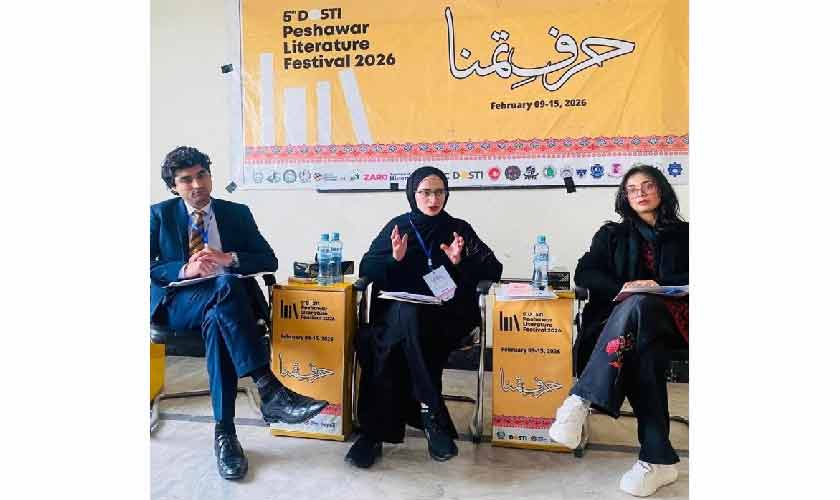
This commitment to inclusivity has positioned the DPLF as a bridge between scholarship and society, fostering dialogues that resonate far beyond the institute’s gates. The inaugural ceremony, held on February 9, captured this spirit perfectly. Organised in the institute’s grand auditorium, it gathered luminaries from academia, cultural governance and literary circles.
Zafar Ullah Khan, rector of the BRAINS Institute, opened with a visionary address, emphasising literature’s role in healing societal divides. “In a world fractured by misinformation and extremism, festivals like the DPLF remind us that words can build bridges,” he remarked, setting a formal yet hopeful tone. Following him, Arsalan Naseer, executive director of DOSTI Welfare Organisation—the festival’s driving force—spoke of the event’s evolution.
“The DPLF has grown into a movement that redefines KP’s identity,” he said, highlighting how the festival counters global perceptions of the region as a mere conflict zone.
As the week progressed, the festival’s thematic diversity shone through, blending academic rigour with civic urgency. Mornings often kicked off with keynote sessions exploring the enduring relationship between literature, society and collective consciousness.
A lecture on post-colonial identity stood out. During it, speakers dissected how Pakistani literature challenges colonial legacies and reshapes public imagination. “Literature isn’t passive; it’s a weapon against stereotypes,” said a panellist, drawing nods from an audience that included students from the University of Peshawar.
The discussions spanned indigenous linguistic traditions—the evolution of Pashto literature, the heritage of mother tongues and structured language learning—to pressing contemporary issues.
Panels on governance and public policy tackled corruption and reform. Sessions on environmental law addressed KP’s vulnerability to climate change, from melting Himalayan glaciers to urban pollution in Peshawar.
Social justice took centre stage in talks about gender equality and minority rights, with voices from marginalised communities sharing poignant stories. A particularly timely debate focused on preventing violent extremism. During it, some experts linked literary education to building resilience against radical ideologies.
But the DPLF wasn’t all somber analysis; it embraced the future with enthusiasm. Forward-looking sessions on digital modernity delved into artificial intelligence’s impact on authorship and post-humanism’s philosophical underpinnings.
“In an era where AI writes poems, what does it mean to be human?” a keynote speaker mused, sparking debates that extended into coffee breaks. Education’s changing contours were another highlight, with workshops on integrating technology into curricula, reflecting KP’s push toward a knowledge economy.
Amid intellectual fervour, the DPLF also celebrated KP’s living cultural traditions. The mushaira, held under twinkling lights on the institute’s lawns, featured poets from across the province. They recited ghazals and nazms that evoked the rugged beauty of the Hindu Kush. Community chapters organised cultural evenings with folk music and storytelling.
On February 15, Zafar Ullah Khan kicked off the proceedings. He was followed by Arsalan Naseer’s reflective remarks on the week’s achievements. Professor Altaf Qadir presented a comprehensive overview, recounting highlights from the diverse sessions and the festival’s growth. Shields and certificates were distributed by Atta Ullah Khan, former secretary to the speaker of KP Assembly.
In his concluding address, Ijaz Khan lauded the core team’s dedication. “The tireless efforts of Prof Dr Altaf Qadir, Prof Dr Syed Hanif Rasool from the University of Swat, Dr Aslam Mir, Mr Yasir Ali Sarmad, Mr Hamza and the entire DOSTI team have made this festival a reality,” he said.
In a forward-looking announcement, he named Dr Aslam Mir as the chief organiser for the 6th edition, slated for March 2027. Khan also extended gratitude to Dosti partners.
The writer is a Peshawar-based journalist. He mostly writes on art, culture, education, youth and minorities. His X handle: @Shinwar-9