Print Story
X




A disclosure meant to clarify instead produces a culture of search, churn and procedural suspense. With Chomsky’s name pulled into the Epstein Files-cycle, a theory of media power meets the conditions of its own afterlife

| T |
he archive did not arrive as a story. It arrived as a portal.
A scatter of links, a promise of “transparency” delivered in the calm diction of compliance, files stacked with bureaucratic neatness and a search bar waiting for the citizen to do what the citizen now does by reflex: type a name, collect a hit, feel the brief jolt of recognition and call it knowledge.
This is how disclosure looks in our moment. It does not invite reading. It invites scanning.
The Epstein Files were released with the tone of a public good, as if a long-shut window had been opened and the stale air finally let out.
The announcement came in the idiom the modern state prefers: scale—millions of pages, thousands of videos and images in quantities too large to picture. Numbers now do the moral work. They suggest seriousness. They hint at closure.
The public responded with the posture that the platforms have taught us. It searched. It skimmed. It shared. The story was less about what the documents contained than the feeling of being permitted inside and the older feeling that the room had been arranged before you arrived. A scandal now moves at the pace of the feed. It refreshes; it rarely concludes.
Then came the moment of a particular, almost uncomfortable neatness. Noam Chomsky’s name surfaced in the orbit, circulated as part of a secondary narrative about his interactions with Epstein. The details, whatever their full meaning, were instantly shadowed by what the symbol offered. The critic most associated with diagnosing the manufacture of legitimacy in the late Twentieth Century had become a figure in a scandal archive that, in the public imagination, stands for elite indulgence and impunity. A phrase had met its own archive.
The irony is not merely personal. It is a clue to how Western public life now handles truth and criticism.
The first life of the phrase
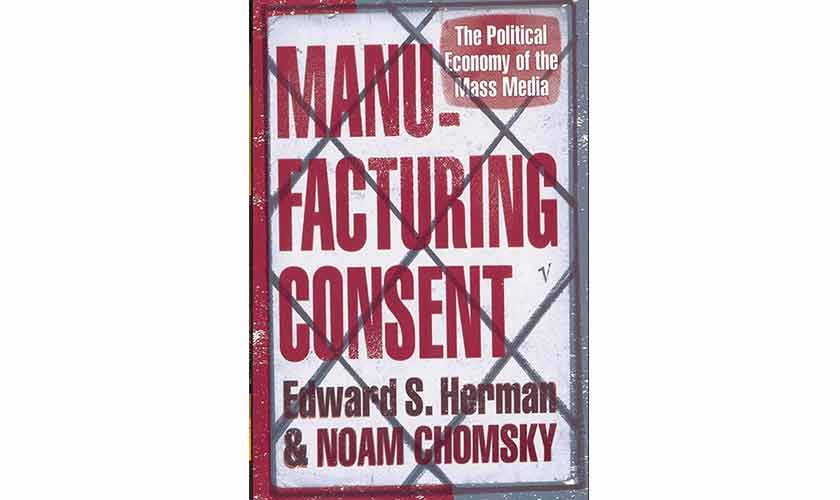
“Manufactured consent” has been quoted so often that it risks sounding like a mood rather than a claim. It began as something precise. Edward S Herman and Noam Chomsky published Manufacturing Consent in 1988, in a media order built around gates. A small number of broadcasters and newspapers set the terms of public reality. Editors could decide what entered the national conversation. Omission had force.
The Chomsky twist is not merely personal. It shows how criticism is handled now: absorbed, personalised and repackaged as proof that nothing structural can be understood.
Their argument was never a casual complaint about bias, a word that flatters the reader by implying a neutral position from which bias can be corrected. Their claim was structural. They described a system in which the political economy of media shapes news before a journalist writes a sentence. Ownership disciplines. Advertising disciplines. Reliance on official sources disciplines. Reputational punishment disciplines. The result is not identical propaganda everywhere, but a narrowing of what can sound “reasonable,” a tightening of the boundaries of permitted debate.
Consent, in this account, is not an opinion tucked inside the mind. It is a public condition, the political requirement by which a social order is maintained. A managed common sense that makes certain outcomes feel natural; certain violence feel regrettable yet necessary; and certain questions feel unserious. The power of the concept lay in its refusal of melodrama. It suggested that agreement can be managed without police and without bans. Etiquette, repetition and the soft authority of what “serious people” say can do the work.
The phrase gained a second life in the early 1990s when the documentary Manufacturing Consent: Noam Chomsky and the Media travelled widely through public broadcasting and the National Film Board’s distribution ecosystem in Canada. The argument became a visual grammar, reaching audiences who would never read the book. By then, another language of inevitability had settled over political life: the Washington Consensus, the grown-up idiom of global economic reasonableness. Its propositions travelled as if they were simple maturity. The term “manufactured consent” began to feel attached to that era, not as a slogan but as a diagnosis of how legitimacy is built around an order presented as common sense.
That was the first life of the phrase. It described a world where power could keep certain truths out of public view and where public agreement could be shaped through what was excluded and how what was included was framed.
The second life: begin with volume
The Epstein Files belong to a different media physics. The gate matters less than the torrent. The defining experience is not a narrative one can follow from beginning to end. It is an archive one can search.
That difference is not cosmetic. It changes what public attention can do. Reading forces time and sequence. It asks one to weigh, to return, to tolerate uncertainty. Searching encourages extraction. It is impatient. It is name-driven. It lends itself to a politics of who rather than an institutional analysis of how.
Transparency, staged as volume, becomes a kind of moral theatre: the archive stays open, the story keeps moving; the consequence drifts.
A million pages does not enlighten a working public. It creates a market for intermediaries.
It forces reliance on navigators: the outlet that maps the dump; the commentator who threads it into a plot; the influencer who surfaces names; the partisan operator who turns fragments into verdict. Even well-meaning navigation guides carry a quiet confession: access exists but legibility remains scarce. The archive can be open and still defeat lay citizen understanding.
Here, the connotation of “manufactured consent” shifts. The older story turned on filters and exclusion. The new story turns on inundation. Consent is shaped not only by what is withheld, but also by what is released in quantities that overwhelm judgment and invite outsourcing.
The scandal also acquires a new rhythm; it serialises. Releases arrive in tranches. Each tranche restarts the cycle and the public learns to assume the decisive evidence lies just ahead. Anticipation becomes a habit. That habit suits platforms that reward return visits. It also suits institutions that can present disclosure as an answer while the consequences drift. Publication becomes performance. Numbers do the moral work. Motion replaces settlement.
Procedure takes over
Sexual violence carries a moral burden that cannot be discharged by scale. Information in this domain is not neutral. It has victims attached to it. It carries risk as well as truth.
When disclosures mishandle that burden, when redactions fail or personal information leaks, the release becomes part of the harm. A second injury arrives, administered by process. The public’s attention is then pulled from responsibility into mechanics, because mechanics are easy to narrate and endlessly renewable.
What was redacted? What was temporarily removed? What returned? What is missing? Procedure becomes the story.
This shift trains a particular kind of endurance. It teaches the public to live inside a permanent procedural present, always scanning, always waiting, always ready for another release to restart outrage. It also makes the desire for closure feel naïve.
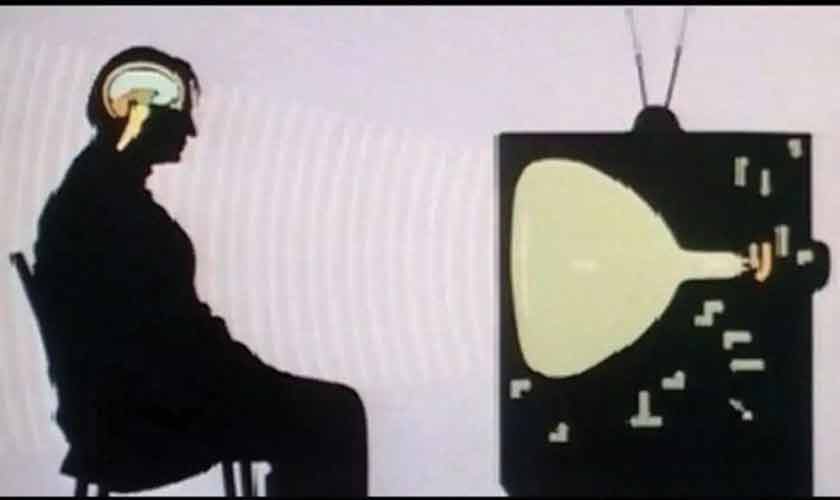
This is where “manufactured consent” begins to name something broader than media gatekeeping. It names a public condition in which information circulates quickly and consequences struggle to arrive. People feel informed while remaining politically weightless. Outrage rises and falls in the rhythms of circulation. Participation becomes sharing.
Inconclusiveness begins to look less like a failure and more like a stable outcome.
Chomsky now: the critic as a usable figure
This is the context in which the Chomsky irony bites.
A media ecosystem organised around speed and moral heat extracts value from proximity as much as from proof. A name does not need to be guilty to be profitable. It needs to be recognisable, narratable and capable of producing an arc that can travel.
Chomsky’s presence in the Files-cycle immediately supplies such an arc. The critic of media power appears in an archive associated, in the public imagination, with elite corruption. “Manufactured consent” is pulled from analysis into mockery. It begins to circulate as a jeer, a way to collapse critique into hypocrisy.
The move is simple. It flatters disillusionment.
If the critic is compromised, then critique is theatre and belief foolish. That can sound like sophistication. It often functions as resignation.
The scandal refreshes; it does not conclude. . . The critic becomes a usable figure; critique is treated as theatre.
A public that expects betrayal as baseline stops demanding clean outcomes. It begins to demand the next reveal. Exposure becomes entertainment. Scandal stands in for accountability. The feeling of being “in the know” replaces the slower work of building consequence.
This is why the moment matters beyond the man. It shows how the system now handles criticism. It not only resists it. It absorbs it, turns it into a character and uses the character to suggest that nothing structural can be understood, only mocked.
Three habits of attention
A scandal like this exposes the split within Western media ecosystems.
For good reason, institutional journalism moves with caution. It knows the cost of turning mention into conviction. Yet in a distrustful environment, caution is punished: caveats sound like hedging; context sounds like protection.
Partisan and influencer ecosystems take the opposite route. They collapse adjacency into a verdict. They thrive on velocity. Their product is moral heat rather than understanding. The archive becomes material for mobilisation, often without organisation.
A third layer is now permanent: the hermeneutics of suspicion. Disclosure multiplies doubt. Every release implies another hidden reserve. Every redaction implies a cover story. Every glitch implies sabotage. Vigilance becomes identity. Adjudication rarely arrives.
Democracy can survive disagreement. It struggles when people no longer share standards of evidence or a common expectation that disputes can be concluded.
A nation’s scandal has become attractive partly because the local consequences have weakened.
Local journalism, at its best, made power legible in ordinary life. Budgets, contracts, policing, schools. It turned accountability into practice. It created a habit of conclusion, not as aesthetic preference but as civic necessity.
As local news collapses, the appetite for accountability migrates upward into national spectacle, where consequence is harder to secure and easier to simulate. Outrage becomes an identity because leverage is scarce. Scandal becomes a substitute for governance.
The Epstein Files land neatly in that environment. They carry moral charge. They arrive in endless volume. They offer countless names. They permit an outcome that can always be deferred.
Recalibration, in plain terms
The future of Western media ecosystems turns on a blunt question: can societies recalibrate the relationship between disclosure and consequence?
Without that recalibration, public life will remain organised around recurring scandals, contested releases and a widening gap between what is known and what is done. The archive stays open, the story keeps moving and the powerful remain durable, helped by a system that can move attention faster than accountability can travel.
Recalibration does not require nostalgia for a vanished golden age of gatekeepers. It asks for unglamorous infrastructure.
It asks for clearer provenance, so documents come with legible handling, context and limits. It asks for disclosure protocols that treat victims as primary, not as collateral, in a transparency performance. It asks for journalism financed as civic capacity rather than feed-dependent theatre.
It asks for platform conditions where amplification can be seen, audited and understood, because the decisive power now lies as much in what is made to travel as in what is published.
None of this promises a restored public sphere. It offers something more basic: the ability to conclude.
The Epstein Files clarify something Herman and Chomsky could only partly anticipate. Consent can be manufactured without silence. It can be maintained through volume, serial releases and procedural churn. The public can be shown everything and still struggle to hold anything.
That is why the phrase survives and changes. It once described the management of perception through gatekeeping and framing. It now describes the management of endurance: the conversion of archives into episodic content, outrage into circulation and critique into spectacle.
The archive is open. The question is whether openness will mean anything beyond the right to search, to share, to feel briefly shocked and to move on. A society that cannot conclude struggles to compel an answer. The absence of that answer begins to feel like the normal condition of politics.
In such a society, consent is kept alive through fatigue.
Narendra Pachkhédé is a critic, writer and essayist who splits his time between Toronto, London and Geneva. His latest book is Form As History: When History No Longer Requires Us.