Print Story
X




Exploring potential and limits of AI in healthcare for Pakistan and other low- and middle-income countries
| A |
rtificial intelligence has become healthcare’s newest frontier. From Silicon Valley to Dubai, AI holds the promise of transformation: reduced diagnostic errors, lowered costs, enhanced access for all. But the real test is not in tertiary care hospitals in developed or developing country settings, it is in the myriad small one- or two-room private clinics that service millions of low-income communities across Pakistan and other parts of South Asia.
In countries like Pakistan, India and Bangladesh, acute symptomatic care takes precedence over primary care and is often delivered by small non-physician private providers, single-doctor clinics, maternity homes, dispensers, diagnostic labs and pharmacies. These providers operate on the fringes with low margins and little appetite for experimentation. If AI is to become mainstream in Pakistan and improve health outcomes for low-income populations, these often-overlooked providers have to be included in the dialogue.
Decision making and diagnostics
A clinic seeing approximately 50 patients a day cannot easily track evolving guidelines for hypertension, diabetes, tuberculosis or maternal risk. AI-enabled clinical decision support systems can assist with triage, flag danger signs in pregnancy, prompt appropriate antibiotic prescribing and standardise treatment pathways. The value is that AI works with the provider to simplify decision-making, reduce variability and standardise care.
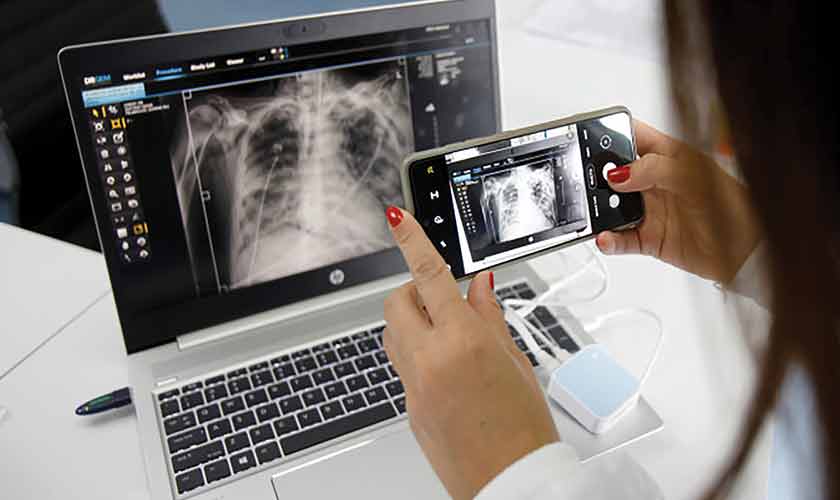
Diagnostics present another opportunity. Simple AI interpretation apps can assist in rapid readings (chest X-rays, ultrasounds) and are increasingly being used in the US and the UK. In remote areas where qualified radiologists are often scarce, AI can quickly read the ultrasound scan of a pregnant woman and thus reduce unnecessary delays to treatment services in an acute or emergency setting. For example, in Pakistan, a high burden country for TB, AI can assist in remote areas to read chest X-rays and reduce detection time to enable immediate treatment initiation.
Barriers and mindsets impeding transformation potential
The enthusiasm is tempered with reality—AI requires infrastructure. In many low resource settings, both electricity and internet connectivity are not certain. Documentation is on paper and where computers do exist, they are often outdated. Cloud-based AI tools are designed for high-bandwidth environments. Even smart-phone-based systems assume devices with adequate processing power and secure storage. Addressing this infrastructure barrier is essential to whether AI will become routine practice or remain in isolated up-end hospitals.
Cost is another consideration.
Small providers have tight business models. Will the new tool increase patient volume or revenue? If the financial incentive is unclear and not immediate, the interest is hard to engage. Software subscriptions, updates and running require some short-term investments that many are reluctant to do. During the Covid-19 pandemic, telemedicine platforms expanded rapidly in Pakistan and parts of South Asia, but many struggled to sustain operations once donor funding receded.
Current AI systems are trained on Western datasets and may not perform equally well in South Asian populations, where disease profiles, co-morbidities and environmental exposures differ.
Contextualisation
There are also some local differences that need to be ascertained. Current AI systems are trained on Western datasets and may not perform equally well in South Asian populations, where disease profiles, co-morbidities and environmental exposures differ. Over-reliance on algorithmic outputs may confuse clinical judgment. Data privacy protections (cyber security) in small clinics are often minimal, raising the possibility of patient information breaches. There is a broader systemic concern as well: AI may benefit larger hospital chains that can afford integration, potentially further marginalising the inclusion of small providers.
Low-income countries across the region face similar dilemmas. In India, digital health initiatives are trying to create interoperable health IDs and standardised records, but implementation remains uneven. In Bangladesh, mobile health services are widespread, yet AI integration remains largely urban. In Nepal and Sri Lanka, digital divides between cities and rural areas constrain scale.
Across these contexts, one lesson is clear: AI cannot thrive without basic minimal acceptance and availability of digitisation.
At the individual and community level in Pakistan, where digital literacy remains low, AI needs to enter initially through trusted intermediaries: community-health workers, pharmacists and private providers using AI-enabled tools for risk screening, triage and follow-up reminders without requiring patients to navigate complex apps. Voice-based systems in local languages, IVR (interactive voice response) calls and simple SMS prompts can support medication adherence and maternal care tracking while minimising digital burden on households.
What next?
First, AI in healthcare must be treated in the broad context of the country’s digitisation process initiated by the government for financial inclusion and transactions. Even simple electronic medical records can significantly improve continuity of care. Second, hardware gaps, power supply, device affordability, secure connectivity must be addressed through smart public-private investment. Third, AI deployment should focus on narrow, high-impact use cases: tuberculosis screening, maternal risk detection, non-communicable disease management and appointment adherence tracking. Fourth, financing mechanisms, whether through insurance schemes, government reimbursement, private sector or targeted subsidies, must align incentives for small providers.
Women must be deliberately included as both users and providers of AI-enabled healthcare. Training female frontline workers and small clinic staff in digital tools improves uptake and trust. AI design must incorporate women’s health data, privacy safeguards and literacy-sensitive interfaces. Financing models should prioritise women-owned clinics to prevent digital exclusion and widening of gender disparities.
AI is a technological capability that requires system readiness and practicality for health providers so that the final users—communities, individuals—can reap the benefits of improved health outcomes and the government can save costs on preventable health crises. AI is not the saviour of a weak system but it can, at lower cost, strengthen a functioning one.
The writer is the CEO of the Akhter Hameed Khan Foundation (www.ahk-foundation.org), an Islamabad based community organisation working on women’s primary and reproductive health and economic empowerment.