Print Story
X




Hussainabad, a small village, is rewriting Sindh’s climate story
| A |
mid the growing climate and environmental challenges facing the country, young volunteers from Hussainabad village in district Sujawal have stepped forward to play their role in addressing environmental concerns. Working under the auspices of the Ismailia Volunteer Services and the Ismailia Civic Initiative, these volunteers have launched a tree-plantation drive in Hussainabad and its surrounding areas. The initiative aims not only to enhance the natural beauty of the region but also to combat global warming and mitigate the adverse effects of climate change.
The effort, named the Clean and Green Initiative, is being managed by a dedicated team of volunteers who say that they have identified several locations suitable for large-scale plantation to help reduce the severity of the ongoing climate crisis.
Hussainabad, located in Jati taluka of Sujawal, lies at a distance of 30 kilometres from the district headquarters and is part of an otherwise underprivileged and low-lying area of Sindh. The village is situated on the main Jati–Sujawal Road, connecting Sujawal with the coastline. The area is generally known for poverty, a low literacy rate, poor infrastructure and climate-related challenges. However, the villagers have other ambitions.
“We are well aware that large-scale deforestation over a couple of decades has intensified the impact of climate change, particularly in urban and semi-urban areas of the province,” says Abdul Karim Chagla, a local villager, adding that they too were facing the harsh consequences of climate change but had decided to play their part in preventing its worsening and make their village an example for the rest of the country.
Director of Ismailia Volunteer Services, Hussainabad, Engr Feroz Ali Khowaja, noted that according to recent guidelines of their spiritual leader, His Highness Prince Rahim Aga Khan V, they have taken the responsibility of working for a better and improved ecosystem and contributing towards reducing the impact of climate change in the area. “Our spiritual leader has stressed taking concrete measures for a safe and healthy environment, besides taking the issue of climate change seriously,” he noted. He said a team of villagers had been formed to create mass awareness regarding environmental protection and the necessary measures required in this regard.
“We all have a clear vision of resisting the adverse consequences of climate and environmental change in our area”
Another member of the team, Riaz Hussain Khowaja, said that they had planted trees that were beneficial and best suited to the local climate. “Saplings of neem (Azadirachta Indica), kandi (Prosopis cineraria), ber (Ziziphus jujuba) and liar (Salvadora persica) have been planted in Hussainabad village and its adjoining areas.” He said that gardeners had been hired for the proper maintenance and grooming of the trees.
The village, comprising around 55 households with a population of about 300, has a high literacy rate, with both men and women serving in health, education, revenue and banking sectors. “More than 15 doctors and 20 female nurses, besides paramedics, teachers, lawyers and bankers, belong to Hussainabad. They are working not only in Pakistan but also in other parts of the world,” said Qasim Ali, a retired teacher dedicated for 35 years to education and literacy. He added that the villagers, with the support of AKDN-Aga Khan Development Network, and government and non-government organisations, had not only obtained development projects but also maintained them properly.
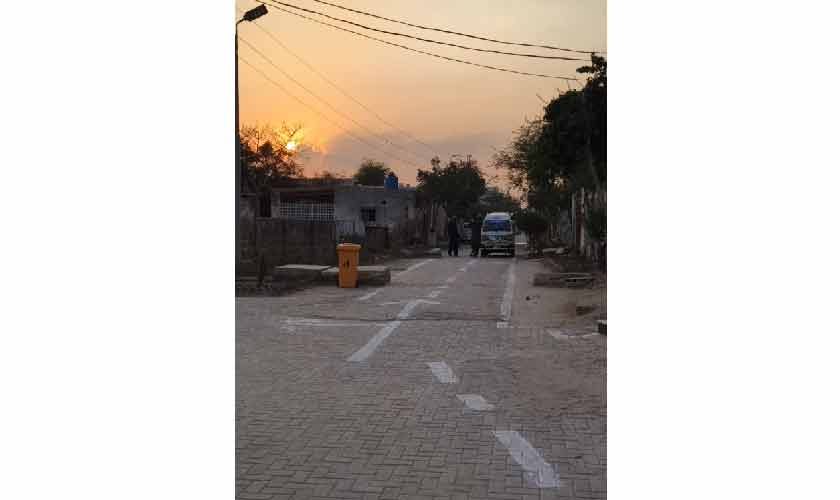
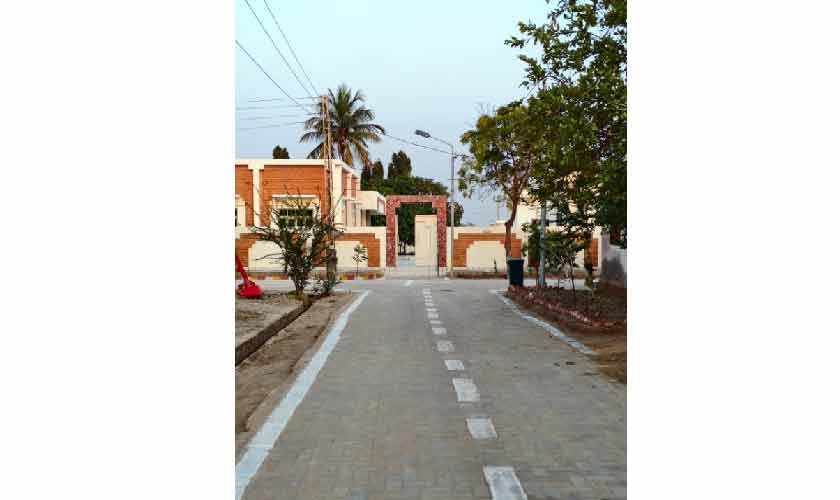
The village has a water filtration plant installed in 2013 by former PPP senator Dr Karim Ahmed Khowaja, followed by paver-block streets, streetlights, and a water drainage system provided by the provincial government.
Sharing a brief history of the village, Imdad Hussaina Acharani said that Seth Motan Khowaja, a prominent landlord of his time, his son Imam Dino Khowaja, Ashiq Ali Karimi, Nazar Ali Muhammad Saleh and Piyar Ali Hajani had established the village in 1974 with the support of the Aga Khan Federal Council for Pakistan.
Another villager, Imtiaz Ali, described the environmental uplift initiative as a revolutionary move, adding that it would bring long-lasting and satisfying results.
“We have installed dustbins in the streets of the village to encourage proper disposal of garbage. We have also initiated a campaign to discourage the use of plastic,” he mentioned, adding that in the third phase, villagers would be informed about productive use of electricity.
“We have a clear vision of resisting the adverse consequences of climate and environmental change in our area,” said Feroz Ali Hussaini. He added that the ongoing environmental crisis was no less than a war emergency. He said communities should take this issue seriously and adopt measures for environmental betterment.
Adeel Anwer, a young member of the team, urged tourists to visit Hussainabad village. He said it would soon be ranked among the most modern and eco-friendly villages of the country. He also said that the villagers were committed to improving the ecology of their surroundings and making the area safe for agricultural farming.
The author is a practicing lawyer and a freelance journalist. His interests include cultural diversity and socio-politics. He tweets as @ZainSha1 on X