Print Story
X




Syed Zaeem Hussain Qadri will be remembered for his ideological steadfastness and a fearless commitment to democratic politics
| T |
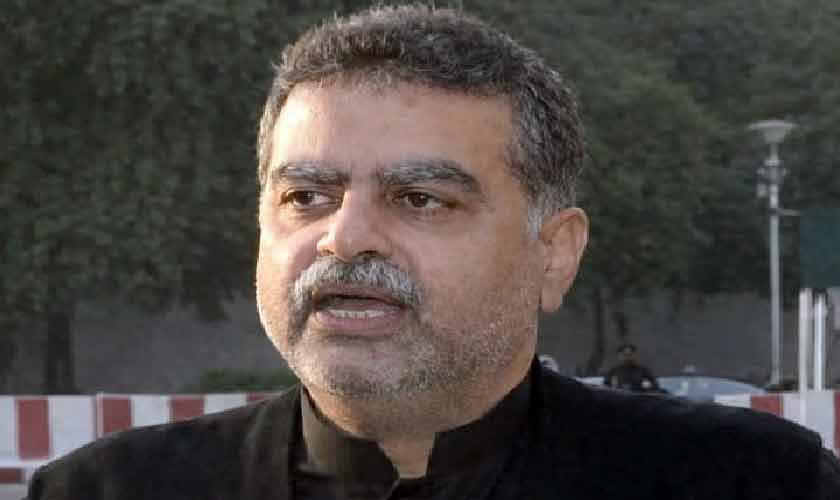
he passing of Syed Zaeem Hussain Qadri, a former provincial minister, on February 13, marks the end of an era for Punjab’s combative, articulate and ideologically driven political class. His political journey spanned decades of tumult, transition and democratic contestation, during which he emerged as a resolute voice for constitutional politics, party loyalty and an unflinching defence of civilian supremacy.
Qadri was born on January 1, 1965, into a politically conscious family. His early years were shaped by exposure to public life and ideological debate. Those who knew him from his youth recall a young man with remarkable clarity and a natural inclination towards public speaking. His oratory, later to become his political hallmark, combined sharp wit with fearless candour that endeared him to his supporters and unsettled adversaries.
Qadri gained prominence during the turbulent years that followed the military takeover of 1999 under Pervez Musharraf. At a time when many senior leaders were in exile, incarcerated or politically sidelined, he remained among the small cadre that continued organisational work. Party colleagues say he stood “like a wall of steel” against authoritarian pressure, enduring arrests, financial hardship and sustained political victimisation.
His loyalty to democratic principles and the party’s leadership ensured his steady rise in the PML-N’s Punjab chapter. Qadri later served as the party’s general secretary in the Punjab, where he played a key role in reorganising the cadre structure and energising grassroots mobilisation. Known for his accessibility, he cultivated close relations with workers across districts, often travelling extensively to address conventions, protests and press briefings.
Elected as an MPA, Qadri went on to serve as Punjab’s minister for education. During his tenure, he emphasised curriculum reform, institutional discipline and expansion of access to public schooling. Colleagues at the time have described him as a minister who combined political instinct with administrative diligence. While critics sometimes took issue with his combative style, few disputed his command over policy detail or his ability to defend government decisions on media platforms.
Despite his long-standing loyalty to the party and its leadership, Zaeem Qadri’s political career was not without turbulence. In the later years of his association with the party, he developed differences with the Punjab leadership, particularly with Shahbaz Sharif, then the dominant organisational authority in the province. Known for his outspoken temperament, he increasingly found himself at odds with what he privately described as an overly centralised decision-making structure. He complained that loyal workers who had endured the hardships of the Musharraf era were being sidelined in favour of electables and technocrats, a shift he warned was diluting the party’s ideological moorings.
In a political landscape often driven by expediency, he represented a tradition of principled partisanship — outspoken, unwavering and deeply rooted in belief. His life embodied the paradox of modern Pakistani politics: fierce loyalty coupled with the courage to dissent when principles appeared compromised.
These tensions came to the fore during ticket allocations and organisational restructuring in the Punjab. Feeling marginalised and convinced that his voice was no longer reaching the party’s inner circle, Qadri publicly expressed dissatisfaction with the internal culture of the party. The estrangement culminated in his decision to part ways with the PML-N, a development that shocked many long-time observers. He never abandoned his ideological commitment to democracy or to Nawaz Sharif’s political narrative. He maintained that his differences were with organisational management rather than the party’s founding philosophy.
Beyond offices and portfolios, Zaeem Qadri was widely regarded as a deeply ideological politician — a self-proclaimed democrat who rejected all forms of authoritarianism. His speeches often invoked constitutionalism, parliamentary sovereignty and respect for the electorate’s mandate. He remained a passionate advocate of civilian rule and a steadfast believer in the supremacy of democratic institutions.
Friends and rivals alike acknowledged his personal warmth. Those who travelled with him during long political campaigns remember his humour, personal generosity and unwavering companionship in moments of adversity. He cultivated friendships across party lines and was known to maintain cordial ties even with opponents.
His final days were marked by a prolonged struggle following a severe cardiac episode, after which he remained under intensive medical care.
Speaking to The News on Sunday, Khawaja Saad Rafique recalled:
“On his first night in hospital, Zaeem was conscious. I and Salman sahib met him in the ICU of National Hospital. He had his familiar vigour, fearlessness and faith about him. The next night, at around midnight, he was put on a ventilator.
“Words fail me… Zaeem Qadri was the brave son of a brave father. He stood firm against General Musharraf’s dictatorship, endured imprisonment, rendered financial sacrifices and endured pressure but never retreated and was never intimidated by anyone.
“From 1999 till today, we have been colleagues and brothers. Political differences did not cause personal distance. He was a dedicated lover of the Holy Prophet (peace be upon him), a patriot and a committed democrat. He spoke plainly and was a friend to his friends as well as opponents. He will be always missed. May Allah grant him complete forgiveness, the highest ranks in paradise, and bless him with the intercession and vision of the Holy Prophet (peace be upon him).”
Zaeem Qadri is survived by his wife, Syeda Uzma Qadri, who has also served as an MPA. He leaves behind a legacy defined by loyalty, ideological steadfastness and a fearless commitment to democratic politics.
The writer, an award-winning investigative journalist, is the editor-in-chief of The Scoop, a digital platform. He can be reached on X @HassanNaqvi5