Print Story
X




The two documentaries are relevant for those interested in piecing together the truth following the recent release of the Epstein Files by the United States Department of Justice

| N |
etflix’s twin documentaries, Jeffrey Epstein: Filthy Rich and Ghislaine Maxwell: Filthy Rich, function less as sensational true-crime entertainment and more as unsettling case studies in power, complicity and the psychology of exploitation. Charting the criminal networks of Jeffrey Epstein and Ghislaine Maxwell, the two productions operate as exposés of how wealth can be weaponised into immunity and how systems bend in the presence of influence.
The four-part Jeffrey Epstein: Filthy Rich (2020), directed by Lisa Bryant, foregrounds survivors rather than spectacle. Archival footage of Epstein’s Manhattan townhouse and private island is juxtaposed with testimony that steadily dismantles the illusion of glamour.
Amid renewed scrutiny surrounding Prince Andrew and his long-shadowed with Epstein, Jeffrey Epstein: Filthy Rich no longer feels like a closed chapter in a true-crime catalogue, but an unresolved indictment of power — one that continues to implicate institutions that have yet to reckon fully with their complicity.
The series illustrates classic grooming dynamics: isolation, incremental boundary violations, financial inducement and the exploitation of socioeconomic vulnerability. Many survivors describe being recruited as teenagers highlighting how developmental immaturity, combined with authority and wealth, creates dangerous power asymmetries.
The documentary also dissects the myth of “consent” often invoked in high-profile abuse cases. Survivors recount how apparent choice was embedded within coercive circumstances especially poverty, manipulation and implied threats. The emotional aftermath included dissociation, shame and hypervigilance that underscore the long shadow such exploitation casts. Rather than dramatising violence, the series centres voice restoration, resisting the voyeuristic tendency of the true-crime genre.
What distinguishes the Epstein series is its structural critique. It interrogates how wealth insulated him: prosecutorial failures, the controversial 2008 plea deal and the silence of elite networks become central to the narrative. The filthy rich include not only the perpetrators, but also the ecosystems that protected them. The absence of definitive legal reckoning due to Epstein’s death in custody in 2019 leaves the story suspended in unresolved injustice.
That lack of resolution has become more significant in light of ongoing public interest in the Epstein Files: batches of court documents, depositions and previously sealed records released in several phases over recent years. These disclosures, many tied to civil litigation and related investigations, have reignited global debate about the extent of Epstein’s connections with political leaders, business magnates and cultural elites. The Netflix series, which predates some of these un-sealings, now reads as a foundational narrative that contextualises the names, associations and institutional failures emerging in the documents.
The documentaries gain retrospective power because the Files have shifted the conversation from individual criminality to network accountability. As court records circulate online and media outlets dissect flight logs, contact books and testimony, viewers return to the series to seek coherence. The show’s emphasis on systemic complicity feels prescient. What initially appeared as a contained scandal increasingly resembles a web of social capital shielding misconduct.
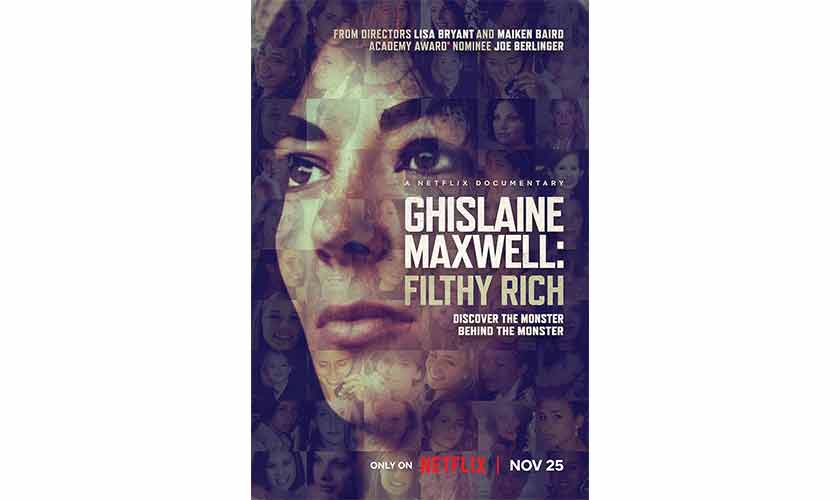
The follow-up film, Ghislaine Maxwell: Filthy Rich (2022), deepens that sense of reckoning. Whereas Epstein is portrayed as predatory and transactional, Maxwell’s depiction is socially intricate. She is presented not merely as accomplice but also as facilitator. She is often a relational bridge between the predator and the victim. The film explores how she allegedly used warmth, sophistication and perceived mentorship to disarm girls, complicating simplistic villain narratives.
Stylistically, the Epstein series is emotionally immersive, affording survivors extended narrative space. The Maxwell film is tighter and more legally oriented. Together, they form a chronological arc - exposure, outrage and consequence — albeit incomplete. They resist sensationalism and avoid graphic exploitation, focusing instead on restoring credibility to those dismissed earlier.
Maxwell’s trial, extensively covered in the documentary, provided something the Epstein series could not: a measure of courtroom accountability. Her conviction and sentencing offered a symbolic counterweight to the frustration surrounding Epstein’s death. In the context of the document releases and renewed scrutiny of elite associations, the Maxwell film functions as a procedural anchor — proof that, at least partially, the machinery of justice moved.
The timing of these documentaries also explains their evolving reception. When Jeffrey Epstein: Filthy Rich premiered in May 2020, it arrived amid global pandemic lockdowns. Attention was fragmented by crisis and uncertainty. Despite the explosive subject matter, the series did not initially dominate cultural conversation. Its restrained, testimony-driven style demanded reflection rather than binge-driven adrenaline.
Today, public trust in institutions has eroded further. Conversations about power, transparency and elite impunity have intensified as a result. The steady drip of court documents, collectively labelled as Epstein Files in media shorthand keep the story alive in public consciousness. Algorithm-driven platforms amplify each new revelation, creating cycles of renewed outrage and speculation. In this climate, the Netflix documentaries feel less like dated true-crime and more like essential background reading for an unfolding narrative.
Stylistically, the Epstein series is emotionally immersive, affording survivors extended narrative space. The Maxwell film is tighter and more legally oriented. Together, they form a chronological arc - exposure, outrage and consequence — albeit incomplete. They resist sensationalism and avoid graphic exploitation, focusing instead on restoring credibility to those dismissed earlier.
A limitation persists: the films primarily frame the story within Western elite contexts and do not deeply interrogate broader trafficking structures. Yet their relevance has only grown as legal disclosures continue to surface. The documentaries provide moral and narrative scaffolding for understanding why the release of documents matters — because behind every page of testimony are lives shaped by abuse of power.
Ultimately, the renewed attention surrounding these works is not mere hype. It reflects a cultural reckoning still in progress. As more records enter the public domain and debates about accountability continue, Jeffrey Epstein: Filthy Rich and Ghislaine Maxwell: Filthy Rich endure as stark reminders that abuse does not thrive in secrecy alone; it also flourishes where prestige, silence and influence converge and systems hesitate to confront their own complicity.
Nearly five years after Jeffrey Epstein: Filthy Rich first aired, the most unsettling takeaway is that despite documentary evidence laid out for the world to see, accountability has remained strikingly selective. Exposure does not always guarantee justice.
The fact that the documentary only chips at the surface of heinous crimes committed by the elite and powerful of the world with little to no accountability highlights the need for a systematic change.
The writer has a degree in psychology with a minor in mass communication. She can be reached at [email protected]