Print Story
X




A balanced analysis of Basant celebration must acknowledge the significant challenges that accompanied the festival’s return
| H |
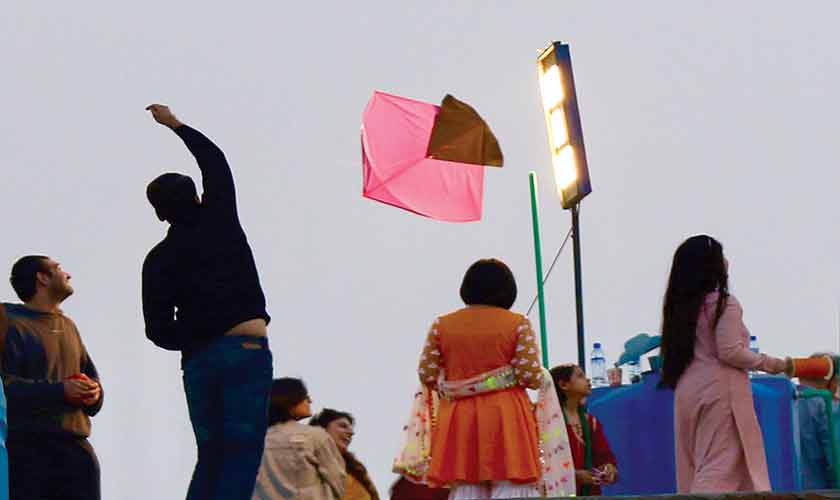
aving celebrated a kite-flying Basant in Lahore after a two-decade ban, we must ask ourselves about the pros and cons of restoring this festival. From a sociological perspective, the advantages mainly centred on opportunities for family leisure, the strengthening of inter-communal solidarity, the collective celebration of the arrival of spring and the reaffirmation of cultural heritage and local identity. The festival provided shared social spaces where people expressed collective joy, offering a temporary release from everyday pressures and social tensions that characterise city life.
The revival of Basant also had economic significance. It appeared to stimulate several segments of the local economy through tourism, small businesses and informal services, including catering, lighting, kite manufacturing and rooftop management. For many small vendors and seasonal workers, the festival functioned was a short-term livelihood opportunity and a platform to showcase their skills. In this sense, Basant may be understood as a cultural-economic event, where heritage, consumption and informal labour intersect in ways that are particularly important in cities with high levels of underemployment.
A balanced analysis must, however, also acknowledge the significant challenges that accompanied the festival’s restoration. Some reports during and immediately after the celebrations documented accidents, including individuals falling from rooftops, people being injured by kite string and children being hit by vehicles while distracted by kite flying. Despite the official ban, use of chemically treated string was also reported. These incidents echoed the very safety concerns that had originally led to Basant’s prohibition, suggesting that risk-laden practices remained embedded in behaviours and no amount of awareness campaigns and legal regulation could completely stop those.
Beyond physical harm, Basant appeared to reinforce social and class divisions. The rising costs of kites, twine and access to secure rooftop spaces limited participation for lower-income households. In contrast, affluent families were able to celebrate in fortified homes, gated communities, with ostentatious decorations and much more money spent on new clothes and food preparation. This uneven ability to celebrate safely and with elite exhibitionism, transformed what could have been a unifying cultural event into one that reflected deep inequalities in Pakistani society.
Environmental harm was another recurring concern. This included challenges of excessive waste generation, discarded strings and kite fragments. We have no data, meanwhile, on the birds injured or killed after getting tangled in kite strings. While these harms were less visible than human injuries, they add to the costs of large-scale festivities that aim to promote leisure without due regard for the community and environment.
Beyond physical harm, Basant appeared to reinforce social and class divisions. The rising costs of kites, twine and access to secure rooftop spaces limited participation for lower-income households.
The net economic benefit of the festival was unclear. While certain sectors profited temporarily, the city experienced widespread disruptions, with educational institutions being closed, official work halted, traffic movement restricted and emergency services placed under strain for three days. From a policy perspective, it remains unclear whether the revenue generated through Basant outweighed the economic costs associated with lost working days and the diversion of administrative resources.
Considering these issues, we must ask ourselves whether there are other ways of investing in community activities that may yield more inclusive social benefit? For instance, can public resources and civic energy be directed toward cultural initiatives explicitly linked to community development goals, such as neighbourhood festivals combined with fundraising for public schools, health clinics or environmental rehabilitation? Could community bake sales or urban slum cleaning initiatives preserve the celebratory spirit of Basant while reducing the risks and maximising social benefits?
Other possibilities include shifting the focus to a festival centred on local crafts, music or food traditions that do not rely on hazardous practices and that ensure safer spaces for women, children and senior citizens, while providing better opportunities for sustained income generation. Such initiatives can strengthen social cohesion, support livelihoods and reinforce cultural identity without reproducing the safety hazards, environmental damage and class divisions that accompany the exclusive kite-flying Basant.
A retrospective evaluation of Basant need not result in an outright rejection either. Instead, it should invite a thoughtful reimagining of how culture, safety and social equity are celebrated and sustained in urban Pakistan through such festivals. Such a reimagining must extend cultural expression toward community development initiatives that carry meaning and inspire people, especially the youth, to engage in activities not limited to family leisure and performativity.
The writer has post-doctoral experience in social policy at University of Oxford and a PhD in sociology from the University of the Punjab. She is an associate professor at the Department of Sociology, Forman Christian College. Twitter/X ID- @JafreeRizvi. Email: sarajafree @fccollege.edu.pk.