Print Story
X




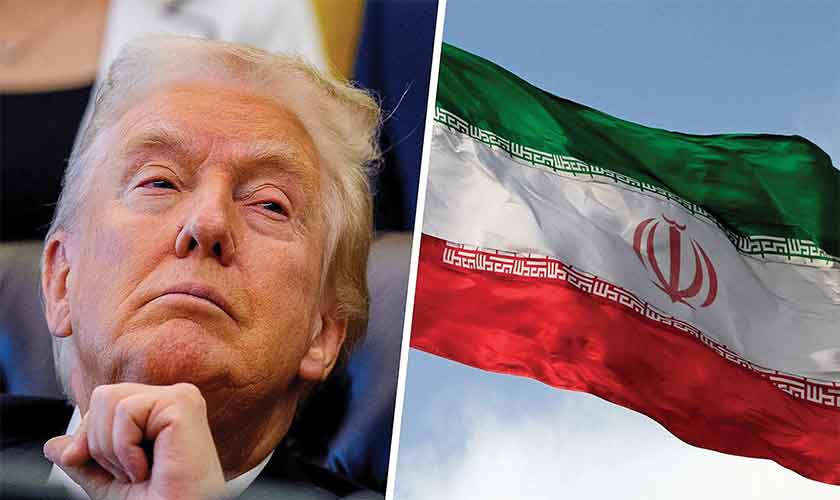
A US-Iran confrontation can have far-reaching implications for the way other states approach their nuclear assets.
| “E |
uropeans can no longer outsource their thinking about nuclear deterrence to the United States. The era in which Europe could afford strategic complacency has ended,” a report titled Mind the Deterrence Gap: Assessing Europe’s Nuclear Options states. The report has been published by the European Nuclear Study Group, established in 2024 as a joint initiative of the Munich Security Conference, the Centre for International Security at the Hertie School in Berlin and the Institute of Political Science at the University of St Gallen.
The report, presented at the Munich Security Conference this week, says that Europe risks a dangerous deterrence gap unless it urgently re-thinks its nuclear posture. The report evaluates five policy options discussed variously in European defence and security circles.
The ENSG warns of a shift in global nuclear order “intensified by nuclear threats from Moscow and mounting doubts in some capitals about the long-term reliability of US security guarantees, compelling Europe to confront a strategic problem it can no longer afford to avoid.” The five policy options are: continued reliance on US-extended nuclear deterrence; strengthening the role of British and French nuclear forces in European deterrence; developing a common European deterrent; pursuing new, independent national nuclear deterrents; and investing in conventional deterrence without a nuclear component.
The News on Sunday discussed the report’s key findings, its assessment of Europe’s nuclear posture and the broad strategic implications for trans-Atlantic security and global deterrence dynamics with Dr James W Davis, a co-chair of the ENSG, and a professor of political science and director of the Institute of Political Science at the University of St Gallen.
Referring to the escalating US-Iran tensions, Prof Davis said the apparent willingness of the American administration to use force had probably enhanced the credibility of its nuclear deterrent. “Anybody who has been watching Donald Trump must conclude that it if the US thought it necessary to use a nuclear weapon, it would. Donald Trump seems to be willing to carry out military strikes.” Prof Davis said, “if I were an adversary, I would think twice about attacking the US or one of its allies.” Talking about a president “willing to take risks,” Prof Davis said: “What matters, however, is not what Donald Trump says; what matters is what other people believe.”
Prof Davis said a US-Iran confrontation could also affect South Asian deterrence dynamics, particularly between Pakistan and India.
“It seems clear to me that the dynamics of the US-Iranian confrontation will have implications for the way in which other states approach their nuclear assets and their nuclear strategies.” If the US could destroy the Iranian nuclear capability, he said: “I would imagine that nuclear powers of the subcontinent would be looking at the developments and trying to understand which of their weapons will be vulnerable to a first strike, from the US or from someone else.”
About the credibility of a European nuclear deterrent and its feasibility without the US, Prof Davis said there was “no way to replace the Americans in the foreseeable future. This makes it imperative that Europe and the US continue to cooperate and develop ways of furthering and deepening that cooperation.”
However, he also said that it should not be inconceivable that a continent of 400-500 million people can develop the means to deter a nuclear attack on it on its own. Referring to the Mind the Deterrence Gap report, he said, “One can think about ways of further developing the French and British independent nuclear deterrence in a way that will allow them to also credibly deter attacks on one of their European partners and allies. There are ways in which one could think about developing a genuine European deterrent, the politics of which are very complicated. It would require institutional development at the level of Europe that we haven’t seen, but it’s not inconceivable. We could [also] see proliferation where either individual European states or a group of European states got together and developed their own [nuclear deterrent].” The problem Professor Davis highlighted was in “the period between the decision to develop a nuclear capability and deploying it as a full-fledged nuclear deterrent.”
“There are many vulnerable systems… It’s an invitation for a first strike. Until you get a robust second-strike capability deployed, you’re a target.
“That type of proliferation probably only works if the US is [prepared] in the in-between period to extend its nuclear umbrella until that state has its own robust deterrent. ‘Sheltered pursuit’ is the term we often use for it. Alternatively, it’s not inconceivable that one could develop some type of very robust conventional deterrent. But that’s extremely expensive, because nuclear weapons give you a lot of bang for the buck.”
US posture
Asked how he interpreted US Secretary of State Marco Rubio’s emphasis on burden-sharing and strategic realism in US commitments, combined with remarks made by Vice President JD Vance last year, Professor Davis said interpreting Washington’s message was complicated. “Trying to understand the message the Americans are sending is difficult because it appears so erratic. Last year, JD Vance suggested that the biggest threat to European security comes from within — meaning immigration and what he called a turning away from traditional Western cultural values. Most Europeans shook their heads in bewilderment. From their perspective, the immediate threat is Vladimir Putin, who is waging a war to change the European order.”
Prof Davis noted that while the tone of Secretary Rubio’s remarks differed from earlier US rhetoric, the underlying message about Europe’s responsibilities remained clear. “We did not hear from Secretary Rubio that the greatest challenges are internal, but we did hear a narrative of European decline and the need for Europe to become strong again. The United States is intimately linked to Europe — it is inconceivable that it is separate — but it clearly wants Europe to shoulder more responsibility.”
Prof Davis said that Europe’s reassessment of its own security responsibilities was now under way. However, he questioned the strategic direction of the trans-Atlantic cooperation. “There was an outstretched hand offering Europeans, asking them to partner with the US, and continue to partner with the US. The real question, however, is: partner for what? If you listen to the rest of the speech, it was mostly what was in Vance’s speech.”
Prof Davis said the discourse focusing on the loss of great European empires was misplaced. He questioned whether that historical framing would resonate with contemporary audiences on either side of the Atlantic. “If the project Secretary Rubio is asking Europe to partner on is a re-assertion of some 19th- or early 20th-Century imperial European-American political order, I don’t think he will find many takers. I am not sure he would find many takers in the United States either.”
The writer, a communications professional, is currently the manager at the Centre for Excellence in Journalism, IBA Karachi. She can be reached on X: @mariaamkahn