Print Story
X




A healthier future for Tharparkar requires greater emphasis on community-level policies and planning
| T |
harparkar is a place of extreme contrasts, not only in cultural diversity and community strength but also in serious health and socioeconomic problems. With Mithi as its district capital, it is one of the largest districts in Sindh. The district extends across much of the Thar Desert. Covering 19,637 square kilometers, it has a population of 1,778,407 residents. Tharparkar comprises seven tehsils: Mithi, Diplo, Islamkot, Chachro, Dahli, Nagarparkar and Kaloi. Because they are far apart, the terrain is very rough and there is little good infrastructure, they have always had issues with governance and service provision. For decades, Tharparkar has been a backward region in health care. It has had weak in environmental protection.
Tharparkar residents have always been vulnerable to weather extremes, largely due to its geographical location. Very hot or very cold weather, dry periods and rain that comes and goes have all affected health and livelihoods. Repeated droughts have adversely affected the primary economic sectors of agriculture and livestock, leading to chronic poverty and food insecurity. Women, children and the elderly are more likely to become ill in these conditions.
One of the most significant problems has been access to safe drinking water. Many families in the area rely on polluted groundwater or shallow wells. Diseases such as diarrhoea, typhoid and hepatitis, as well as other stomach diseases, are common. This problem has been compounded in places where fluoride concentration and high groundwater levels of salinity have been high, resulting in dental and skeletal fluorosis and long-term physical impairment.
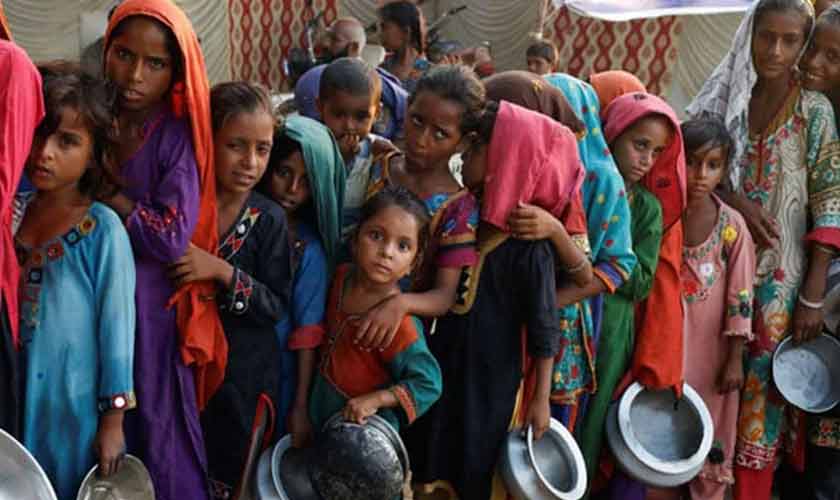
Malnutrition is another visible and disastrous health problem. A large proportion of the population of children under the age of five is stunted, wasted or underweight, indicating chronic nutritional deprivation, not only food shortage in the short run.
Maternal malnutrition is equally concerning. It is a primary reason behind a high incidence of underweight newborns, pregnancy complications and maternal and infant death. Iron and folic acid deficiency is common, especially in women of reproductive age, but supplementation and screening facilities are, by and large, inadequate. Limited areas of dietary diversity, poverty, lack of awareness and lack of mother and child health services have contributed to an intergenerational cycle of poor health that is extremely difficult to break without sustained long-term interventions.
Reproductive health indicators are a particular cause for concern in Tharparkar. More than 90 per cent of deliveries are still worked under traditional practices, oftentimes with the help of untrained birth attendants, with a dramatic rise in risks for both mothers and infants. Screening facilities for the above-mentioned prenatal care, anaemia and other pre-natal high-risk conditions are largely unavailable. Many women are deprived of much-needed preventive care.
Snakebite cases, especially during the rainy season, are another widely known public health problem that result in deaths due to delays experienced while receiving treatment and a lack of anti-venom sera in some local health facilities.
Chronic poverty, social pressures, food insecurity and recurrent environmental stress have taken a toll on the population in psychological terms. Increasingly, depression, anxiety and other mental health disorders are being reported. Stigma and lack of awareness mean that many fail to seek assistance. Suicide rates, particularly among female teenagers are alarming and have been linked to economic problems, cultural restrictions and the lack of social support systems. Limited mental health support from the district healthcare framework leaves behind an unaddressed critical area despite the growing impact on the well-being of the population.
In such a challenging setting, humanitarian and medical outreach efforts are key to enabling a rapid response and helping fill the gaps in healthcare access.
Taking these realities into consideration, an argument for transforming healthcare delivery systems toward emergency response institutions is presented here.
Healthcare infrastructure in Tharparkar still lags behind the rest of the country in catering to the needs of a widely dispersed population. Basic Health Units, Rural Health Centers and Taluka Hospitals are plagued with a shortage of qualified doctors and paramedical staff, medicines and diagnostic equipment. Specialist care is almost non-existent in most of the district. Patients must travel long distances to urban areas such as Hyderabad or Karachi for treatment. Poor road connectivity and lack of an organised ambulance network add to the emergency response, which often leads to a life-threatening condition instead of a treatable condition.
Well-trained and professional doctors are few and unwilling to come to Jamshoro, states Dr Bika Ram Devrajani, a former vice chancellor of Liaquat University of Medical and Health Sciences, Jamshoro, and a senior medical specialist hailing from Tharparkar. Long-distance and time-consuming methods of sub-specialist clinical diagnosis are significant factors that make consultants and specialist doctors from major cities apprehensive about working in the desert district. Dr Devrajani emphasises that, despite the proposed increase in the number of doctors, it would be challenging to attract and retain skilled medical professionals in this desert, remote region that lacks suitable facilities and incentives.
In the challenging setting, humanitarian and medical outreach efforts are key to enabling a rapid response and helping to fill the gaps in healthcare access.
One prominent recent attempt in this regard was a two-day free medical camp held in Chachro. The camp was organised on January 30-31, by the Organisation of Islamic Cooperation’s Standing Committee on Scientific and Technical Cooperation (OIC-COMSTECH) in association with the University of Modern Sciences, Tando Muhammad Khan. The special initiative has been taken on the direction of the OIC-COMSTECH Coordinator General Prof Dr Muhammad Iqbal Choudhary, with support from Gourmet Foods and the District Administration and the District Health Department.
The medical camp provided people with free medical consultation, diagnostic services and medicines. A team of experienced specialists and healthcare professionals provided services in ophthalmology, ENT, dermatology, cardiology, gastroenterology, gynaecology, general medicine and surgery. On-the-spot diagnostic facilities allowed chronic patients and people suffering from unaddressed or unnoticed health conundrums to be screened and treated.
The explosion of positive responses from the community indicates a large unmet need for medical care in Tharparkar. Over 5,700 patients (more than 2,200 on the first day and more than 3,500 on the second day) were treated in two days. Women, children, adults, older people and people with chronic diseases attended the free services. The fact that the camp offered maternal healthcare services and that at least some of the deliveries in this activity went smoothly show the need to ensure the availability of maternal and reproductive healthcare in the region.
Many patients got free prescription drugs they could barely afford otherwise. Additional medicines were handed over to the medical superintendent of the Chachro Civil Hospital for post-camp medical facilities. The programme also provided patients and their families with drinking water.
People working together to benefit neglected communities can make a difference. The OIC-COMSTECH free medical camp is just one example. Such efforts help make local health systems stronger and make it easier for people to use them. They also help people feel dignified by providing them access to healthcare
Muhammad Murtaza Noor is a senior analyst and writer with 25 years of experience in the higher education sector. He can be reached at: [email protected].
&
Dr Mazhar Abbas, author of The Aftermath of the Bangladesh Liberation War of 1971: Enduring Impact (Routledge, 2024), has a PhD in history from Shanghai University. He is a lecturer at GCU, Faisalabad, and a research fellow at PIDE, Islamabad. He can be contacted at [email protected]. His X-handle is @MazharGondal87.