Print Story
X




The tragic deaths of a woman and her 10-month-old daughter in Lahore have done more than expose the holes in our urban infrastructure
| L |
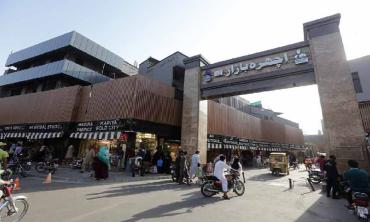
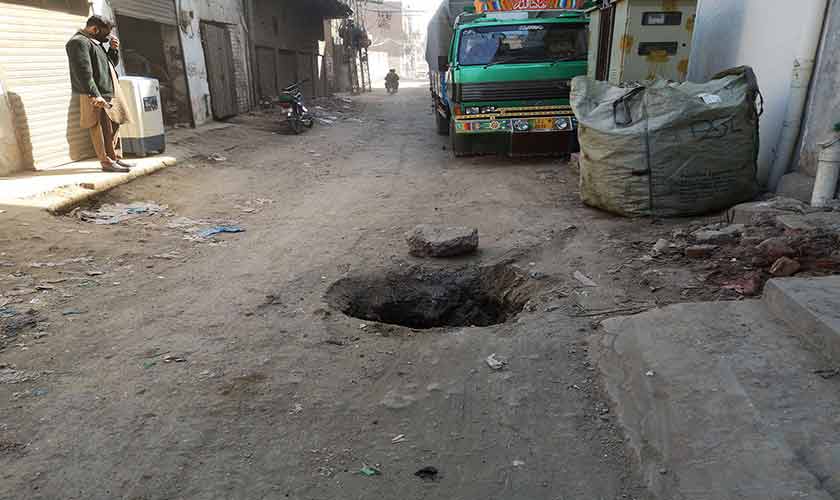
ast week, a woman and her 10-month-old daughter fell into an open manhole of the under-construction Data Darbar extension project in Lahore. The incident more than exposed the literal holes in the urban infrastructure; it revealed deep cracks in our safety systems and raised uncomfortable questions about why such tragedies are treated differently across Pakistan.
The incident occurred near Data Darbar, where a mother and her infant child fell into an open manhole at a construction site. It took several hours for rescue workers to recover their bodies from the sewer. Those hours were marked by more than a painful rescue operation — they were defined by a troubling official response that oscillated between denial and victim-blaming.
When the alarm was first raised, officials initially questioned if such an incident had occurred at all. Some went so far as to claim that it was “impossible” for anyone to fall into a manhole at that specific location.
As hours went by, the narrative took an even darker turn: the police took the grieving husband into custody. Instead of receiving support from law enforcement, he was reportedly detained and manhandled while his family waited in agony. The recovery of the bodies — first the mother, then the child — forced the bureaucracy to face the truth: here was a fatal accident caused by criminal negligence.
Intervention by Chief Minister Maryam Nawaz, who questioned the administration in a televised meeting, brought some transparency to the matter. Investigations revealed a staggering lack of coordination between the Water and Sanitation Agency, the Traffic Engineering and Transport Planning Agency and the contractors.
In Lahore, the response was largely muted. Media analyst Dr Hassan Shehzad says aggressive policing has discouraged citizens from protesting, even in the face of preventable loss.
The WASA had been desilting sewers in the area but failed to notify other departments after the work was finished. The TEPA and the contractors, in turn, failed to verify if the site was secure. On-site, basic safety protocols were non-existent. There were no barriers: excavation areas were not cordoned off or marked and the area was pitch-dark, making the open pit invisible to pedestrians. It is a standard requirement for WASA teams to seal manholes or install temporary barriers before leaving a site. None of this was done.
| T |
he tragedy also highlighted a stark contrast in civic activism between Lahore and Karachi. When similar deaths occured in Karachi, they sparked intense media coverage and civil society movements, such as the Fix-it campaign and large-scale protests by Jamaat-i-Islami.
In Lahore, however, the response was muted. Media analyst Dr Hassan Shehzad suggests that this silence was symptomatic of “weakened public resistance” in the Punjab. He says aggressive policing has discouraged citizens from protesting, even in the face of preventable loss. “This silence is more tragic than the incident itself,” he says. “People cannot even stand up for the dead.”
Several officials have been suspended from service since the incident. Critics say that these actions are reactionary.
The tragedy is a reflection of a fractured safety culture and a public conditioned to silence. Unless the accountability is proactive rather than reactive, open manholes in Pakistan’s cities will continue to claim precious lives.
Ahsan Raza is the editor of Minute Mirror. He can be reached at [email protected]