Print Story
X




The choice before us is not between concrete and nature. It is between learning lessons and repeating the mistakes
| E |
very time floods devastate large areas of Pakistan, a familiar debate resurfaces. One side calls for more embankments, higher walls, deeper drains and larger engineering projects. The other argues for protecting floodplains, restoring wetlands and working with nature rather than against it. Too often, this debate is framed as a rigid choice: either huge infrastructure or nature-based solutions. This framing is misleading. Let us try to understand the lessons from our experience of floods.
The real lesson of recent floods, especially those of 2022 and 2025, is not that infrastructure is irrelevant, but that infrastructure alone; particularly poorly planned infrastructure, is no longer enough. In many cases, it is a part of the problem.
The false comfort of
concrete
Pakistan’s flood management philosophy has long been dominated by a belief that brick, mortar and steel can “control” rivers. This mindset has deep roots, going back to a colonial engineering tradition that viewed rivers as predictable channels to be disciplined by embankments and barrages. For decades, this approach appeared to work; at least partially.
But the climate system that allowed those designs to be viable, no longer exists.
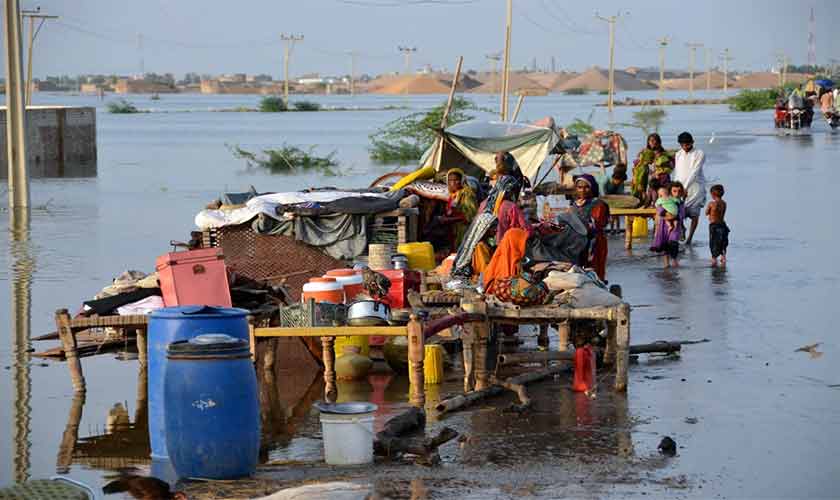
The floods of 2022, which affected more than 33 million people and caused economic losses exceeding $25 billion, brutally exposed this reality. Embankments breached not because floods were unprecedented, but because they were designed for a different climate. Drainage systems failed not because rain was unexpected, but because rainfall intensity exceeded the design assumptions. Similar patterns re-emerged in 2025, showing that these were not one-off failures but systemic ones. Yet, even after the experience, our default response remains unchanged: rebuild the same structures, in the same places, using the same logic; often faster, higher and with more concrete. This is not resilience. It is repetition.
Nature-based solutions are not anti-development
When planners and researchers argue for non-structural measures and nature-based solutions; such as protecting floodplains, restoring wetlands or adopting sponge city concepts, they are often accused of being “anti-development” or “unrealistic.” This is a misunderstanding. Nature-based solutions do not mean abandoning infrastructure. They mean questioning which infrastructure, where, and for whose benefit. They recognise a basic hydrological truth: when rivers are denied space, they reclaim it violently.
Many of Pakistan’s worst flood impacts occur because water has nowhere safe to go. Floodplains have been encroached upon. Natural drainage paths have been narrowed or built over. Urban land has been sealed under concrete, eliminating infiltration. When intense rainfall occurs - an increasingly common feature in a warming climate - water is forced into homes, streets and fields. In such conditions, adding more walls often shifts risk rather than reducing it. One community is protected, another is flooded. One city drains faster, another downstream drowns.
Nature-based solutions aim to reverse this logic by reducing exposure before disaster strikes. Restored wetlands slow floodwaters. Floodplains absorb excess flows. Urban green spaces reduce runoff. These interventions do not replace engineering; they make engineering work better.
The problem is a mindset
The real challenge Pakistan faces is not technical capacity. It is cognitive rigidity.
Across political leadership, bureaucracy and engineering institutions, a deeply entrenched belief persists: visible infrastructure equals safety. Large projects are politically attractive. They can be inaugurated, photographed and claimed as achievements. They also bring financial benefits for certain people. Non-structural measures, by contrast, are quiet. A protected floodplain does not cut a ribbon. A zoning regulation does not impress many voters. But the floods do not care about optics.
There is evidence within Pakistan that infrastructure that ignores land use, hydrology and climate trends often increases vulnerability. In several flood-affected districts, embankments trapped water inside populated areas. Urban drains designed for “average” rainfall collapsed under extreme events. Roads and housing schemes built in natural flow paths became barriers, not protections. This is not an argument against engineering. It is an argument against engineering without systems thinking.
Learning from others and our experience
Countries that face chronic flood risk have already moved beyond this false binary. The Netherlands, often cited for its engineering prowess, has deliberately shifted toward Room for the River — relocating embankments, widening floodplains, and allowing controlled flooding to reduce catastrophic risk. Bangladesh combines embankments with mangrove restoration, tidal river management and community-based adaptation. These countries did not abandon infrastructure. They redefined its role.
Pakistan has begun experimenting with similar thinking. Initiatives such as wetland restoration and groundwater recharge projects demonstrate that it is possible to manage floods while supporting livelihoods and ecosystems. But these remain exceptions, not the norm.
Integration is the only way forward
The central lesson from recent floods is clear: structural measures, non-structural policies and nature-based solutions must work together. None can succeed in isolation.
Where dense urban areas require embankments or drainage systems, they must be designed using contemporary climate data, not historical averages. Where rivers naturally spill during high flows, floodplains must be protected, not marketed as real estate. Where early warning systems exist, they must translate data into local, actionable information; not vague alerts. Most importantly, flood management must move from a culture of reaction to one of anticipation.
A choice Pakistan can no longer postpone
Pakistan is entering an era where floods will be more frequent, more intense and more unpredictable. Doubling down on old solutions will not deliver new outcomes. Each flood embankment rebuilt the old way will cost more lives, more money and pile more agony.
The choice before us is not between concrete and nature. It is between learning lessons and repeating mistakes. Nature-based solutions do not say “no” to infrastructure. They say no to infrastructure that ignores reality. They demand humility; an acknowledgment that rivers are systems, not enemies; and that resilience lies in balance, not domination. The floods have already delivered their verdict. Whether we accept it is now a political and institutional decision.
The writer is a member of Indus River System Authority