Print Story
X




Mian Muhammad Afzal Wattoo will be remembered for his leadership style that combined pragmatism with principle
| T |
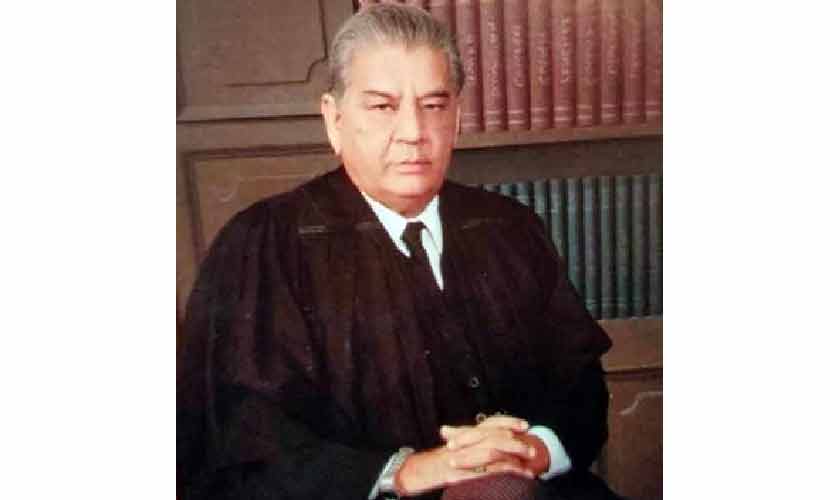
he death of Mian Muhammad Afzal Wattoo marks the end of an era. He was laid to rest in his ancestral village, Jand Wala, in Bahawalnagar district. A large number of political workers and lawyers had gathered to pay their final respects. His passing has been widely mourned, particularly in the Pakistan Peoples Party.
A senior politician, seasoned legislator and former provincial minister, Wattoo represented a generation of leaders known for their commitment to ideology and institutional discipline. His contributions to provincial governance, party organisation and legal thought place him among the key figures of Pakistan’s political evolution in the 1970s and 1980s.
Afzal Wattoo rose to prominence in the 1960s. In 1969, when Zulfikar Ali Bhutto founded the Pakistan Peoples Party, Wattoo was appointed the party’s Punjab president. His tenure as provincial president lasted eight years. During this time, he oversaw party’s consolidation across the Punjab. Populist politics was rapidly reshaping Pakistan’s democratic landscape during these years.
The 1970s were particularly significant for the Punjab as PPP’s growing reach laid the groundwork for the party’s electoral dominance in the province and influenced legislative priorities at both provincial and national levels.
Wattoo’s association with Bhutto was both ideological and strategic. Regarded as one of Bhutto’s trusted aides in the Punjab, he played an important role in strengthening the party’s grassroots organisation and ensuring cohesion among the provincial leadership. Contemporaries recall him as a disciplined organiser who valued institutional continuity, loyalty and political clarity over personal visibility.
His style of leadership combined pragmatism with principle, ensuring that the party’s organisational foundations remained intact during periods of political turbulence, including constitutional transitions.
Over the course of his long career, Wattoo served three terms as senior provincial minister, holding key portfolios including Irrigation, Transport, Industries and Labour. The leadership of these departments placed him at the centre of the Punjab’s administrative and development framework. His role as minister was marked by a methodical approach to governance, with an emphasis on meticulous planning, firm regulation and long-term institutional functioning.
Under his leadership, provincial transport policies were modernised, labour welfare measures were strengthened and irrigation initiatives contributed to agricultural productivity in several districts. His contribution helped stabilise provincial administration during a period of rapid economic and demographic growth.
He also served as a member of the Provincial Assembly and later as a member of the National Assembly, earning respect for his composed parliamentary conduct and legal insight.
His passing marks the end of an era defined by organisational politics, ideological commitment and respect for institutions.
Unlike some of his contemporaries, Wattoo avoided populist rhetoric. He was committed to legislative work grounded in constitutional principles. His speeches in the assembly reflected careful attention to legal frameworks, public policy implications and institutional sustainability, illustrating the intersection of his political and legal expertise.
Besides his political career, Wattoo maintained a distinguished legal practice. A senior advocate of the Supreme Court of Pakistan, he was known for his grasp of constitutional law and restrained courtroom presence. His legal expertise complemented his political work, particularly during periods of legislative reform. He was often consulted on constitutional matters within the party.
Wattoo authored several books on law, governance and political history, reflecting a scholarly side that, while not widely publicised, was respected among legal scholars and peers.
Speaking to The News on Sunday, his daughter Ashifa Riaz Fatyana, an MPA and former provincial minister, said her father viewed politics as a trust rather than a means of power.
“He believed that public office was a responsibility, not privilege. He lived simply and remained committed to his principles even when circumstances suggested compromise. His concern was always the stability of institutions and the future of the country,” she said.
His son-in-law, Riaz Fatyana, MNA and a former federal minister, described him as a man guided by integrity rather than expediency.
“He believed that politics without principles weakens the state. His advice was always rooted in experience, patience and respect for constitutional limits,” he told TNS.
His grandson, Ahsan Riaz Fatyana, a former MPA, recalled Wattoo as a mentor whose influence extended well beyond politics. “He taught us that leadership was about restraint and responsibility. His life is a lesson in dignity, discipline and public service,” he said.
Despite belonging to a prominent political family, Mian Muhammad Afzal Wattoo led a largely private life. He avoided controversy, remained distant from the media spotlight and preferred quiet engagement over public spectacle. Even in his later years, he closely followed national affairs and continued to offer counsel to younger politicians who approached him.
The writer, an award-winning investigative journalist, is the editor-in-chief of The Scoop, a digital platform. He can be reached on X @HassanNaqvi5