Print Story
X




Record shows that Karachi, in its current state, is a tinderbox. From the Baldia Factory to the recent fire at Gul Plaza, the city is haunted by a trail of recurring tragedies

| “T |
hey had already booked the furniture; only the dinner set remained. During the last call, they said they would arrive in ten minutes.”
So says Ms Ayesha, who has been visiting the debris of Gul Plaza on Karachi’s MA Jinnah Road ever since the catastrophic fire. Her cousin’s daughter, Kiran, was getting married. The family of six had come for wedding shopping—three women, three men and a 13-year-old girl. The ten-minute wait never ended.
Nearly 60 people, it is now believed, lost their lives in the horrific fire that broke out at Gul Plaza, located in Karachi’s historic commercial district. The blaze was so severe that several bodies were burnt beyond recognition. DNA samples are being collected from families of the missing for identification of the charred remains. More than 77 families have reported missing loved ones.
The 77 missing persons include nine women and 14 children, aged between 11 and 17. The stories shared by families at the scene and on social media have plunged the entire country into a state of mourning.
According to Rescue 1122 Chief Operating Officer Dr Abid Jalaluddin Sheikh, many bodies have been reduced to an unidentifiable state. Human remains are being several from locations. “Until technical and forensic verification determines whether these remains belong to the same individual or several people, it is difficult to confirm the exact death toll,” he says.
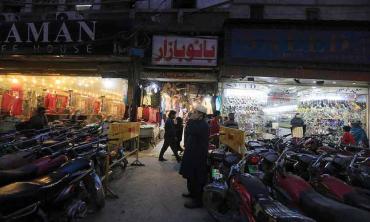
Gul Plaza, built in the 1980s, was among Karachi’s earliest shopping malls. Spread across a basement, ground floor and three upper floors, it housed more than a 1,000 shops selling crockery, garments, makeup, toys and ladies’ undergarments. It was a place where one could buy everything needed for a wedding, which is why so many families visited it.
Chief Minister Syed Murad Ali Shah has said that due to the wedding season and the weekend, there was an unusually large crowd in the plaza on Saturday night.
Many people have shared their memories of Gul Plaza on social media. Shahnila Balgamwala wrote on Facebook: “My first mall in life was Gul Plaza—my wedding, my niece’s wedding and then my daughter’s wedding. For Karachi’s women, Gul Plaza was a one-stop shop for wedding preparations. Its biggest strength was that it catered to every class, from melamine dinner sets to bone china. Gul Plaza is a memory of my childhood. It introduced me to mall shopping.”
The narrow corridors, small shops and additional stalls at Gul Plaza were already a warning sign. Some staircases were so narrow that only one person could pass at a time. According to eyewitnesses, several gates were closed after 10:30pm.
Rehan Fazal, who runs a bed-sheets shop named Areeba Bedsheets on the main road, said that after the fire broke out, he broke through a gate to escape the flames. “Within five to seven minutes, the entire market burned down before our very eyes. Fire brigade vehicles arrived too late,” he said.
The office of the DC South is located opposite Gul Plaza. DC Javed Nabi Khoso said fire brigade vehicles, including snorkels, had reached the site around 10:30pm.
Chief Minister Shah had earlier told a press conference that the fire was reported at 10:16pm and that the first fire tender had reached the site at 10:26pm. He also acknowledged difficulties in sourcing water.
According to DC Khoso, three factors hampered the rescue efforts: a large crowd gathered after the incident, obstructing operations; it was Sunday night, when Karachi’s roads are heavily congested, delaying backup vehicles; and the building became structurally weak, complicating the rescue effort.
The rear portion of the plaza collapsed due to intense heat. Multiple layers of roofs then formed heaps of debris. Heavy machinery, arranged by the KMC through a local contractor, was used eventually to clear the rubble. Along with Rescue 1122, the Edhi Foundation participated in the rescue operation.
Sitting near the debris, watching the rescue operation and waiting for a miracle, Muhammad Qaiser said his wife, daughter-in-law and younger sister had come for shopping. He said their whereabouts remained unknown. Expressing a lack of confidence in the rescue operation, he said the way it was being conducted meant that even the bodies so far intact might not be recovered safely. His hopes were shattered when the bones of more than 25 people were found in crockery shops located in the basement.
The Sindh government has initiated an inquiry into the incident. Chief Minister Shah has revealed that approval had originally been granted for 1,017 shops in Gul Plaza. The inquiry would also examine whether adequate firefighting arrangements were in place.

Permission for additional construction at Gul Plaza was issued by the Karachi Building Control Authority in 1998. According to the record, Genoa Centre, also known as Gul Plaza, was allowed to be built on a Preedy Quarters plot. The third floor was converted into shops, with permission to shift parking to the fourth floor.
Under the approved plan, the building comprised a basement, ground floor, mezzanine, first floor, second floor and a rooftop designated for parking. The planning approval said structural engineers would be responsible for the building’s overall safety.
Fire safety
This was not the first market fire in Karachi, even in recent years. Previously, business centres including Cooperative Market, Chase Up Store, RJ Mall and Millennium Mall have witnessed devastating fires. A lack of fire safety arrangements was revealed in every case. While such deficiencies were repeatedly highlighted across the city, no effective remedies were undertaken.
In 2023, the Karachi Fire Brigade and Urban Search and Rescue inspected fire safety arrangements in several high-rise buildings on II Chundrigar Road. Their report found that basic firefighting facilities were inadequate in many buildings. In some places, fire extinguishers, hydrants and sprinkler systems were either missing or insufficient, making prompt action in case of fire difficult.
Serious issues were also identified regarding fire exits. The report noted that in some buildings, emergency routes were unclear or obstructed, hindering safe evacuation. Fire alarm systems were also found ineffective in many cases, with some alarms malfunctioning and others lacking detector coverage. A lack of emergency lighting in staircases, corridors and exit points was highlighted as a major concern.
The report also stated that building occupants and staff had not been adequately trained in fire safety, despite the critical importance of awareness about fire prevention and evacuation. It warned that these shortcomings posed a serious risk of loss of life and property and recommended issuing legal notices to building owners, associations and office-bearers, giving them a clear deadline to improve fire safety measures.
In 2024, the KMC Municipal Commissioner sent a report to the Karachi Commissioner stating that inspections had been carried out on Shahrah-i-Faisal, II Chundrigar Road, Shahrah-i-Qaideen and Tariq Road. The report said many buildings had inadequate firefighting systems, non-functional fire alarms and blocked or poorly maintained emergency exits—conditions that could lead to a major disaster.
Despite these warnings, no emergency actions were taken. Mayor Murtaza Wahab said the report was at the Chief Minister’s Secretariat. He said its implementation was the responsibility of the Sindh Building Control Authority. Senior Provincial Minister Sharjeel Inam Memon said the report had been submitted during the caretaker government’s tenure and had been shelved. He said it clearly required fresh attention.
Earlier, the chief minister announced the immediate enforcement of the 2024 Fire Safety Audit, acknowledging that many buildings in Karachi suffer from serious safety issues. He announced the installation of fire alarms in shops as part of immediate and medium-term measures, stressing their importance for timely evacuation and saving lives.
Safety laws
The legal framework prepared by the Pakistan Engineering Council in line with international standards mandates standpipe systems, fire alarms, fire extinguishers, emergency exits, and, in some cases, automatic sprinkler systems in high-rise buildings.
Pakistan’s primary legal framework—the Building Code of Pakistan: Fire Safety Provisions 2016—sets minimum requirements for fire prevention, protection of human life and emergency evacuation. It applies to both new and existing buildings, placing responsibility for compliance on building owners, developers and relevant government bodies. Enforcement lies with local “authorities having jurisdiction,” including building control authorities, municipal bodies and Civil Defence.
According to Professor Nauman Ahmed of NED University, the Pakistan Engineering Council, in collaboration with the National Disaster Management Authority, developed comprehensive yet recommendatory fire safety regulations in 2016. These recommend that land management agencies adopt and enforce fire safety laws in their jurisdictions. PEC’s role is limited to certifying and assessing the competence of engineering professionals. Practical enforcement lies with land management agencies and building control authorities.

Under the Sindh Building Control Authority’s 2018 law, every building must strictly comply with prescribed fire safety regulations. Buildings of ground plus three floors or higher must install standpipe systems with specified pipe sizes, water points on each floor and hose pipes. Certain buildings, parking areas, industrial and commercial centers as well as large storage facilities are also required to have automatic sprinkler systems and dedicated overhead water tanks. Fire alarm systems and external fire department connections are mandatory in schools, hospitals, and high-rise offices.
These laws also place significant responsibility on builders, which has not been fulfilled for years. Association of Builders and Developers of Pakistan representative Muhammad Hassan Bakhshi said many markets are old. He says new constructions are taking fire safety into account and complying with regulations.
Professor Nauman Ahmed notes that the Building Control Authority’s jurisdiction is limited to specific areas, leaving large parts of Karachi—including informal settlements, cantonment boards and other areas—outside its direct control. In practice, building control focuses mainly on design approval and the construction phase, with responsibility shifting to building management after completion. When changes in usage or structure occur, building control intervenes again, but the process is complex and must be handled on a case-by-case basis for effective results.
Architectural plans include emergency exits. According to Professor Ahmed, authorities use a comprehensive checklist to review all applicable by-laws point by point. Even minor discrepancies result in plans being sent back for correction. Regulations at this stage are strict, but once a building’s use changes, matters become more complex.
Across Pakistan, fire safety inspections fall under Civil Defence, which reviews building plans, previous reports and safety laws before inspections. During inspections, firefighting equipment, alarms, hydrants, emergency lights and safe exit routes are checked. Civil Defence also monitors the safe storage of flammable materials and electrical load management, issuing NOCs or operating permits only after all requirements are met.
Losses and coping
Anam Khatoon, who has worked with her husband at their garments shop in the basement, says it was peak business season for them. Starting with the month of Rajab, their shop was stocked with new products. “We only managed to save our lives, for which we are grateful to God, but 15 years of hard work and earnings are gone,” she said, estimating losses of Rs 6-7 million. “Big traders may survive because they have other businesses, but what about us? The government must help us.”
The Sindh government has announced compensation of Rs 10 million for each deceased person’s family and promised interest-free loans for affected shopkeepers. Governor Kamran Tessori has proposed temporarily handing over the Parking Plaza building in Saddar to the affected shopkeepers.
A support campaign has also emerged on social media for affected traders. Actress Ayesha Omar, in an Instagram message, wrote, “Gul Plaza was not just a market but a source of livelihood for hundreds of families, severely impacted by the tragedy.” The message noted that after the fire, many traders are temporarily moving their businesses online to sustain their livelihoods.
The public has been urged to shop from these online stores, share their social media accounts to help them reach more people and place orders to support and encourage them.
The writer is a freelance journalist and a researcher. Her X handle: @FehmidaRiaz