Print Story
X




Some political parties have a strong aversion to the idea of powerful local governments
| W |
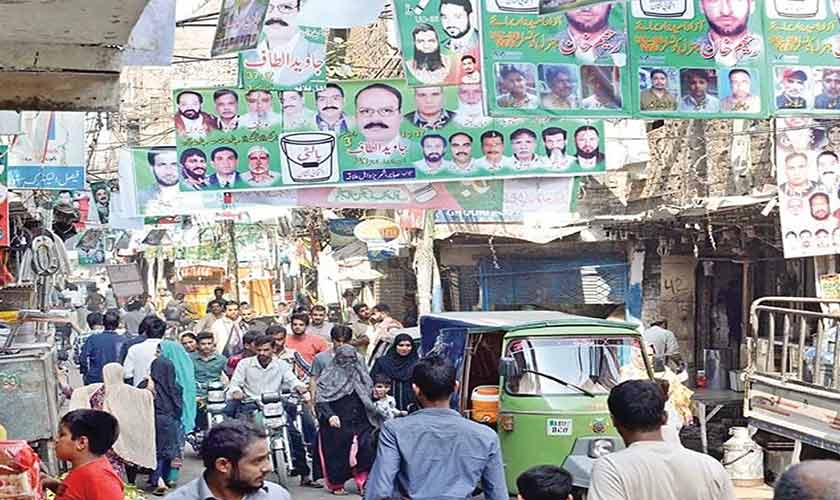
e often hear politicians and analysts say that the people of Pakistan have only been allowed elected governments just for ~35 years. What we don’t hear often enough is an account of how during those years these political parties have deprived people of their right to elect empowered local governments.
Elected governments, federal and provincial, have typically seen to it that elected local governments do not flourish. During the ~35 years of elected federal and provincial governments, elected local governments have been mostly missing. For nearly 22 years under military-led governments, there have been functioning local governments.
It has been argued that military rulers had to have empowered local governments, elected in party-less elections in order to make the mainstream political parties irrelevant and to create a façade of their own elected constituency. As soon as the military regimes ended, the mainstream political parties succeeding them in power dismissed the elected local governments as a relic and remnant of military rule. This consistent policy of the mainstream political parties has been akin to throwing the baby with the wash.
Our political parties’ aversion to the idea of powerful elected local governments isn’t attributable to their association with military rule alone. Several other factors have also contributed to it. The first and foremost among those is the sheer insecurity of the political elites who fear that empowered local bodies will foster a new generation of leaders who could eventually challenge their established leadership and parties. The world, after all, has seen many national leaders and political parties who have emerged from their success at town and city levels.
All our mainstream political parties have advocated the devolution of financial and administrative powers from Centre to the provinces. However, they have been unwilling to devolve powers to the district and city governments. This may be on account of their desire to concentrate administrative powers and development funds at provincial levels.
All our mainstream political parties advocate devolution of financial and administrative powers from Centre to the provinces, however, many are unwilling to devolve the powers to districts and city governments.
The civil bureaucrats too have developed a vested interest in disenfranchised local bodies since the absence of elected leaders allows the administrative officers to enjoy additional powers and control over towns and cities development and management. This also benefits provincial governments perpetuate their sole control over development and service delivery.
Even as and when we have had local governments, the provincial governments have not set up provincial finance commissions for a award of resources to district and city governments. District allocations have thus failed to create a financially self-sustaining third tier of government because they are often ad-hoc, frequently ignored and lack constitutional protection comparable to finance bills adopted by the National and Provincial Assemblies for the respective governments.
Article 140-A of the constitution provides for local governments. However, it neither provides a constitutional guarantee for a permanent third tier of elected governance nor specifies the powers of local governments. This has allowed the provincial governments to frequently dissolve and suspend the local bodies. Another pattern has been observed in recent years. The provincial governments keep amending local government laws in ways that invariably invite petitions to High Courts that remain pending for months and years, allowing the provincial governments to delay - even avoid - local election.
The political elites’ aversion to devolution of powers and to the local governments exposes their shallow commitment to grassroots democracy. Unlike the Provincial and National Assemblies, it’s at the local government level that a common man can be elected, share power and play a significant role in development of their own cities and communities. This selfish aversion also deprives our polity of an important opportunity to raise the next generation of political leaders.
Given the reluctance of our political elites for a powerful local government system, a great deal of incessant advocacy is required from people and the rights groups for a constitutional amendment which places the elected local governments under fundamental rights rather than a mere administrative obligation of the provinces, ensure them as sufficiently devolved with financial and administrative powers, with a uniform tenure and regular PFC awards.
The writer is a sociologist with extensive work in social policy and development. He’s accessible at [email protected]