Print Story
X




The impact of Punjab government’s Apni Chhat, Apna Ghar scheme
| W |
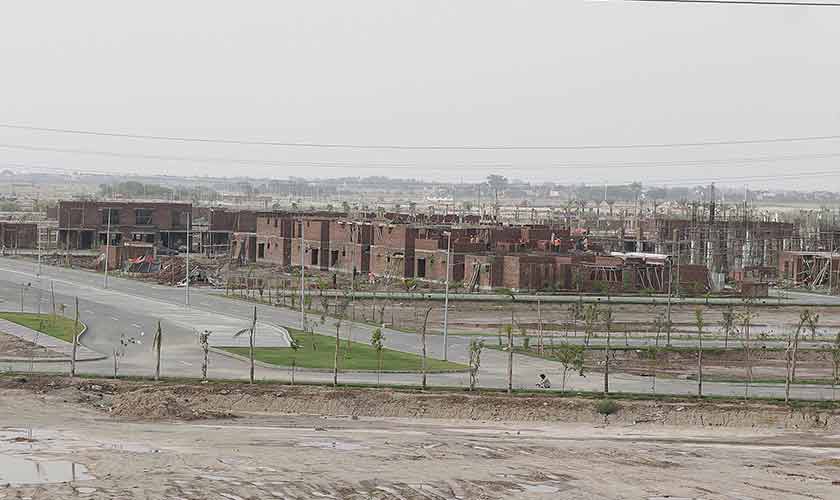
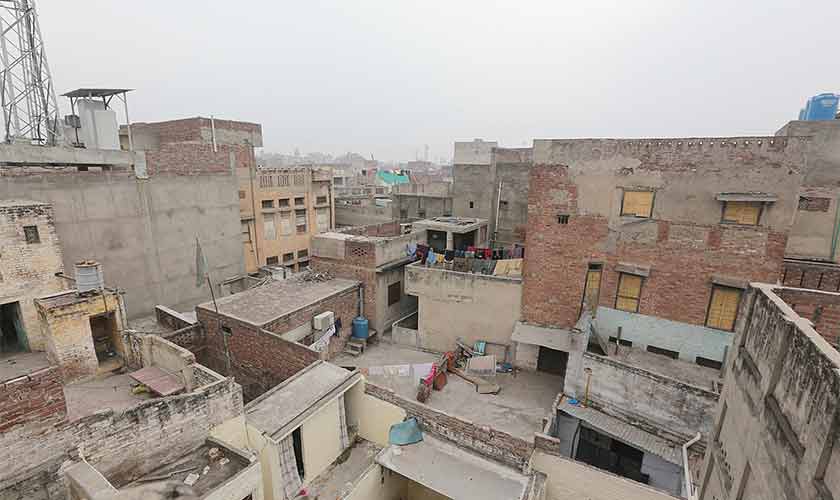
aris Ali Khokhar, a tailor in his early fifties, stands proudly inside his three-marla house in Mumtaz Town. For years, the dream of ownership felt like a mirage. Though he had saved for five years — labouring long hours and saving money to buy a small plot — the cost of construction remained an impossible ask.
“In a way, the plot belonged to me. However, I worried that I’d never be able to own it in the form of a house,” Khokhar says, gesturing towards the unfinished doors near a staircase.
For decades, low-income families have been trapped in a cycle of high interest rates and strict collateral requirements. That cycle broke for Khokhar in October 2024, when he applied for the Punjab government’s Apni Chhat, Apna Ghar scheme — an initiative providing interest-free loans to those previously excluded from formal banking.
After months of waiting, Khokhar was selected through a balloting process. Partnering with the microfinance institution Akhuwat, the government approved a Rs 1.5 million loan, disbursed in two installments.
The transition from tenant to owner was not without its hurdles. “The construction cost rose to around Rs 1.9 million,” Khokhar notes. “The loan amount was exhausted before the house was complete, but we managed.”
Despite the unfinished woodwork, the family moved in as soon as the structure was sound. “Owning a house, even with minor unfinished parts, is far better than paying rent every month.”
Khokhar has already begun his nine-year repayment journey, paying monthly installments of Rs 14,321. While he advocates for raising the loan ceiling to match the rising material costs, he admits that the scheme has fundamentally changed his family’s trajectory.
According to Zia-ur Rahman, media consultant for the Punjab Housing and Town Planning Agency, the programme’s reach is unprecedented. Since its launch on August 21, 2024, the programme has managed a high volume of interest, processing over one million applications and engaging with 829,177 applicants so far.
More than 121,000 loans have been disbursed, totaling Rs 163.4 billion in financial support. To date, 64,149 homes have been completed; another 56,952 are currently under construction.
After 752,459 individuals had expressed interest, 29,683 opted out, and 222,806 remain to be contacted. An estimated 491,968 candidates are currently organising their documentation. 62,957 applications are undergoing verification. With 18,205 loans ready for disbursement, the programme demonstrates consistent and steady progress.
However, the scale brings logistical challenges. Over 53,000 applicants were declared ineligible; and 21,019 could not be reached due to invalid contact details. Currently, Rs 23.68 billion is queued for disbursement as the verification process continues.
| S |
ome economists urge caution. Dr Qais Aslam, a renowned economist and former professor at Government College University, Lahore, questions the efficacy of cash-based housing loans. “There is no guarantee that beneficiaries will always spend the cash on construction,” he warns.
Dr Aslam suggests that the government should consider building houses or investing in vertical housing in urban centres.
He also points out a structural risk: “Microfinance is traditionally meant for income-generating businesses. Housing does not produce immediate returns. This can make repayment a burden if the borrower’s income doesn’t rise.” He notes that Rs 1.5 million is often insufficient to finish a house given the rising prices, potentially leaving families in partially completed structures.
In response to these concerns, Zia-ur Rahman emphasises that the programme features strict monitoring, including regular site visits and the requirement of bills and receipts for every rupee spent.
Beyond individual households, the government argues, the Rs 120 billion investment has revitalised allied industries — cement, steel and transportation — while creating thousands of jobs for local contractors and labourers.
For families like Khokhar’s, the programme represents more than just bricks and mortar; it is a permanent asset and a hedge against the rising cost of living.
Ahsan Raza is the editor of Minute Mirror. He can be reached at [email protected]