Print Story
X

| I |
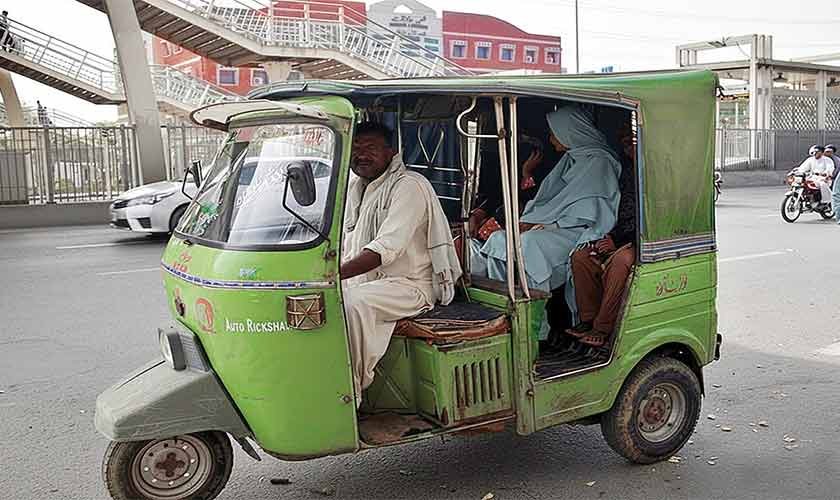
once got into a rickshaw in Lahore and the driver began, as many do, by circling the idea of money without quite asking for it. Then he stopped himself mid-sentence and said, “Baaji laanat ho mujh peh, main nay Musalmaan ho kar Christian say udhaar maanga.”
Of course, he said it to squeeze money out of me, but the words stayed because they were so… ordinary and expected. Shame, hierarchy, grievance, with a topping of faith, are all compressed into a single ride meant to dissolve into traffic noise.
Rickshaws, I have come to think, are Pakistan’s moving confessionals. People speak there the way they rarely do elsewhere. They talk about jobs they lost, friends who cheated them, politicians who betrayed them and celebrities who promote fahashi. Religion enters these conversations not as theology but as grammar, mostly in a way of ordering humiliation and dignity, who stands above whom, and why.
Here is the catch: long before radicalisation appears in surveys, arrests or television debates, it is already being rehearsed in such spaces. Grievance is spoken aloud informally at the front and back seats alike. Moral binaries begin to harden.
Research on extremism increasingly confirms what these rides suggest. Contrary to the idea that radicalisation is primarily an online phenomenon, large comparative studies of extremist trajectories show that face-to-face social networks remain central. Many individuals who later engage in violence first encounter ideological narratives offline, usually through friends, relatives or trusted community figures.
Those pathways, researchers note, tend to produce deeper commitment than fleeting exposure on social media. These studies also indicate that offline pathways were also associated with a higher likelihood of committing more severe acts when compared to online-only radicalisation. This suggests that social networks of friends, family, acquaintances and community figures often play a formative role before any recruitment materials or digital content come into the picture.
Radicalisation, in other words, is rehearsed in conversation long before it is encountered as content. This dynamic echoes what sociologists describe as the “social construction of reality” — essentially the idea that beliefs do not become powerful because they are imposed, but because they are repeated, normalised and affirmed in everyday interaction. What is first expressed as a complaint or a joke, then repeated ad nauseum, gradually hardens into common sense simply by being spoken and socially recognised.
This matters in a country like Pakistan, where public life is intensely social and frustration widespread. Youth unemployment remains stubbornly high, particularly among those with limited education. More than being development indicators, these are emotional conditions. They shape how disappointment is explained and where blame is placed. When opportunity narrows, moral explanations demand to be widened.
Add to this a legal and cultural environment in which religious accusation carries extraordinary weight. Blasphemy laws remain part of Pakistan’s legal landscape. Their social effects are well documented: fear, silence and the ease with which an allegation can escalate into violence. In such a context, everyday talk about moral decline or religious transgression is never entirely harmless. It exists in the shadow of real consequences.
Public opinion research reflects this tension. Surveys of Muslim-majority societies have repeatedly found strong support, among certain segments of the population, for harsh punishments — particularly, where respondents also favour a greater role for religion in state law. These views are not abstract, but actually circulate socially, shaping what feels say-able, punishable or righteous in ordinary disputes.
None of this means that every rickshaw conversation is a warning sign, or that grievance naturally turns violent. Let’s be honest, most of it does not. Much of it dissipates into humour or exaggeration. But radicalisation is not an on-off switch. It is a social process, very cumulative, fed by repetition and affirmation. If that is true, then prevention cannot begin only at the level of security operations or online monitoring.
It must begin earlier and closer to where people speak freely. In the places we consider too mundane to matter.
Listening, in this sense, has to be diagnostic. It requires paying attention to how people explain their losses; who they blame; and which moral frameworks feel most available to them.
It also requires humility: the recognition that resentment is often a response to real exclusion, even when it takes dangerous forms.
A society that only measures radicalisation once it becomes visible has already waited too long. The rickshaw driver’s seat was not a threat but a clue. Pakistan is full of such clues, moving quietly through traffic, asking whether anyone is listening closely enough to hear them.
Kiva Malick is an academician and writer, who focuses on education, philosophy, music and culture