Print Story
X




The faculty, students and pensioners of the oldest university in the province have been protesting for months
| F |
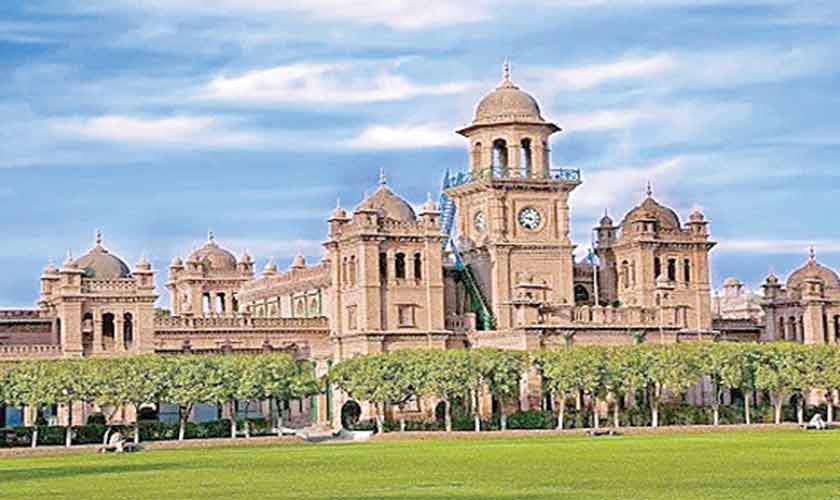
or over 75 years, the University of Peshawar has been a symbol of higher learning in Khyber Pakhtunkhwa, educating scholars, civil servants and political leaders from across Pakistan. But now, the province’s oldest public university is fighting a very different battle: a deepening financial crisis that has delayed salaries of its faculty members and staff, strained academic life of the students and raised uncomfortable questions about governance, policy and political priorities.
The crisis has kept the university in the headlines for months. The students, teachers and pensioners have been protesting publicly. Public concern is growing, not only about why such a prestigious institution has fallen into financial distress, but also about whether the university administration and the provincial government have a clear plan to pull it back from the brink of financial collapse.
The financial difficulties of the University of Peshawar are not attributable to a single failure. Rather, they stem from a combination of structural changes after the 18th Constitutional Amendment; aggressive expansion of universities across the province; policy shifts that have restricted the traditional revenue streams; and long-standing issues of governance. These factors have steadily eroded the university’s income, while expenditures have continued to rise.
Before the 18th Constitutional Amendment, public universities across Pakistan used to receive regular annual funding (grant) from the federal Higher Education Commission. Alongside student fees, this support formed the backbone of university finances. After education became a provincial subject, the responsibility for funding and administration was shifted to the provinces.
In Khyber Pakhtunkhwa, this transition proved difficult. Provincial authorities, critics say, lacked competence and experience in managing university finances. Within a few years, federal grants were discontinued, leaving universities increasingly dependent on provincial budgets and their own revenue.
For the University of Peshawar, this marked the beginning of sustained financial pressure.
A university in every district
A pivotal point in the journey was the provincial government’s policy decision to expand the higher education network by establishing universities in every district. While this improved access to higher education, it also had unintended consequences for the existing universities.
For decades, University of Peshawar and Gomal University in Dera Ismail Khan, had been the main campuses for students from across the province. As new universities opened closer to home, many students chose to enroll there. Admissions at the University of Peshawar declined. This led to reduced fee-based revenue, a critical source of income for the institution.
University Act
amendment
The fiscal pressure intensified, when in 2017, amendments were made to the Khyber Pakhtunkhwa University Act, 2012. Previously, a large number of public and private colleges across the province were affiliated with the University of Peshawar, generating significant revenue through affiliation fees and examinations.
The amendment required all colleges to affiliate with universities in their own districts. As colleges outside Peshawar shifted their affiliations, the university lost another major income stream.
Competition from
low-cost programmes
Changes in degree structures also played a role in the condition that University of Peshawar is in today. The introduction of four-year bachelor of studies programmes replaced the traditional two-year master’s degrees. Soon after, other public and private colleges began offering BS programmes at a fraction of the cost.
Financial difficulties of the University of Peshawar are not the result of a single failure. Rather, they stem from a combination of structural changes after the 18th Constitutional Amendment; aggressive expansion of universities across the province; policy shifts that have restricted the traditional revenue streams; and long-standing issues of governance. These factors have steadily eroded the university’s income, while expenditures have continued to rise.
At the University of Peshawar, BS programmes can cost between Rs 40,000 and Rs 50,000 per semester. At other public colleges, similar programmes are available for as little as Rs 6,000 to Rs 7,000. Unsurprisingly, many students opted for the cheaper alternative, leading to a further drop in university admissions.
Spending autonomy
Officials in the provincial Higher Education Department say that the crisis cannot be blamed solely on policy decisions. According to the office of the provincial higher education minister, public universities are autonomous in their financial and administrative matters.
“Not all public universities are facing financial crises,” an official says, claiming that some institutions run surplus budgets. “The University of Peshawar spent way beyond its allocated budget. This is why it is now facing serious financial difficulties.”
The official at the minister’s office says that it has continued to support public universities, allocating around Rs 6 billion in the current fiscal year to help institutions manage their finances. An additional Rs 2 billion has reportedly been released for salaries and pensions.
“We cannot spend the entire public education budget on universities alone,” the official says. He says that hundreds of degree colleges across the province have been operating without similar financial problems.
University of Peshawar faculty representatives strongly contest this narrative. Zakirullah Jan, president of the Peshawar University Teachers’ Association tells The News on Sunday that the crisis reflects years of delayed decisions, both by the university administration and the provincial government.
“Even on January 16, teachers, staff and pensioners had not received salaries for the month of December,” he shares. “The university does not have funds to pay salaries for May and June of the current fiscal year.”
Jan disagrees with the suggestion that universities are a burden on the exchequer. He argues that public universities are among the province’s largest revenue generators, collectively bringing in an estimated Rs 20 billion annually. “After the Khyber Pakhtunkhwa Revenue Authority, universities are the largest source of revenue in the province,” he says.
Taking to task what he describes as “increasing bureaucratic control over universities,” Jan says the chief minister is chancellor and chairman of syndicates. All vice chancellors are appointed by the provincial government. “Since the civil bureaucracy took over administrative control and appointments, there has been no improvement,” he adds.
It may be noted that Chief Minister Sohail Afridi is the current chancellor of the University of Peshawar. Meena Khan, the minister for higher education, too, is an alumnus of the university.
Dr Muhammad Quraish, a resident of University Town and a graduate of the institution, says that, to him, the crisis is deeply personal. “This university gave us our identity,” he says. “Seeing it struggle like this raises serious concerns about the future of public higher education in the province.”
The writer is a multimedia producer. He tweets @daudpasaney.