Print Story
X




Despite a constitutional obligation to ensure free and compulsory education for all school age children, we tolerate massive losses of human potential
| L |
ike diamonds hidden beneath layers of ordinary soil, human potential is not immediately visible at birth. Only through deliberate extraction, careful shaping and sustained refinement does a diamond acquire its recognised value. The same principle applies to human development. Every newborn is endowed with a brain—the most complex form of matter known—comprising billions of neurons and trillions of synaptic connections. These neural networks provide the biological foundation for cognition, creativity, moral reasoning and imagination. Yet, the mere presence of this extraordinary endowment does not guarantee its optimal development.
Education, in its broadest sense, is the chiseling and polishing through which innate potential is transformed into realised capability. Access to quality education, intellectual stimulation, emotional support and a nurturing social environment play a decisive role in strengthening neural connections and expanding cognitive capacity. In their absence, most of this latent potential remains buried and unrealised, much like a diamond left unmined.
Investment in education, therefore, is not simply a social obligation; it is a fundamental process of human capital formation, essential for individual fulfilment and societal progress.
It is deeply ironic, then, that a state struggling to raise resources to meet its budgetary needs—by selling or privatising its assets one by one—fails to recognise where its greatest and most sustainable wealth truly lies. National airlines today, railways tomorrow, shipping lines, banks, insurance corporations, heavy industries, gold and copper mines, prime real estate such as the Roosevelt Hotel in New York, and now even public schools and colleges are placed on the auction block. Yet, the most successful nations do not grow rich by selling assets; they prosper by investing patiently and consistently in a well-educated and highly skilled population. Pakistan, tragically, continues to overlook this basic lesson, preferring short-term fiscal relief to long-term national strength.
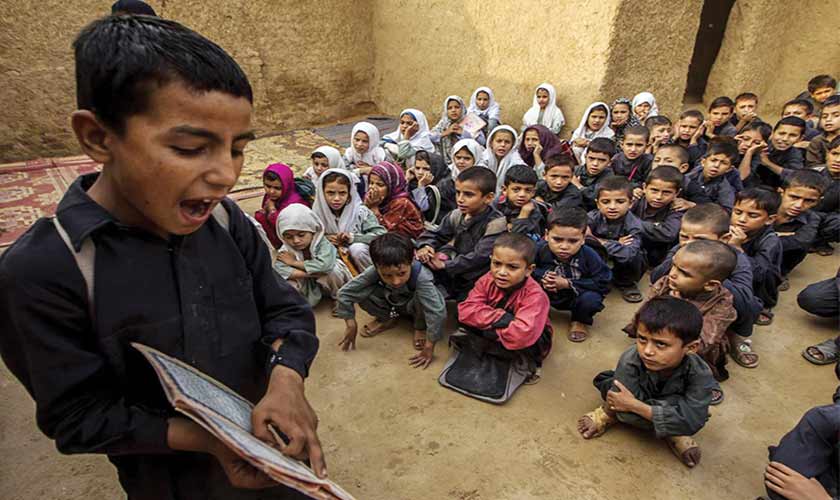
Psychologists distinguish between natural intelligence, with which a child is born, and nurtured intelligence, which develops through environmental factors such as education, nutrition, healthcare and cognitive stimulation. If an entire cohort of children were properly nurtured, one would expect roughly half to grow up with an average IQ of around 100, about one in 15 to be gifted with an IQ near 120, one in 44 to be highly gifted with an IQ around 140, one in a thousand to be exceptionally gifted with an IQ of about 150, and one in a million to be super-intelligent with an IQ exceeding 180. Applied to Pakistan’s reality, this implies that from the 25 million out-of-school children we are losing every year, dozens of potential super-geniuses, tens of thousands of exceptionally gifted individuals, and hundreds of thousands of highly gifted young minds—numbers that could have transformed the country’s scientific, technological, economic and cultural landscape.
Is it not astonishing that we tolerate such a massive loss of high-value human potential year after year, despite a clear constitutional obligation to enroll every child in school and provide free and compulsory education?
The consequences extend far beyond individual lives. A society that systematically fails to educate its children weakens its future workforce, suppresses productivity, deepens inequality and multiplies long-term social and fiscal costs. What is lost is not merely income, but innovation, institutional capacity and the ability to compete in an increasingly knowledge-driven global economy.
In the 78 years of Pakistan’s existence, the state has never allocated—let alone consistently spent—the internationally recommended four percent of GDP on public education. The year 2023-24 marked a nadir, with education funding reduced to a paltry 0.8 percent of GDP. Predictably, chronic underinvestment has produced a fragile and under-resourced public education system. Nearly one-third of primary schools in the Punjab are single-room, single-teacher institutions offering multi-grade teaching. High-quality education cannot be expected in the absence of well-trained teachers, adequate classrooms, furniture, laboratories, technical workshops and basic facilities such as potable water, electricity, boundary walls, playgrounds, toilets and libraries stocked with engaging books. Nor can meaningful learning occur without textbooks that promote understanding and inquiry rather than rote memorisation. None of these requirements is a luxury; all are essential during the most formative years of cognitive development.
Yet, facilities alone are not enough. Some deeply entrenched practices must also be abandoned. Chief among them is an examination system that rewards mechanical recall instead of comprehension, analysis and creativity. Assessment must move up Bloom’s cognitive ladder, encouraging students to apply, evaluate and create rather than merely reproduce memorised text.
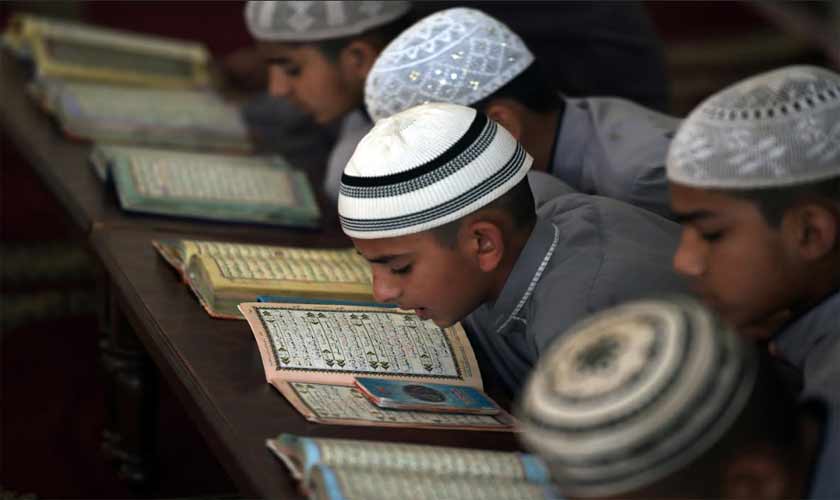
The introduction of the Single National Curriculum and the National Curriculum of Pakistan has compounded these structural deficiencies. Their most visible outcome has been the gradual conversion of school education into a madrassa-like experience. Teachers across the country report that the expanded quantum of religious instruction now crowds out core subjects, particularly languages, science and mathematics.
The ill-conceived decision to impose English as the medium of instruction for mathematics and science from the earliest grades has rendered these subjects intimidating and alienating for millions of students in public and low-fee private schools. Instead of unlocking young minds and cultivating intellectual confidence, our education policies are steadily sealing them shut—burying diamonds that the nation can ill afford to lose.
Ultimately, the question is not whether Pakistan can afford to invest in education but whether it can afford not to. A nation that sells its physical assets while neglecting its human ones is consuming its future to survive the present. Roads, buildings and enterprises can be rebuilt; lost generations cannot. Every child denied a meaningful education represents not just a personal tragedy but also a collective failure with consequences that will reverberate for decades. Until education is treated as a strategic national priority rather than a residual budgetary item, Pakistan will continue to bury its diamonds and lament its poverty in the same breath.
The writer is a retired physics professor of Quaid-i-Azam University, Islamabad.