Print Story
X




Lahore’s iconic Ichhra Bazaar is undergoing a Rs 66 million makeover
| I |
chhra Bazaar, one of Lahore’s oldest and busiest commercial hubs, is undergoing a significant transformation aimed at revitalising its infrastructure, addressing safety concerns and reclaiming its status as a premier shopping destination, especially for women.
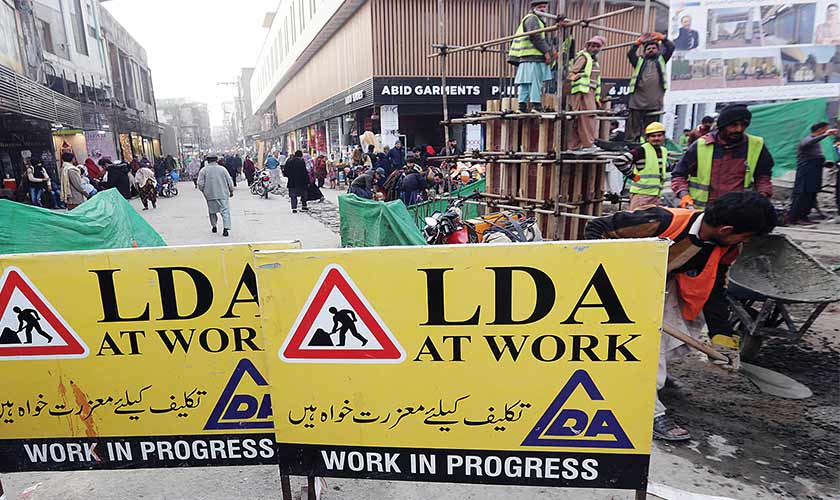
For decades, the narrow, crowded lanes of Ichhra have drawn shoppers from across the city in search of affordable fabrics, footwear, jewellery and household items. However, the market has struggled with chronic congestion, poor civic amenities and safety hazards, pushing many affluent customers to move to modern, upscale retail centres. A Rs 66 million project by the Punjab government is meant to address these issues. Billboards installed at the under-construction market entrance — described as a gift from Chief Minister Maryam Nawaz to women shoppers — highlight the project’s stated mission, even as they stand amid broken pavements and construction material.
Shopkeepers are welcoming the change. “This is a gift to shopkeepers as well,” says Muhammad Jawad Chaudhry, who has had a shop here since the 1970s and is the finance secretary of the Ichhra Bazaar Union. “A transformed bazaar will bring back thse customers who moved away years ago. Better infrastructure means better business.”
Chaudhry believes the market holds a deep, emotional value for women across all social classes in Lahore. “Over time, the bazaar turned into a no-go area for families. Encroachments, lack of cleanliness and disorder pushed them away. Hopefully, the revamping will make Ichhra [Bazaar] a good place for families again,” he adds.
Conceived by the deputy commissioner’s office (as the local government system is currently non-functional), and executed by the Lahore Development Authority, the project aims to improve safety, infrastructure and the overall shopping experience while preserving the bazaar’s historic character.
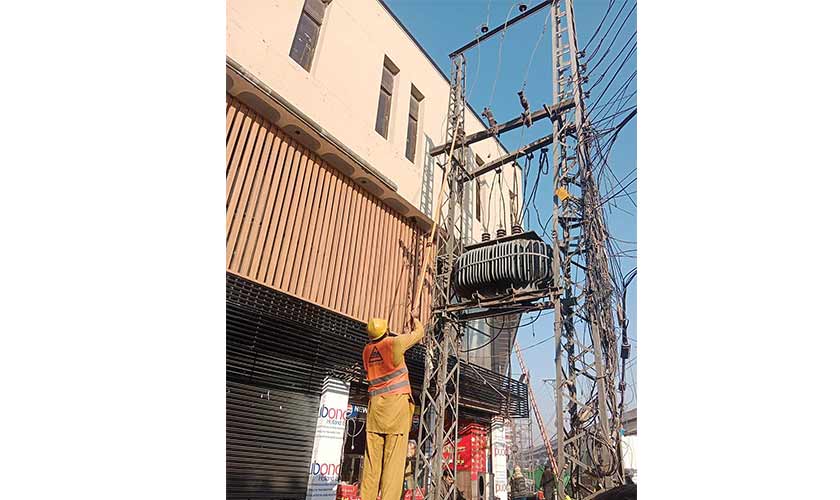
LDA Chief Engineer Mazhar Butt says work is focused on long-standing civic deficits, electricity being the most critical challenge. “Overhead wiring was extremely hazardous. Some cables hung low, meters were apparently installed outside shops without planning and transformers were placed randomly.”
Butt points out that both low-voltage and high-tension (11kV) lines passed through the bazaar, posing serious risks. To mitigate this, the LDA is overhauling the power infrastructure. The plan includes installing seven new, strategically located transformers to replace the 24 scattered units, drastically reducing visual clutter and improving safety. Power cables will be shifted underground, or properly aligned and secured overhead, significantly reducing the web of wires that has plagued the market for years.
While the LDA is addressing encroachments as part of the revamp, officials acknowledge that sustained enforcement will be essential for the changes to last. “This cannot be a one-time operation,” one official said.
Another key feature is the widening of streets to improve pedestrian flow. Butt explains, “By increasing the effective width of the streets, we want to make movement easier for shoppers, especially women and the elderly.”
The resurfacing of floors and roads with tuff tiles is also underway, designed to handle heavy footfalls and replace the broken, uneven surfaces. What’s more, the perennial issue of encroachments is being addressed. Shopkeeper Chaudhry squarely blames fellow traders for renting out their shop fronts, which led to makeshift vendors choking the main corridor.
While the LDA is addressing encroachments as part of the revamp, officials acknowledge that sustained enforcement will be essential for the changes to last. “This cannot be a one-time operation,” one official said.
Aesthetic improvements include the redesign of shop fronts. Butt confirms the introduction of uniformity in shop signs and façades to help the “visually chaotic” look of the market. He admits that “some shopkeepers initially resisted the idea, but they now see its value.”
Special attention is being given to facilities for women, who constitute a majority of customers. Separate, free-to-use washrooms are being constructed at multiple locations, along with new seating areas and a small coffee house.
“This is not just a beautification project,” Butt asserts. “It is about safety, comfort and dignity.”
The pilot phase of the project covers about 2,400-2,500 feet of the bazaar, including a portion along Ferozepur Road and inside the main market. LDA plans to expand to adjoining streets in later phases.
| D |
espite the general optimism among traders, some environmental activists have questioned the timing of the large-scale civil work. Journalist Samilullah Randhawa points out that construction dust adds significantly to air pollution, especially during Lahore’s peak smog season. “The LDA has launched massive construction projects across Lahore without factoring in their impact on air quality. But do they care?” he remarks.
Nevertheless, shopkeepers remain hopeful that the long-overdue revamp will not only improve sanitation and discipline but also help traders adjust to modern, late-night shopping habits, finally restoring Ichhra Bazaar to its former glory.
Ahsan Raza is the editor of Minute Mirror. He can be reached at ahsanbudh @hotmail.com