Print Story
X




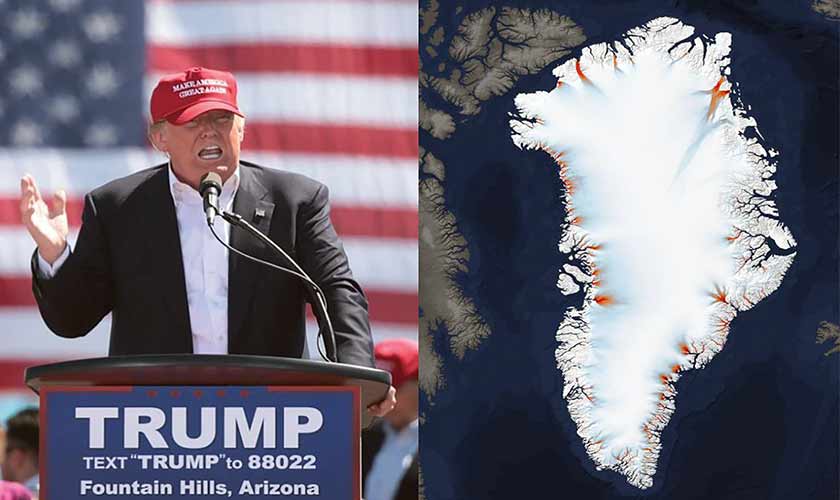
After the Venezuela operation, Trump administration eyes Greenland
| T |
he US military operation in Venezuela has once again accentuated the realist premise that national interests and geopolitical priorities provide the raison d’état for the nation-states. It demonstrated that realpolitik tends to take precedence over international norms and legal frameworks.
Venezuela, home to around 30 million people, was bereft of its executive leader, Nicolás Maduro, after US forces kidnapped him on January 3. Maduro’s capture was preceded by large-scale airstrikes in the region. The US actions in that Latin American country have drawn widespread criticism from various international actors. These acts are being denounced not only as a gross violation of international law but also as an attempt to subvert the so-called rules-based international order. The attack has also raised serious concerns regarding the future outlook of Latin America, specifically vis-à-vis countries that have had strained relations with Washington. These include Colombia, Cuba and Mexico. The American president has already hinted that these countries too could be targets of similar actions.
In the 1960s, as Cold War rivalries intensified, Venezuelan presidents Rómulo Betancourt and Raúl Leoni had secured a strong economic partnership with the US through aid and investments. The US was quick to engage with Venezuela, primarily deploying its soft power to influence public opinion and prevent the spread of communist ideas, which were gaining traction across many Latin American countries at the time.
However, in December 1998, Venezuela elected former military officer Hugo Chávez, a left-wing populist who advocated state control of key strategic sectors, such as oil. He nationalised Venezuela’s oil industry, pushing many American oil companies out of the country. After he died in 2013, Nicolás Maduro took office. A long-standing Chávez loyalist, he continued and reinforced the anti-US stance. In 2025, after Maduro won his third term as president of Venezuela, tensions began to escalate between the US and Venezuela. The Trump administration revoked the temporary protected status for Venezuelans that had previously allowed them to live and work in the US. It also doubled the reward for the arrest of Maduro to $50 million.
By the end of 2025, after months of strikes on alleged drug boats in the Caribbean, the US had finalised its plan for the latest operation against Maduro. Drug trafficking, narco-terrorism, the rapid influx of migrants from Venezuela and the possession of destructive devices were cited as the leading causes for the operation. The grand jury, in the indictment filed in the Southern District of New York, has charged Maduro with partnering with co-conspirators to transport thousands of tonnes of cocaine to the United States; issuing traffickers diplomatic passports; and using Venezuelan law enforcement agencies for their protection.
However, a BBC report issued in the aftermath of Maduro’s kidnapping describes Venezuela as a relatively minor player in the global drug trafficking business. It says it is not Venezuela, but its neighbor, Colombia, that is the key producer of cocaine in the region. Fentanyl, which Trump designated as a “weapon of mass destruction,” is primarily produced in the neighbouring Mexico and reaches the US via land routes.
The high-handed American operation in Venezuela and the kidnapping of Maduro under the pretext of narco-terrorism has signalled a range of overarching strategic objectives that are no longer obscure to the international community. For Trump, Maduro’s arrest presents a unique opportunity to access Venezuela’s more than 300 billion barrels of proven oil reserves. These reserves are estimated to be five times larger than those in the United States and are valued at trillions of dollars. The American president was quick to make this economic agenda explicit, openly encouraging American oil companies to invest in Venezuela’s oil industry.
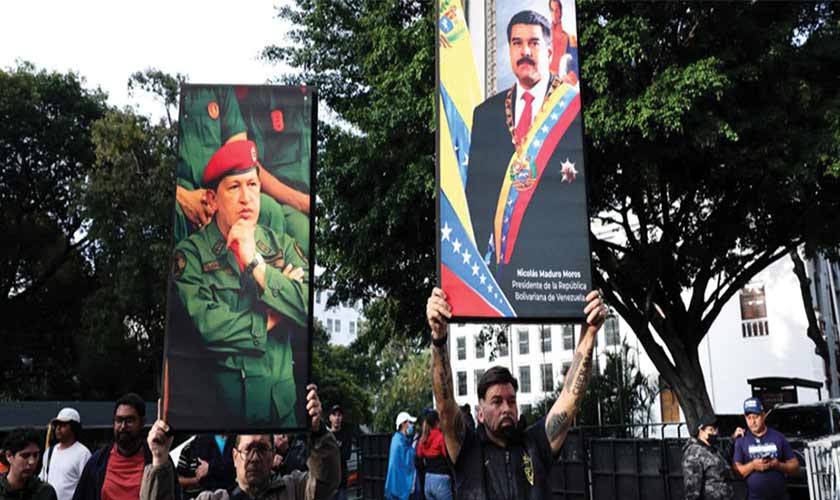
In 1998, Venezuela elected former military officer Hugo Chávez, a left-wing populist who advocated state control of key strategic sectors, such as oil. He nationalised Venezuela’s oil industry, pushing many American oil companies out of the country. After he died in 2013, Nicolás Maduro took office.
Besides securing control of critical energy resources, the attack is being perceived as a stern political message to the American adversaries in the region. By capturing Maduro, whom the US had long viewed as a vital part of the broader socialist network in the region, which includes Cuba, Nicaragua and Colombia, the operation signals that the global hegemon may revive its decades-old policy of interventionism.
The response from the Venezuelan people has been mixed. While many, owing to the repression under Maduro’s government, are celebrating his capture and removal from power, his supporters have rallied in the streets, demanding the release of their leader. Many Venezuelans based in the United States, on the other hand, view Maduro’s capture as a turning point—one that could transition Venezuela from an era of repression and authoritarianism toward liberation. US adversaries beyond the Western Hemisphere, including Russia, China and Iran, have also condemned the American action. The response from the UK, the EU and some other European countries has been in a soft tone. They appears to be tacitly condoning the US action.
Some international relations scholars say that the US might frame its action in Venezuela as an act of self-defense, citing Article 51 of the UN Charter. This means that by pointing to an alleged narco-terrorism threat from Venezuela, it may argue that Article 51 allows it to conduct such an operation. However, this assertion can be contested on two principal grounds. First, although Article 51 recognises a state’s inherent right to defend itself, it also specifies that a state may only use force against another state if an armed attack has taken place, which, in this case, did not occur. In addition, customary international law establishes basic requirements that a state must meet to exercise the right to self-defense. Two of the most important principles are necessity and proportionality, implying that force may only be used if it is unavoidable and must be proportionate to the attack faced. The US’s action meets none of these criteria. Even if Venezuela had posed a narco-terrorism threat to the US, the large-scale strikes and abduction of its president cannot be justified as self-defense. Indeed, John Mearsheimer, a renowned American IR scholar, posited the other day that the US faces no global power domination in the Western Hemisphere; hence, the invocation of the so-called Monroe Doctrine is empirically inapplicable and misleading.
Another legal issue arising from US actions concerns jurisdiction: can US courts claim the authority to try Maduro, an incumbent head of state? The US may argue that its jurisdiction stems from the protective principle of jurisdiction under international law, which allows a state to exercise criminal jurisdiction when an act threatens its security, even if committed abroad by a foreign national. However, under customary international law, heads of state enjoy immunity from the jurisdiction of another state. The concept is known as sovereign immunity. This principle is based on the understanding that states are equal members of the international community, so that a state should not prosecute the leader of another. The US might further argue that it did not recognise Maduro as the legitimate head of Venezuela since 2019. Nevertheless, this does not change Maduro’s status. Interim President Delcy Rodríguez has publicly demanded his release, clearly asserting that he remains the president of Venezuela.
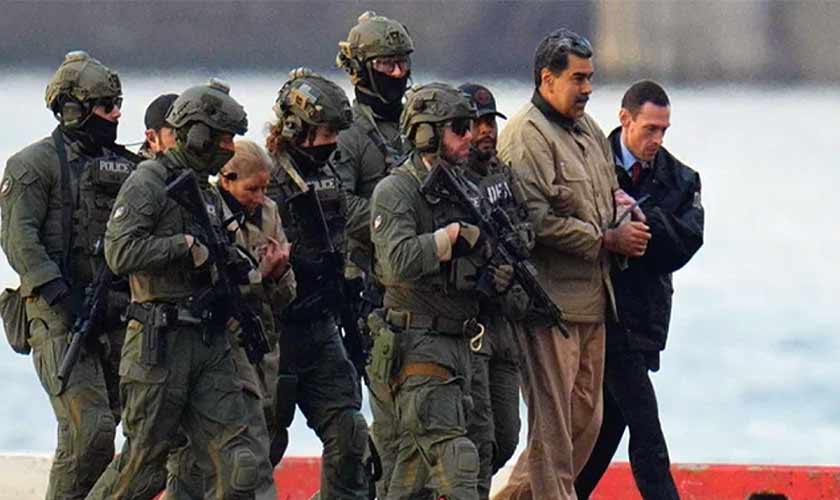
As if this were not enough, Trump has been discussing “a range of options” to acquire Greenland, including use of the military, the White House said on January 7. The White House said that acquiring Greenland - a semi-autonomous region of fellow NATO member Denmark – was a “national security priority.”
The fate of the Venezuelan president remains uncertain. His abduction by US forces has set a deeply troubling precedent for the international community. The episode has starkly exposed the fragility of international law when confronted with great-power interests and underscores how easily legal norms can be subordinated to strategic expediency. Under the Trump-led US regime, the persistent invocations of peace, order and legality stand in sharp contrast to the reality of coercive intervention abroad, revealing a profound dissonance between American rhetoric and action that continues to erode the credibility of the rules-based international order.
Dr Ejaz Hussain has a PhD in political science from Heidelberg University and post-doc experience at University of California, Berkeley. He is a DAAD and Fulbright fellow and an associate professor. He can be reached at [email protected]
Malik Mashhood is a graduate teaching associate at the Lahore School of Economics.