Print Story
X




Viewers are gravitating towards honest writing and character-driven plots, but absence of narratives from the Global South remains a concern
| I |
n 2026, cinema and television will be operating under a common pressure: audiences are no longer impressed by volume. Bigger universes, louder action and endless content pipelines have not translated into deeper engagement. What viewers now expect is meaning - stories that recognise the emotional, political and psychological instability of the moment. The upcoming slate of films and series suggests ambition, but ambition alone will not be enough. The question is no longer what is coming out, but whether it understands why viewers are watching at all.
Cinema still positions itself at the top of the cultural hierarchy. Titles like Avengers: Doomsday, Spider-Man: Brand New Day and Supergirl: Woman of Tomorrow indicate that superhero cinema remains commercially dominant, but the excitement surrounding them is cautious rather than euphoric. Viewers are no longer celebrating announcements; they are waiting to see if these films acknowledge consequence. After years of narrative inflation, audiences want stories where power has cost; where survival leaves scars; and where heroism is not endlessly rewarded without loss. Without this shift, even the most polished spectacle risks emotional irrelevance.

Science fiction and epic cinema, however, generate a different kind of anticipation. Dune: Messiah arrives with genuine intellectual weight, precisely because it promises to dismantle the myth of the chosen saviour rather than reinforce it. In a world increasingly shaped by charismatic authority, ideological extremism and moral manipulation, this is the kind of science fiction the audience trust. Similarly, Christopher Nolan’s The Odyssey carries excitement not because of scale alone, but because it suggests myth as psychological inquiry of displacement, endurance, masculinity and the trauma of return. These films reflect what audiences want more of: stories that interpret the world rather than distract from it.
Horror and thriller cinema continues to be under-estimated despite consistently understanding the cultural moment better than most genres. Titles like Scream 7, Ready or Not 2 and The Bride! maybe marketed as entertainment, but the real interest lies in whether they lean into psychological unease rather than formula. Horror resonates now because fear is no longer abstract. Surveillance, violence, moral decay and social cruelty are lived realities and audiences respond to films that acknowledge this honestly. The excitement here is conditional because horror works when it reflects truth and fails when it relies on repetition.
Animation, meanwhile, remains commercially secure but creatively cautious. Films such as Toy Story 5, Minions 3, Moana (live-action) and The Super Mario Galaxy Movie will draw audiences regardless, yet the expectation is shifting. Viewers are increasingly open to animated storytelling that grows emotionally rather than merely extends brands. What audiences want more of is animation that trusts emotional intelligence across age groups, recognising that comfort does not have to mean simplicity.
While cinema attempts to recalibrate its scale in 2026, television is likely to remain the more emotionally-responsive medium. House of the Dragon Season 3 and Euphoria Season 3 generate excitement not because of spectacle, but because they promise escalation of politics, psychology and consequence. These shows survive because they allow characters to deteriorate, contradict themselves and evolve in uncomfortable ways. Viewers no longer want endless seasons; they want meaningful progression.
Ultimately, what audiences expect from 2026 is not novelty for its own sake, but sincerity. They want cinema that understands consequence, television that respects emotional complexity and genres that reflect the instability of the world rather than smoothing it over.
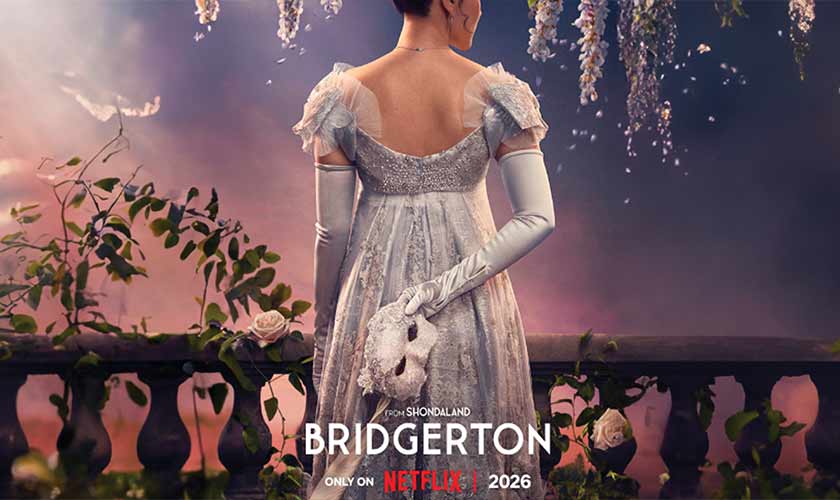
The return of Bridgerton Season 4 reflects television’s continued investment in intimacy and emotional fantasy, but even here expectations are changing. Romance without context feels thin. Audiences now look for stories that acknowledge class, power and identity rather than merely aestheticising them. Procedural and grounded dramas like The Pitt and Will Trent attract attention precisely because they remain rooted in human cost. These shows succeed because they allow exhaustion, failure and ethical compromise to exist without neat resolution.

Franchise television remains prominent, though not universally exciting. The Mandalorian and Grogu carries brand power but limited narrative urgency, while animated and genre series like Invincible Season 4 and One Piece Season 2 generate more organic enthusiasm due to their willingness to push emotional and moral boundaries. Fantasy expansions such as A Knight of the Seven Kingdoms benefit from anticipation, but only insofar as they resist becoming decorative extensions of familiar worlds.
New series entering 2026 signal cautious hope rather than guaranteed excitement. Shows like Love Story and Maya suggest a return to character-driven storytelling and psychological tension, which when these are executed with restraint, audiences consistently respond to. The growing presence of international and Korean series also reflects a significant shift: viewers are actively seeking narratives beyond Western frameworks. Global stories are no longer a niche; they are necessary.
Much as they entertain, streaming platforms and global media conglomerates also shape collective memory. The marginalisation of Palestine and Muslim experience continues. This is no longer a matter of oversight but of ethical failure. When entire populations are reduced to headlines, stereotypes or strategic silences, storytelling becomes complicit in erasure.
Streaming giants possess unparalleled reach and narrative power. Too often they sanitise occupation, flatten resistance or frame Muslim lives only through the lenses of violence and victimhood, denying them political context and human depth. Authentic coverage is not about sympathy—it is about truth: acknowledging histories of displacement, state violence and survival without distortion or fear of controversy. Journalism, whether in newsrooms or narrative media, must return to its foundational responsibility to bear witness honestly, especially when power demands silence. Without factual integrity and moral courage, media becomes propaganda by omission and stories that should provoke accountability instead dissolve into noise. Covering Palestine and Muslim realities accurately is not advocacy; it is the minimum requirement of truthful journalism in a world that depends on it.
Yet, despite the abundance of content, certain absences remain striking. Political realism is still limited.
Psychological dramas addressing radicalization, displacement, moral injury and collective trauma remain rare. Stories from the Global South continue to be under-represented, particularly those engaging directly with conflict rather than sanitised symbolism. The excitement for 2026 is, therefore, uneven not because of lack of material, but because of lack of courage.
Streaming giants should encompass the areas where they are lacking and deliver documentaries that voice what is happening in the real world rather than dystopian movies and series.
Ultimately, what audiences expect from 2026 is not novelty for its own sake, but sincerity. They want cinema that understands consequence, television that respects emotional complexity and genres that reflect the instability of the world rather than smoothing it over. Films like Dune: Messiah and series like House of the Dragon succeed because they do not promise comfort but rather they promise confrontation.
2026 will not be remembered for how much content it produced, but for whether its stories chose to engage honestly with real life. The audiences are ready. The question is whether the screens are.
The writer has a degree in psychology with a minor in mass communication. She can be reached at [email protected]