Print Story
X




Cultural action by governments has the potential to create greater social cohesion and religious tolerance
| T |
he Sindhi Ajrak-Topi Day was first observed in 2009 during President Asif Ali Zardari’s first incumbency. It has since become an international event for Sindhis living across the globe. In 2017, he remarked that Sindh offered a unique path to non-violent struggle for rights that other ethnicities could learn from. Looks like the Punjab is set to try this approach. The Punjab is using both cultural and religious metaphors. This may be necessary because religious metaphors also need reinterpretation, given their divisive use over the decades.
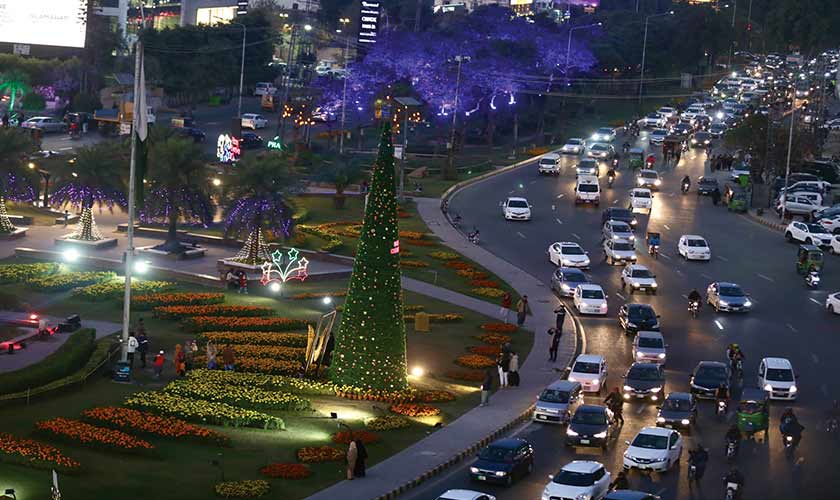
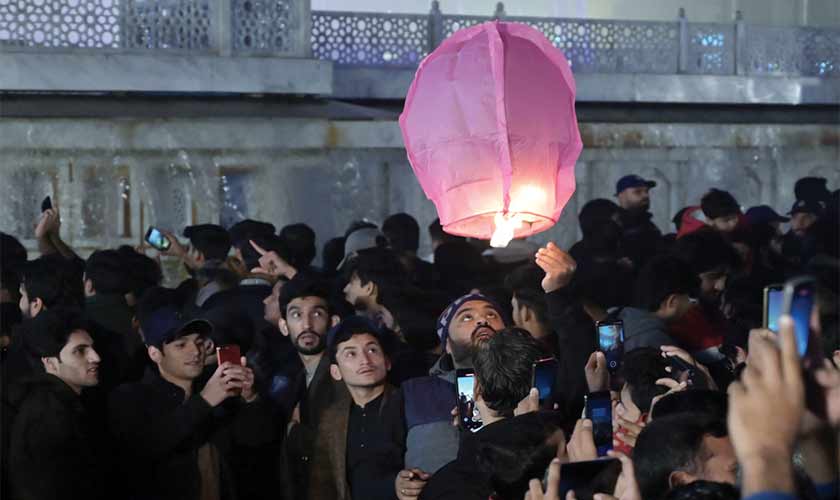
2025 was a promising year for minorities, especially, in the last quarter as Diwali (October), Guru Nanak’s birthday (November) and Christmas (December) were officially observed. This increased a sense of belonging among minorities while creating openness in the society. The chief minister was profoundly happy that her government had organised celebrations and public gatherings that over the past couple of decades had been reduced to in-door activities.
The Punjab government has also decided to celebrate Basant in February. The spring festival had been banned for nearly two decades due to accidental deaths linked to irresponsible kite flying, but also because of certain conservative elements, who had portrayed these festivals as un-Islamic. Of course, hazards should be foreseen and mitigated. Frantz Fanon, an advocate of cultural action said that it was an essential, inseparable component of the struggle for social and political transformation. Hence, the government is encouraged to keep a focus on cultural metaphors of inclusivity for transforming the pervasive conflicts and religious intolerance.
The provincial governments of Sindh and the Punjab, where 90 percent of religious minorities reside, have enhanced their budgets for scholarships, income support and grants for religious minorities. These included renovation of places of worship and spaces for graveyards. Hence, although mostly in the manner of charity rather than empowerment or development, governments tried to enhance opportunities for the more disadvantaged religious minorities.
Areas of improvement belong to neglect and institutional lethargy. The delay in legislation on the National Commission for Minorities’ Rights is a classic example. After an aborted effort to haphazardly institute a weak NCMR in 2023, the government reintroduced a draft bill in March 2025—adopted by the Senate on April 29 and by the National Assembly on May 12. President Zardari sent the bill back to the parliament on June 5 with eight points for improvement. The president also explained the cause of two-week’s delay on his part. However, the government did not make the bill public for the next five months. Hence, civil society could not participate in the conversation over the response from the presidency.
Finally, a joint session of the parliament passed the NCMR Act, 2025, following a hurried debate on December 1. While the law minister vehemently argued in favour of passing the bill, some members raised questions about the probability of Ahmadis getting leverage under this law. The section on the powers to initiate (suo motu) proceedings was not properly answered by the government, therefore, probably dropped.
The president signed the bill on December 18. However, the government has failed to make it public. There is concern over this since the performance of the NCMR will depend on the functions and powers given to it. While other bills passed on December 1, were timely placed on the parliament’s website, the one relating to the NCMR was not.
The government [in]action manifests persistent challenges in governance, policy and legislation. The government should move towards introducing parity of age in matrimonial laws; protection of minority communal properties; review and reform of the Evacuee Trust Properties (Management and Disposal) Act, 1975, and The Protection of Communal Properties Act, 2002. A step for protection of minority properties will also help curtail institutional corruption.
The provincial governments of the Punjab and Sindh, will do the people a favour if they implement the denationalisation policy of the remaining educational institutions (taken over by the government mainly in the Punjab in 1972) that has been stalled for two decades. The Punjab has not denationalised around 30 schools and two colleges (Gordon College, Rawalpindi, and Murray College, Sialkot). The government of Khyber Pakhtunkhwa has taken over the Edwards College, Peshawar, against the 1972 policy decision.
Although long-standing issues of systemic discrimination and marginalisation are yet to be addressed, the federal and provincial governments deserve admiration for taking a proactive approach. The more consequential and substantive steps in the area of policy must follow cultural action and some social cohesion. This means a lot, especially for the Punjab. For now, the governments need to consistently employ this approach with complete nuance.
*The NCMR bill had not been placed on the parliament's website till the printing of this piece. On Jan 2, the bill had been uploaded on the website.
The writer is a researcher, freelance journalist and a human rights activist working with the Centre for Social Justice. He can be reached at [email protected].